On a Losing Streak

On a Losing Streak

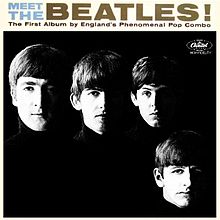
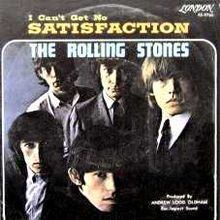
 (I Can’t Get No) Satisfaction, by the Rolling Stones 1965, encountered 1965

Buy it here | See lyrics here | See video here

            One-twoooo, one-two-three!  One-twooooo, one-two-three!  First you hear Keith Richards’ fuzz guitar playing this rhythm, lancing upwards in one of the most famous riffs in all of rock.  And then Charlie Watts lays down almost the same rhythm on the drums, an abortive march ending each measure with the little cha-cha-cha that keeps the beat as jerky and unfulfilled as the lyrics proclaim the singer to be.  Lyrics full of disdain for commercialism and sexual frustration – and what could more potently articulate the psyche of a 16 year-old in the summer of 1965?

Certainly nothing I was listening to that summer.

Now, my thesis about the way most of us listen to most rock lyrics is that we don’t take them in as a whole, especially at first.  Partly because of the vexed acoustics they’re embedded in.  (For instance, when Mick sang “I can’t get no girl reaction,” I’ll bet half the listeners heard what I heard: “I can’t get no girlie action” – which is a little bit more risqué.  And on the other hand, I’ll bet lots of people heard “I’m trying to meet some girl” rather than the blunter “I’m trying to make some girl,” which was what Mick actually sang.)

That’s one reason.  Another is that little fragments of words and music mean so much they tend to distract you from the bigger picture.  It took me a while to get past “I try and I try and I try and I try” sung as a rising cadence, because that spoke to me.  I was trying very hard the summer of 1965, and not provoking much girl reaction.  Or any other kind.

That was a summer in which it seemed as if everywhere, people were doing big things.  The Great Society had been proclaimed.  A Michigan grad was doing a space walk.  We were told we were winning the Vietnam War – or would anyway, once we responded properly to that Gulf of Tonkin thing.  And here I was not doing much.

Harmonica Don’t Cut It

One of the ways I wasn’t doing much was musically.  With rock at what many would consider to be its highest tide ever, we all wanted to go on down to Yasgur’s farm and join in a rock-n-roll band,[1] me as much as anyone else.  But my instrument was (sigh) the harmonica.  I’d sort of flamed out on the piano, in equal parts from a) a lack of talent on my part, b) my mother and stepdad’s interest in making me play classical, which just didn’t cut it in 1965, and c) my father’s inability to stake me to a Farfisa organ despite my begging him.  I think if I’d been given that Farfisa I would have been able to fight my way into some kind of music group.  I would never have had people in ecstasy over my fingerwork, but I might have been just good enough.

But I played the harmonica.  And not just any kind of harmonica.  A couple of years before, my father had given me, out of the blue, a Hohner Chromonica 64.  Unless you play harmonicas, that may not mean much to you.  Suffice it to say that it’s a classic; the same instrument is sold to this day.  It’s extremely versatile, with a huge four-octave range, and you can play it in any key, which all sounds like a plus, but playing it in almost any key except C major and A minor takes a good deal of practice, and because of the Well-Tempered Clavier problem, it is not as exquisitely tuned in any individual key as are key-specific diatonic instruments, aka blues harps.  And it’s really only for melodies; it’s not built to play chords on.  Also bending notes is quite hard.  So you have to work at it to sound really good.  The day would come when I would sound pretty good at this monster,[2] but that day was not one of the days in1965.[iii]

So I was one of the crowds who would hang around and listen while the bands played.

Proto-Aftermath

I’m called to mind of one sticky summer evening.  I was on a corner on the east side of the campus, I think near the Michigan League.  Some early version of Aftermath (later known to Motor City fans as Rhinoceros, and then as the Charging Rhinoceros of Soul)[4] was playing up on a temporary stage.  Actually, I don’t think they were even Aftermath yet, since that name was a rip-off of the Rolling Stones’ album name, and the album titled Aftermath wasn’t released until mid-1966.  But I remember them as Aftermath.  They had guitars and, if memory serves, horns.  And they were playing Satisfaction.   And my frenemy Paul was playing with them.

I remember listening to those lyrics, and feeling they were written about me.  Paul of course was playing an instrument they wanted.  Paul was playing well enough to get invited to participate.  Paul had the girls looking at him.  And the band was very good, by local standards, anyway.  I could see that.  Paul was getting some Satisfaction.

As for me, I had nothing to show yet.  Only the folkies in my circle would let me play my harmonica with them.  And high school hootenanny parties simply did not compare to wowing a bunch of university students right up there in public.

Forever after, when I hear that song, I think of that evening.

           …‘cause you see I’m on a losing streak.
          I can’t get no, oh no no no.
          a Hey hey hey, that’s what I say.

[1]   Okay, I know perfectly well that that’s a lyric that refers to an event four summers later.  A little poetic license, please, if you can spare it.

[2]   I expect to write in a later Theme Song entry about the moment I got passable.  I’m never going to be professional quality, but I can rock the room now – almost fifty years too late.

[3]   I grew so attached to the Chromonica and its slightly upscale chromatic cousins that I played nothing but chromatics until my sixties.  When I finally experimented with diatonics, in many respects they were a piece of cake.  Going the other direction would have been harder.

[4]   I think I remember hearing that they had to enlarge the name to dispel confusion with a Chicago band called Rhinoceros.

Copyright (c) Jack L. B. Gohn (except for commercial images)

Theme Songs Page | Previous Theme Song | Next Theme Song 

Stereo!

Stereo!

Samba Do Avião, by Antonio Carlos Jobim 1965, Encountered 1965

See it here[1]  | Buy it here

            When it came to technology, my two sets of parents could not have been further apart.

My mom and stepfather resisted each advance in consumer electronics.  Television, as I’ve written, was kept out of the house until 1964, and then only was allowed in because my father’s grandmother had died and left her set behind.  They insisted on telephone operators making their long distance connections for them for as long as that was a viable option, and one of the first skills my mom lost later on when dementia set in was dialing the phone (I think because it called for 10 digits as opposed to the six or seven that had prevailed earlier in her life).  They never mastered the VCR I gave them or the microwave.  Though each wielded the typewriter a lot, there was never an electric typewriter in the house, let alone a PC (and each lived over a decade after PCs became commonplace, my mother more than two).

          Stereo!

My father, by contrast, loved gadgets, especially gadgets connected with music reproduction.  In his mountain getaway cottage, there was a trestle table with nothing but hi-fi, or as we came to call it, stereo gear: turntables, tape recorders, amps, pre-amps, tuners, speakers, headphones, all patched together in unique ways.  It wasn’t always a success from an audio reproduction standpoint, and was never ever very sightly, but my stepmother did not mind, bless her.  One of my real regrets about losing him so early (1978) was that he didn’t live to see the dawn of the really good gadgets.  Of course he would have been about 90 year old when iPods arrived, 100 years old when Blu-Ray came in, so if he had lived that long, who knows if he would have kept his zest for mechanical novelty late enough in life to enjoy them.

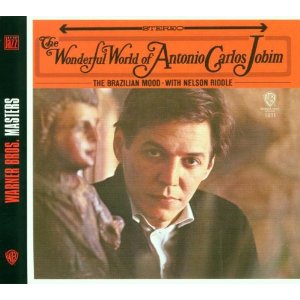
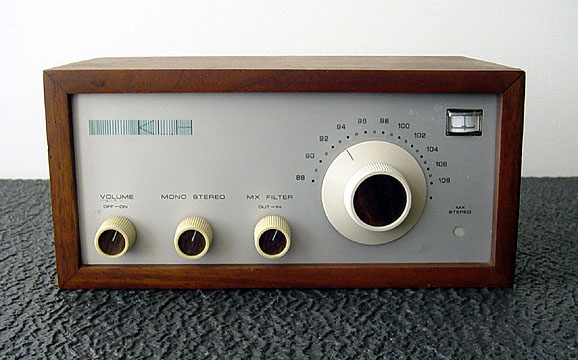
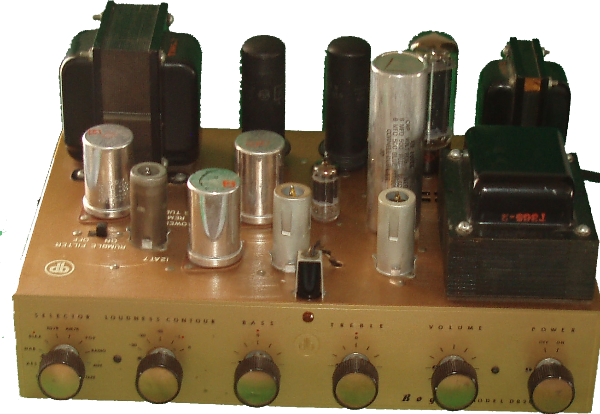
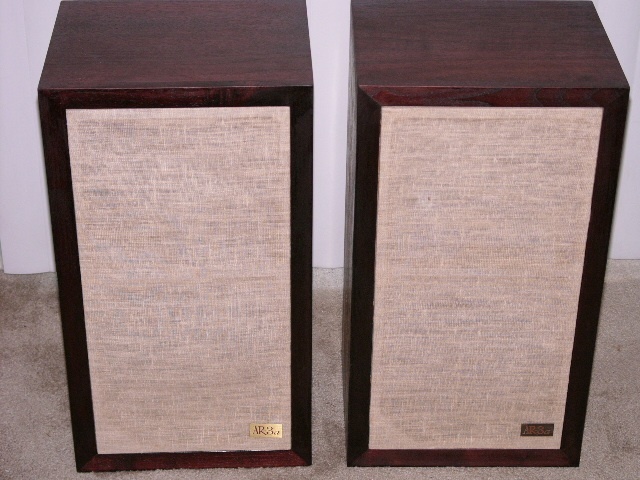
But in the times I’m speaking of now, he was the guy who opened the wonderful world of sound-making gadgets to me.  Somewhere around 1964, probably for my birthday, he provided me some entry-level but serious hi-fi gizmos.  I’ve tried to provide pictures that approximate these treasures, though images of the precise models elude me on the Net.


 [2]  This setup was my pride and joy.

Now you’ll note that in the endnote above describing all this, I mention only a single speaker.  I think that one was all my dad could spring for at that time.  So though it was definitely the most sophisticated rig in my mom and dad’s household, it remained mono for a while.  I knew that stereo was supposed to be way better, but I couldn’t just go out and buy a quality speaker.  If I wanted one, I had to save up for it.  And I think I put money away for a year.  I believe it was shortly after my 16th birthday in the summer of 1965 that I had the necessary coin gathered together.  I went out to a store called Schochet’s (I think), put down my money on a companion speaker, and waited a week or so for delivery.

Eventually, I got the second speaker home, hooked it up with the heavy-gauge transparent wire, flipped the switch on the amp from mono to stereo, and cued up my first stereo record.  And that, I believe, was The Wonderful World of Antonio Carlos Jobim.  As readers of these pieces know, I was all about discovering rock right then, so an album of bossa nova might have seemed like an odd choice.  But I was always a musical omnivore, and bossa nova, not to mention Jobim, was all over everyone’s radar screen[3] after The Girl From Ipanema[4] had become the Grammy Record of the Year in 1964.  And I think I was also aware that the acoustic impact of an album like this was likely going to be greater than that of a collection of rock music.  I probably didn’t recognize the name of the arranger and conductor, the great Nelson Riddle, whose name would have clued me in, but I believe I’d heard (probably read in Stereo Review, which I’d begun subscribing to) that the sound of the album was gorgeous.

So there I was, tone arm posed over the black vinyl with the gold Warner Bros. label in the middle, with “STEREO” written in an arc across the bottom in big red letters.  The needle dropped, and I was transported.  When I closed my eyes, I was in a different aural space, floating out there somewhere with the strings.  It sounded as if Jobim was singing and strumming his guitar up close to you, with a chorus of growling trombones behind him in the middle distance, percussion to the left, piano to the right, while strings encamped all the way out to the luminous horizon.

Damn!  This was stereo!

I just kept playing it.  I’d keep coming back to those two speakers and the fact that I could close my eyes and lose myself in an imaginary space.  I was so taken with the sound that the music almost didn’t matter to me for a while.

            Faraway Lands

Of course eventually I stopped listening to the sound and started paying attention to the record.  I’m not sure I found the music overwhelming.  I think the effect was subtle, like the very sound of the bossa nova itself.  Still that rich Nelson Riddle orchestral palette (the trademark, for instance, of some of the great Frank Sinatra albums of the late 50s and early 60s) elucidated part of the truth about bossa nova, which is that, while it may be quiet and subtle, it’s often about passion and excitement.  It’s not just in the breathless frustrated eroticism of The Girl From Ipanema that appears in this album, a song which everyone knows is about the habitués of a seaside bar watching a passing 15-year old girl with hopeless and slightly inappropriate lust.  On this very album you can hear Surfboard, which somehow captures the thrill of waiting for and then riding a wave.

And then there’s Samba Do Avião, which is about riding a plane coming in for a landing at Rio de Janeiro’s Galeão Airport, and looking down at the town as one goes.  (Not coincidentally, I’m sure,  Galeão is now called Antonio Carlos Jobim.)  And maybe a word needs to be said about exactly why this is so exciting

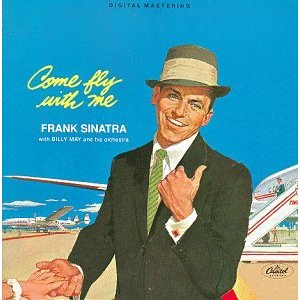
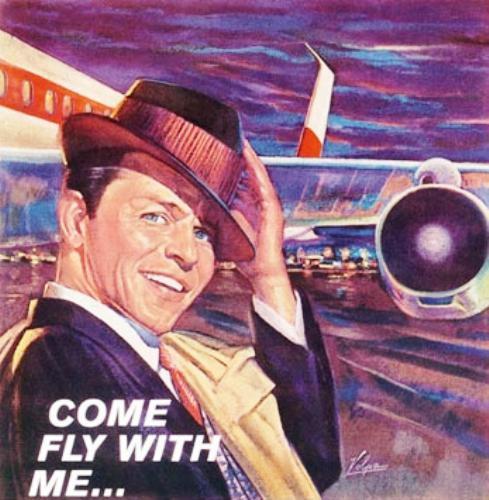
Avião is just Portuguese for airplane.  But this was an era in which airplanes were conjuring up new feelings.  Take a look at the TWA-branded cover of Come Fly With Me, Sinatra’s 1957 smash album (well, recorded in 1957, released in 1958).  Notice something odd to modern eyes about the aircraft?  They were prop-driven.  Yet in the iconography of that cover, these old-timey planes are the magic carpets to carry the lucky listener to all the destinations Sinatra sings about: New York, Paris, Capri, Brazil, Hawaii, etc.[5]  1957 was also the year the Boeing 707 was first licensed for commercial flight.  And people my age will recall that the 707, followed shortly by the DC-8, changed everything, glamorized everything, about air travel.  By 1965, a song about taking off in an airplane (all right, this song is about coming in for a landing, but I didn’t know that) would have had the listener thinking about being thrust unaccustomedly back against the cushions, about plunging recklessly upward, about sexy stewardesses (sorry, “flight attendant” was a neologism years away), and about getting to interesting places ridiculously fast.  Not to mention that the most glamorous folks in the world were called the Jet Set then.  And this was all new.[6]

Even if it weren’t, it had the association of forbidden fruit for me.  My Luddite mom and stepdad were deathly afraid of my flying.  As a result, with but one exception (still in the prop craft era), all the comings and goings between my home in Ann Arbor and my home in New York were by car or rail.  I had some wonderful rail and road experiences that way, but obviously the fact that my mom wouldn’t let me made me all the eagerer to fly.  And the song made it possible to do in my imagination, at least.

So that song carried those associations for me.  I’d also seen That Man from Rio, with Jean-Paul Belmondo and Françoise Dorléac, twice, the previous year.  So I knew what the statue of Cristo Redentor that the singer admires looked like, and about the staggering hills above Rio.  I knew it was an exotic land well worth visiting.  In short, I was a sitting duck for the way the song, even in a language I didn’t grasp much of, [7] evoked its subject.

So this was a part of my introduction to the stereophonic effect, to the sounds of bossa nova, and to the lust for travel.  And that’s why it’s a Theme Song for me.


[1]   This is not the version on the album (Jobim shares the singing with others), but it gives you an excellent idea of the meaning of the song.

[2]   At the heart there was a Bogen tube amp, which I believe was sold with or without a cover, and my dad opted for the without (probably as an economy measure), but that way I could see and marvel at the vacuum tubes, so I never minded.  This amp included preamplification, so I never had a separate unit.  The amp fed an AR-15 speaker in a heavy solid wood casing; Acoustic Research being the dominant quality speaker manufacturer of the day.  Feeding signal into this assemblage was a 3-speed turntable, which I think was a Garrard, though I barely remember this item (and haven’t included a photograph), and a KLH FM-only tuner, although very little of interest to me was yet found on the FM band.  The KLH was also encased in solid wood, and was just elegant to the eye.

[3]   In terms of my radio station influences, I’m guessing this one came by WJR rather than my rock stations, though I can’t be sure about this, as the Top 40 format was pretty catholic in its breadth, extending as far as jazz, country, and folk at times.

[4]   There’s also an interesting black-and-white TV transcription of Astrud Gilberto singing and Stan Getz playing his unforgettable saxophone accompaniment here.

[5]   Interestingly, an Amazon poster has shared a poster from the Sands Hotel of what must have been about the same era, that updates the image with a jet.

[6]   WJR had an all-night program called Night Flight (described by one listener as a “classics, light music, and light jazz show”) that I frequently fell asleep listening to, described in various comments here (see especially the remarks of Don Stoffel).   And I think that maybe some version of Samba Do Avião was the theme; if not, then something along the same lines.  The gimmick was that the commencement of the show would be the takeoff, and you’d set course for somewhere, often somewhere exotic, and at the end of the show you’d come in for a landing with airplane landing sounds.  (Frequently those sounds would awaken me.)

[7]   I don’t claim I understood all the words in 1965.  But I recognized a reference to the statue of Cristo Redentor, got it that the singer is looking down at Rio from above, and the only thing I actually got wrong was, as described above, that I thought the plane was taking off, not coming in for a landing.

Copyright (c) Jack L. B. Gohn (except for photographic elements of the posting which may belong to others)

Kind of a Big Deal

Kind of a Big Deal

 AHardDaysNightUSalbumcoverMeet the Beatles

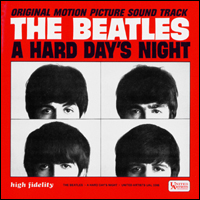
 A Hard Day’s Night, by the Beatles (1964), encountered 1964

Not A Second Time, by the Beatles (1963), encountered 1964?

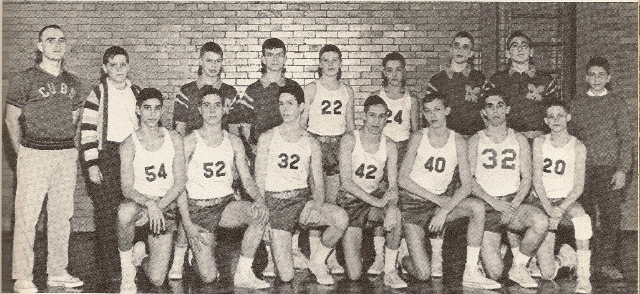
I believe I can remember the first time I heard about the Beatles, sometime during late winter 1964 (my freshman year), in the boys’ locker-room of my high school, after a junior varsity basketball practice.[1]  I think someone was saying he was expecting to watch them on Ed Sullivan, which means we were probably two of three days before either Sunday, February 9 or Sunday, February 16, the dates of the Beatles’ first two appearances on the show.[2]  I took it in, but didn’t make any personal plans to watch.  (There was no TV in my house until June of that year anyhow .)  I understood the Beatles were kind of a big deal, but this was a month or so before my ears started opening up, as described in the previous Theme Song piece.

Had I even heard their music at this point?  I think I must have, as I was already attending high school dances at least sporadically.  Surely by early 1964, they were already playing the Beatles at the dances.  (I Want to Hold Your Hand had charted on January 18 and She Loves You the following week.)  But evidently I just wasn’t listening yet.  I’m quite certain that when my classmate spoke up about Ed Sullivan, I could not have called a single Beatles melody to mind.

No, my path to satori was a by-product of my growing interest in girls.  It was no secret that the youngsters doing most of the screaming at Beatles concerts were female.  If you wanted to have something to talk about with girls, knowing something about the Beatles might come in handy.

There was one Beatles fan in particular, call her Becky, whose mom and my parents met at the beginning of that summer of ‘64.  Her mom was part of my parents’ academic crowd, and I think everybody thought Becky and I were suitable companions.  Well, all the grownups did.

Actually, I’d give a lot now to know what Becky herself thought about the whole thing.  Her mom had the reputation of being a scalp-hunter, out to sleep with academic stars and to flirt with smaller fry.  I can’t speak about whom the mom really slept with (or didn’t); it could all have been unfounded gossip.  But the flirtatiousness I had myself observed, aimed at my stepdad.  In fact a little bit of it was extended in my direction (and a little bit was powerful stuff).

I know Becky had observed this too.  Would you want to go out with a callow boy who had been deliberately buzzed by your mom?  I’m asking the question, not answering.  All I’m certain of is that it was complicated.

She may have felt as confused as I did, given the pretty obvious enchantment her mom exerted over me.  Sometimes Becky treated me like a confidant, and at others as if I were an annoyance.  Because our families quickly became intimates, I was constantly visiting with her throughout the summer and fall of 1964.  She certainly held me at arm’s length, with off-putting remarks like: “Kisses shouldn’t be handed out; like jewels, they’re valuable because they’re rare.”  On the one hand, this kind of comment kept me from trying to kiss her, and in retrospect I’m sure that was an intended effect.[3]  On the other hand, it spurred me to try finding shared topics to fascinate her with.

Which is where Beatlemania came in.  The on-ramp for me was the Beatles’ movie A Hard Day’s Night.  The soundtrack album came out in June,[4] soon followed by the movie itself.  When I was visiting with my father in New York that August, I persuaded him to take me to see it, largely to have something to talk about with Becky.  But not exclusively for that reason.  By now I was listening to the right radio stations back home: CKLW and WKNR, which certainly featured Beatles music prominently.[5]  And the stores in Times Square all seemed to be playing the songs.  And so I must have heard it all on the radio before ever seeing the movie (seven songs from the movie/album having charted by that point in the summer).

When I heard just that first George Harrison chord (possibly G eleventh suspended fourth),[6] I knew I was in for an adventure.  No great distinction for me to perceive that, of course: everyone in my generation had that same moment of epiphany.  What followed that chord in the movie, though (the madcap chases, the lower-class Liverpudlian attitudes, the sneering toffs, and the hard-rocking love songs with the soft-core centers, the camaraderie of the four lads) was an initiation into a brand-new and exciting world and made me fall even harder. There was something, too, about the fourths and fifths the Beatles liked to harmonize with – different from the thirds my ear had been trained up till then to anticipate, that forever came to be associated in my mind with the bracing strangeness of the life on the screen in that movie.

Remember, I was from England, sort of.  So I felt as if this should have been part of my birthright.  But my dim memories of the place held nothing that looked or sounded anything at all like this.  Like most impressionable youngsters of that day, I wanted to go to England, to be English, and part of that scene.

I bought a copy of the album for Becky as a birthday present – which, by good luck, was the only Fab Four album she didn’t already have.[7]   But of course, to a teenager in 1964, Beatlemania was like a Roach Motel: you could check in, but you couldn’t check out.  Of course I had to have the record myself.  I bought my own copy three days after handing over the first one to Becky.  And then I went and saw the movie again with my Ann Arbor friends six days after that.

I got to know the songs.  I played my harmonica alone in my room along with them.  I bought a songbook and played the songs on the piano (to the best of my limited ability and the dismay of my parents downstairs).  I became happily obsessed.

There was a lot more to the music than a chord, I was learning.  Not that I was exactly thinking; I was just responding: to the straight-ahead rock ’n’ roll of the early Beatles.  It drew me in with the just the right mix of challenge and coziness.

And I began to develop a dollop of sophistication.  Top 40 Radio bringing me this incredible mix of excitement (#1 hits from that year – apart from those of the Beatles, who had five of them – included vintage stuff from Peter and Gordon, Roy Orbison, the Beach Boys, the 4 Seasons, the Animals, the Supremes, and the Shangri-Las).  There were dances on Friday nights at the high school where you could hear these things cranked way up (and I got a young woman neighbor to show me how to dance properly).  And I spent hours in the record store, looking at the posters and the album covers, and taking in what they were playing on the PA system.

Somewhere in that fall, I remember being at a dance, and actually telling a girl “This music is the sound of our generation.”  Why would I say something so obvious?  Well, partly because it wasn’t quite so obvious then.  We had scotched the snake of the Mitch Miller sound, not killed it.  (It’s worthy of note that Dean Martin also had a #1 hit that year.)  And we also hadn’t converted our parents, to most of whom it was and remained nothing but noise.  (It was surely just noise to my mom and stepdad, though, blessedly, my father seemed to be hearing something.)  But that remark was also a statement of allegiance.  I was refusing to follow my parents’ likes and dislikes any more.

In later years, my mom spoke of having “lost” me.  She was, of course, talking about a lot more than my music.  But in a real sense it started with the music.  Implicit in her thinking was that she had laid down a course for the two of us to walk together, and then I’d inexplicably wandered off it.  My perspective was the opposite: I’d gone on a voyage of discovery that her own tastes had done a great deal to send me out on, and then she’d refused to accompany me where the path naturally led.  And, as I’d said before, the Beatles (especially of this era) were actually a pretty cozy lot.  Our moms should have loved them.  But for some reason they couldn’t hear.

Of course I went on and bought all of the Beatles’ records, mostly in mono.  I still have them, sacred relics.  Shortly after I secured the soundtrack LP of A Hard Day’s Night, I bought their first Capitol album, Meet The Beatles.  More actually than A Hard Day’s Night, that album – the whole album – was the theme song of my late 1964.  But if I have to choose just one number from the album, I’m going to take Not A Second Time as my theme song.

You can argue about whether it’s the hardest-rocking song on the LP; in my opinion it is, because of George Martin’s pounding piano, and because of the awfully jazzy minor keys (G minor and E minor) alternating among which John Lennon (sole writer and singer) carries on proceedings.  Allegedly the melody comes down on an “Aeolian cadence,” something Lennon had never heard of.[8]  No more had I, nor do I understand the technical lingo to this day.  I just know that it was the song that ended the album, a powerful finish that amounted to a calling card.

And I, as it happens, was accepting visitors.

What then of Becky, who had precipitated these discoveries?  Things there never got unweird.  We did share a few occasions that could reasonably be labeled dates, but she resisted any efforts to get physically or emotionally close.  And then came a climactic moment of weirdness.  Two different strands of my life suddenly got snarled on each other, and I was left not knowing whom to believe.  Becky told me that “Patricia,” of whom I wrote concerning another song, was spreading word that I in turn had been spreading trashy calumnies about Becky.  Apart from the shock of being accused of things I would never have done, the notion of these two having any contact was surprising (they attended different schools in different grades). To this day, I have no idea whether Patricia actually said these things, or whether Becky was making up the story that Patricia had said these things, or whether some intermediary had started the rumor.  Deny it though I might, Becky’s way of dealing with it was not to go out with me anymore.  She deigned to come to a party of mine, and we did see each other through our parents a while longer.  Eventually Becky’s mom left town and never had any contact with her former circle again, nor did I ever hear anything further of Becky.  And so there the story truly ended.

And as for me, I did not mourn long.  Like Milton’s shepherd, I composed myself and made for “fresh Woods, and Pastures new.”   There were lots of girls out there.

So that was that.  But I had a fine legacy from the relationship, an introduction to the sound of my generation – someone I knew called it that.


[1]   This is not a subtle way to sneak in a brag about my athletic prowess.  I had none.  I went out for the team because I knew how bad I was, but had just entered a stage of my life where I thought that maybe by lowering my horns and charging I could remedy the problem.  I couldn’t.  If you can interpret the team photo (me second from right in back row), you can determine this.  (Clue: the jacketed ones didn’t actually get to play much.)
[2]   Though there are an infinitude of Beatles books, my constant vade mecum in Fab Four matters is the late Ian MacDonald’s Revolution in the Head (3d ed. 2005), which is the finest book on the Beatles I’ve ever encountered.  At the moment I’m consulting the appendix containing a Chronology at page 416.

[3]  Another effect, almost certainly intended, was to differentiate Becky in her own mind from her mom.  The mom not only kissed me on occasion but allowed me to kiss back – and I could see Becky’s discomfiture while it was happening.  I can only plead extreme youth and cluelessness for letting myself get swept up in a potential girlfriend’s mom’s psychodrama like that.

[4]   So we’re clear, I’m talking about the 1964 red-covered U.S. soundtrack album including some instrumental tracks, not the British blue-covered album with 13 songs, which is now issued as the standard version in the States as well.  They are well distinguished in this Wikipedia entry.

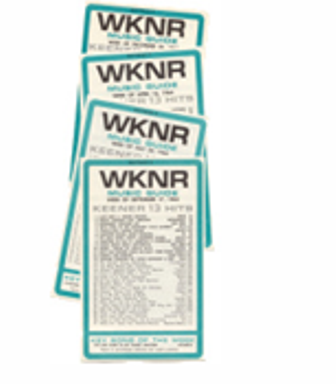
[5]   WKNR was particularly important, because they had these weekly lists of the hot records that you could pick up at the record store, all done up in the instantly-recognizable WKNR turquoise, vital because they gave a neophyte like me a fighting chance to understand everything gushing out of the spigot of music I had just turned on.  Here’s a photo of the guides.  And here’s a good website about the station, source of the photo.
[6]   So saith MacDonald at 115.  Whatever G eleventh suspended fourth even means.  I don’t know what that monster chord really was.  A few years after I first heard the song, I acquired some sheet music and tried to play the chord the transcriptionists had put in its place.  Of course, I was on the piano, not the guitar.  But it wasn’t too hard to figure (while trying and failing to make my right hand stretch all the way to the top) that this was a substitute.  It was a good sound, an intriguing sound, but not that initial slab of arch wonderfulness.  Apparently not everybody agrees with MacDonald anyway.  Check out this amazing article by Chris Hook for further dissection of the chord.  Hook collects 14 different names various experts have given the chord and mentions seven others.  Hook’s take is that you can’t duplicate this sound without a 12-string guitar, deploying eight of the strings – and then you need John replicating it on a 6-string, Paul hitting a high D on the base, and then you still need a post-production snare tap by Ringo and piano chord by George Martin on a Steinway buried in the mix.  No wonder my feeble piano effort seemed so short of the mark.

[7]   Though, as will be seen, nothing wonderful came of the relationship, I think at that moment it was as good as it ever got, because that gift was clearly for Becky, and had nothing to do with her mom, and maybe it made clear to her that I wasn’t just hanging around Becky to get access to her mom, or vice versa.

[8]  MacDonald at 97-98.

Copyright (c) Jack L. B. Gohn
Because They Had No Choice

The Big Picture Home Page | Previous Big Picture Column | Next Big Picture Column

Because They Had No Choice

Published in the Maryland Daily Record January 3, 2011

            The history of white and black in this country has largely been marked by separateness.  Whites in the manse, blacks in the slave quarters; whites on the paved streets, blacks on the dirt roads; whites in the pleasant neighborhoods, blacks in the ghettos.  My recent reading has given me new insight into how this all happened – and what the future may hold.

            The law had a lot to do with it.  Last year’s book, The Warmth of Other Suns, by Isabel Wilkerson, retells the history of the great African American migration from South to North and West in the early-to-mid-20th Century, and brings back to vivid life the realities of the South, where the majority of the nation’s African-American citizenry lived after slavery.  Through thousands of decisions not to investigate or prosecute, for instance, the justice system there ratified the lynching and violence[1] employed to prevent blacks from intruding on whatever was viewed as white turf, which of course included neighborhoods.  Blacks were systematically frustrated in efforts to obtain education, jobs, and the economic leverage these might have bestowed, which might in turn have enabled (among other things) choices to live where whites did.  Many blacks felt they had no choice but to leave, but that was hard and risky.  In fact, as Wilkerson recounts with many examples, it generally had to be done in clandestine fashion, telling almost no one.  And, unsurprisingly, the refugees had to ride in segregated trains.

            The North and the West were better in lots of ways, but not in terms of separateness, and this was directly enforced by the laws.  Wilkerson describes how the places where the internal immigrants had to settle would inevitably be nonwhite neighborhoods.  Another recent book, Not in My Neighborhood, by journalist Antero Pietila, focuses on the mechanisms that created these segregated outcomes, by examining just one city, Baltimore.  There were two great stages in residential segregation in Baltimore.  First, local ordinances explicitly created residential segregation, by forbidding owners of homes occupied by white people to rent or sell to black purchasers.  Baltimore was a pioneer in this regard, and its ordinances were copied in Northern and Southern cities alike.[2]  Then, after such ordinances were struck down, genteeler means were used: restrictive covenants to forbid the residential mingling of the races as a matter of private contract, mortgage redlining (largely brought about by federal agencies charged with stimulating home loans), and blatant racial segregation in public housing.

            Baltimore’s staunch defense of its geographical color bar produced unimaginable inconvenience, not to say suffering, for the black residents who flooded in during the Great Migration, as they were cooped up in portions of the city that were far too small reasonably to accommodate them.  Overcrowding was endemic, yet there was nowhere else to turn.  As Pietila carefully reconstructs, generations of politicians tried in vain to alleviate the pressure of too much humanity in the ghettos, but with every area, old or new, they tried to open up, they were checkmated by intransigent white interests.  Hence when barriers eventually fell despite the intransigence, they fell in the worst, least planned way, to blockbusters and shoddy landlords and financiers who engineered abusive mortgages that only African Americans, desperate enough to settle for such terms, would be offered or pay.  As a result, while racial boundaries moved, racial boundaries persisted.  Blacks had, again, no choice but to continue living in black neighborhoods.

            Times have changed.  The old segregationist residential boundaries now grow more blurred with each year.  And society has likewise made some concerted efforts to achieve integration in some of our schools.  In many of them, the races now rub shoulders.  One might expect that nonwhites, who have been the disadvantaged parties in most earlier arrangements, would welcome the opportunity to mingle freely.  But it proves not to be that simple.  And here I refer to an older book: “Why Are All the Black Kids Sitting Together in the Cafeteria?” by Beverly Tatum now president of Spelman College (1997, second edition 2003).  Her topic remains current (I understand the “black table” is a still fixture at most integrated schools), and she has important things to say about it.

            We should recall that the original desegregation decision, Brown v. Board of Education, was premised on the notion that black students benefit from contact with white ones.  The “black table” discounts that notion, at least to some extent.  Tatum, a developmental psychologist, says that adolescents need to forge an identity, which has to include race.  And in a world where white is the unexamined norm, in diction, in style, and in cultural institutions, and where white individuals reap, often unthinkingly, the benefits of earlier legally-sanctioned privilege, adolescents of color have no choice but to do a lot of extra work.  The “black table” becomes a clearing-house of information relevant to that task and a source of support in facing a difficult situation.  At later stages of development, Tatum suggests, identity gels, and the need for this self-segregation passes to some degree.

            But not entirely.  Tatum posits that black space and white space may remain desirable even after adolescence; the process of placing oneself relative to the racial checkerboard takes less work later on, but never entirely ends.

            This is discouraging.  It would be more in keeping with the policy of Brown if everyone would school and work and live side-by-side and not think about race anymore.   Shouldn’t we be insisting on that right now?  For another thing, as Tatum acknowledges, the “black table” often tends to foster “an oppositional identity that disdains academic achievement.”  Moreover, the whole notion of forming an identity around race is strange, given that race, which has zero biological significance, imparts no traits that are more profound than skin deep.

            Must we go on this way?

            I think the question comes down, in part, to whether human nature can progress.  Face it: humans always have forged their sense of self by the tribes they belong to and live among.  Tribes, whether we call them nations or races or faiths, share the just-mentioned lack of biological significance.  Now that people can mingle without legal interference – now that they do have a choice – will tribalism keep them apart anyway?

            To me, proof exists that the future can be different.  The Emancipation Proclamation, Brown, the Civil Rights Acts, and the creation of a society that could elect a mixed-race president are not just American achievements; they are major human achievements.  They themselves embody but also point further down the path we as a species are following: gradually reconfiguring our psyches to recognize but one race and one tribe: human.  And in this reconfiguration, we Americans lead the world.

            There is a long way to go, however.

            Changing our very nature is hard, and only a work in progress.  Key to continuing that progress, too, will be ending white privilege without passing it on to some other group.  In that regard, the changing demographics ahead, in which no race predominates numerically, pose both promise and threat.  Let us therefore embrace the one and defeat the other.

            We do have and must take that choice.


[1].         Wilkerson quotes a 1933 book, The Tragedy of Lynching, for the statement that “someone was hanged or burned alive every four days from 1889 to 1929.” 

[2].         Pietila at 22-23.

Copyright (c) Jack L. B. Gohn
The Big Picture Home Page | Previous Big Picture Column | Next Big Picture Column

The Greatest Song(s)

Theme Songs Page | Previous Theme Song | Next Theme Song

The Greatest Song(s)

Walk On By, by Burt Bacharach and Hal David, Sung by Dionne Warwick 1964, Encountered 1964

Trying to talk about my encounter with the rock and pop music of the 1960s forces me to resort to metaphor.  Sixties music smacked me in the face, it rocked my world, it turned my world upside down.

For all of that, it was a gradual process, though it started with a bang.

As my earlier pieces make clear, I was not much into 1950s rock – not in the 1950s, anyway.  Some of my friends were, and what the 1960s held in store for them musically cannot have been quite as overwhelming as it was for me.  I was behind the curve.

To catch up, I first had to picture myself as someone capable of being receptive to that kind of music.  And initially I couldn’t.  My failure of imagination was due to two rather different factors.

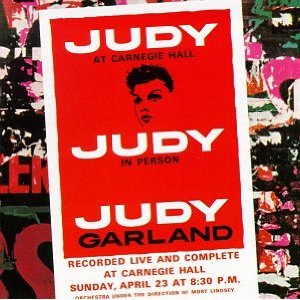
First, there was the force, for good and ill both, of my parents’ tastes.  If you’ve read about my earlier Theme Songs, you know the sorts of things I had been listening to: mostly a selection from what my parents had made available to me.[1]  It was musically nourishing, all right, overly so in fact.  Up to that point it had left me too fulfilled to look around.  That was coming to an end now.  Though I didn’t recognize it just yet, my parents had “gone about as fer as they could go.”  Oh, my stepdad might buy my mom the latest original cast albums from Broadway musicals, but he basically left off with early Sondheim.  Judy Garland and Marlene Dietrich, about whom I’ve already written, were still singing, but doing nothing new and exciting.

My folks’ radio stations were WJR in Detroit and the University of Michigan station, WUOM.  WJR, to the limited extent it was about music at all, was kind of middle-of-the-road-ish, and WUOM was for classical music, educational fare, and Michigan football.  There was nothing wrong with them, but again, they were just not breaking new musical ground.

That was okay with my folks: they didn’t want any truck with new musical ground.  And here we come to the second factor I had to overcome: parental disdain.  Both my mom and my stepdad entertained a visceral revulsion toward the ever-so-slightly-oppositional-defiant style of 1950s American youth icons (think James Dean, Elvis Presley, and Marlon Brando).  To them, this wasn’t a minor matter of style, it was a fight for the very soul of our society.  Such revulsion not only left out of the question any serious parental attempt to listen to or hear what the first generation of rockers were providing, but also extended to expressions of disgust in which I was expected to share.

And, out of sheer loyalty, that’s what I did.  For a while.  My parochial school, which covered twelve grades, had but one cafeteria, and I remember sitting there as a grade schooler in the late 1950s and making scornful remarks about the high school girls in their signature bobby socks and saddle shoes (standard wear for girls of that era who might be listening to Elvis and his ilk) – about them and their music – really for no other reason than that that was what my mom would have done.  Nobody else ever joined in, but I never took the hint.

Becoming an adolescent would inevitably entail my beginning to think for myself.  And that, in turn, would inevitably involve me in an embrace of a lot of things my mom hated.  All the same, one generally does these things by steps.  And I’m pretty sure that the first step of my initiation came through WJR, the station my mom with all her musical prejudices found comfortable to listen to almost every day.

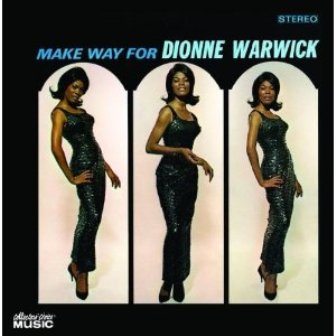
In 1964, however, WJR opened up a little bit, rehiring (from a spell in San Francisco) the slightly adventurous DJ and all-around radio personality J.P. McCarthy, who had both the Morning Music Hall and the Afternoon Music Hall programs.  McCarthy, if I remember correctly, was not orthodoxly opposed to new sounds.  And a lot of new sounds were happening in 1964.  April of that year saw Barbra Streisand charting with People, and Dionne Warwick charting with Walk On By,[2] both of which I am pretty certain I first heard on McCarthy’s program.[3]  I remember Mother commenting with astonishment but not disgust at the then-new Streisand phenomenon.  I don’t remember her saying anything about Warwick.[4]

If she had looked into Warwick, though, she’d have known that Warwick was the test pilot for many of the songs produced by Brill Building tunesmiths Burt Bacharach and Hal David, but also that Bacharach was just coming off a six-year occasional gig as the conductor for – Marlene Dietrich’s orchestra!  Walk On By was full-throated 60s pop, but it was also not rock, as one might expect from Bacharach’s Dietrich pedigree.  (That non-rock pedigree may have had something to do with the song appearing on WJR.)

I remember being blown away by both songs, but being aware, immediately, that Streisand’s and Warwick’s hits came from entirely different musical countries.  The former was my parents’ music continued, maybe freshly repackaged.  The latter, on the other hand, was – well, what was it?

That is actually a surprisingly tough thing to say.  Here’s how the very articulate Alec Cumming phrases it in his notes to the wonderful 3-CD Bacharach anthology The Look of Love (1998):

“Walk On By” has the ability to stop you dead in your tracks.  Maybe it’s the flügelhorn.  Or those pounding doubled-piano breaks.  Or maybe it’s the echoed background singers, with their desperate little joke (“Don’t. Stop. Don’t. Stop.”) Or the strings that at one instant swell up like a sea of tears, then next moment slink away.

In less than three minutes, Bacharach takes you on what seems like a compressed tour of the whole territory of heartbreak, courtesy of his amazing mastery of the pop orchestra.  He composes, he orchestrates, he conducts, and he creates a sound that is uniquely his, one I would come to know as the quintessential sound of 60s pop.

Part of the wonder is the rhythmic uniqueness of it.  When you look at the sheet music, it seems to be in 4/4 throughout.  But the introductory rhythm break ups the bars in a way you can only hear, not count.  It feels as if there’s a shift every half-bar, as if fragments of bars are being fused in weird places.  It should slow the singer and the flügelhorn and the strings down to a halting crawl, but somehow it propels them to lyrical heights.  Don’t ask me how he does it.  Nearly half a century later, it still seems wondrous to me.

Which is not to say it’s all about the composer and the orchestra.  It’s also about the lyricist and the singer.  Especially the singer.  In commenting about each of them, though, I’m even more at a loss for words than I was in talking about the music.  What can one say about utter perfection?  For once I am not even going to try.

In the years since then, I’ve heard lots and lots of songs.  This one remains my very favorite.

And when I first heard it, early in 1964, as a high school freshman, I knew immediately I’d found something my parents knew nothing about and wouldn’t care to, but that I desperately wanted more of.

And so, at age 14, I started to explore.


[1].  Oh, I had made my parents buy me the occasional 45 hit that I’d been exposed to by one or another friend or at school, or maybe even heard on the radio stations my folks listened to.  Examples I can think of are Sixteen Tons by Tennessee Ernie Ford (1955), Oh-Oh, I’m Falling In Love Again by Jimmie Rodgers (1958), and The Chipmunk Song (Christmas Don’t be Late) b/w Alvin’s Harmonica, by Ross Bagdasarian/David Seville/The Chipmunks (1961), not to mention the Singing Nun LP (1963).  But none of these qualified as precursors of the pop and rock revolutions.

[2].  There is an excellent YouTube slide show of the complete song here.

[3].  Also three or four Beatles songs, but that’s another story (see the next entry).  I don’t think I ever heard the Beatles on WJR.

[4].  Warwick apparently became Warwicke in the 1970s.

Copyright (c) Jack L. B. Gohn
Theme Songs Page | Previous Theme Song | Next Theme Song

A Celebration of the Life of the Deceased, Or Not, As the Case May Be …

Previous I Read The News Today Entry | Next I Read The News Today Entry

A Celebration of the Life And Music of the Deceased Or Not, As The Case May Be …

            These I Read The News Today postings of mine seem to have taken on a rather Catholic coloring.  The latest news item to bring out the itchy trigger finger in me is along the same lines.

            Seems that, as reported in the Times, Archbishop Denis Hart, the Roman Catholic prelate of Melbourne, Australia, is trying to draw the line against efforts to characterize Catholic funeral services there as “Celebrations of the Life of …” or to play secular music.  “Romantic ballads, pop or rock music, political songs, [or] football club songs” do not make the cut.

            You can see where he’s coming from.  Religious services ought to be, um, religious.  And what Hart surely takes from that is that they should be about God, for instance, and not about us mere mortals except as in relationship with God.  Religious services should not import values that contradict religious values, either by directly challenging them (e.g. Jim Morrison hollering: “You canNOT petition the Lord with prayer”) or by shutting them out (most love songs, for example, and certainly, to choose an example from Archbishop Hart’s bailiwick, the Melbourne Victory fight song – musical performances where references to the Divinity are scarce or nonexistent).

            Well and good.  Except that nowhere is it written that funerals must be exclusively religious services.  Even when they incorporate a Mass, and Catholic funerals generally do, they have a lot of different functions:

            A) Funerals can, and I guess when delivered under Catholic auspices, must provide reassurance that the life of the departed is changed but not extinguished, and that God will ultimately save every creature and dry every tear. 

            B) But they also have to help the bereaved grieve; and if you think grieving is about being all reassured that the departed is safe and sound in the arms of his Maker, you’ve never experienced real grief.  Grief is a confrontation with the fact that the person who died is nullified, erased from this worldly existence of ours, and a confrontation as well with the tenuousness of the evidence that that person still goes on in some other mode.  Grief is acknowledging that in important ways that person is lost to us, and that religious reassurances could be wrong.  The grieving process is about going through all that, and moving on.

            C) And finally, and I would maintain quite legitimately, funerals are to celebrate the life of the person who died.  (And anyone, even an archbishop, who says otherwise is ignoring his own humanity.)

            So even granting Hart’s premise about religious services, funerals are generally hybrid affairs, and surely the secular objectives are equally pressing with the religious ones.   And to reach the secular goals, immersion in the music loved by the dearly departed may be singularly effective.

             As it happens, though, I don’t even grant Hart’s premise, that religious services must explicitly be about God.  Let me illustrate with a fairly recent memory.

            A few years ago, a friend of mine, still middle-aged, died suddenly.  His brief final illness struck him right in front of us all at church, while he was singing in the choir, a circumstance from which it may well be appreciated that there was no hostility on his part or ours to church music. But this friend had been a disc jockey in earlier life, and popular music was always important to him.  For the funeral, his daughters put together a tape of short excerpts from songs the man had loved.  For about ten minutes we listened, rapt, as the melodies, some shallow, some profound, none religious so far as I can recall, helped bring him back among us.  We were freed up to love him again in a way that would not have been possible without this aid.  Damn straight we were celebrating his life!  Do I think God felt slighted or envious?  Do I think God was worried we were focusing our attention in the wrong place?  Uh, nooo.  That tape was the high point of the funeral, and I don’t think for a minute it took any of us away from God.

            I’ve written elsewhere in this blog that if, as Catholics are all taught, there is a God who made us all in His image and likeness, it’s hard to see how the distinction between sacred and profane is possible.  The Archbishop’s ukase, I think, tries to preserve this hopeless distinction.  Love songs direct our attention to romance, and perhaps to sex.  But God is the Author of these things.  We cannot focus on them without focusing on Him, by another name.  Fight songs direct our attention to athletic feats and identification with teams.  But God is the maker of the bodies and the competitive spirit with which we and our sports heroes exercise.

            Celebrating the life of the deceased is celebrating God.  Not in some ethereal, metaphorical kind of way, either.  If we are believers, the departed is a piece of God, a member of the Mystical Body, whom we shall never see again in this life.  Best to bring that person, with all his or her good and bad points, into high relief, before letting him or her go.  And to do so fully integrating fight songs, ballads or whatever else made that person happy or special, right into the sacredest parts of the service.

            Doing so honors God just as much as it does the person whose death has brought us together.

Copyright (c) Jack L. B. Gohn
Previous I Read The News Today Entry | Next I Read The News Today Entry

Time to Talk, Mr. Pistole

The Big Picture Home Page | Previous Big Picture Column | Next Big Picture Column

Time to Talk, Mr. Pistole

 Published in the Maryland Daily Record December 6, 2010

            Software engineer John Tyner’s encounter with airport passenger screening agents at San Diego Airport, in which he warned screeners not to “touch my junk,” captured by Tyner’s cellphone, has gone viral.  The ACLU has announced a national program of challenging “virtual strip searches of passengers.”  The new regime of full-body scans for selected members of the traveling public, with highly invasive body patdowns for those who demur, has drawn criticism from Barack Obama and Hillary Clinton.  In the face of the huge unpopularity of this screening program, the responsible bureaucrat, John Pistole, Administrator of the Transportation Security Administration, has stood firm.  He has told CNN: “No, we’re not changing the policies.”  He may have no choice in the matter, though.  Both Democratic and Republic leaders are planning Congressional hearings.

            But we should never have reached this point to begin with.  A consistent thread in the TSA creation of this program has been a failure to consult the citizenry or to listen to objections – even in the teeth of legal mandates to do so. 

            Since 1994,[1] Congress had directed the promulgation of regulations “to protect passengers and property on an aircraft … against an act of criminal violence or aircraft piracy.”  These regulations were to “require a uniform procedure for searching and detaining passengers and property to ensure their safety and courteous and efficient treatment by .. Government … law enforcement personnel.”  Kinda sounds like a mandate to establish regs for this very program, right?

            If that were not enough, there is a mandate in the Administrative Procedure Act (it governs the workings of federal agencies, including TSA) which most likely would be held to require the promulgation of regulations governing this program even absent specific Congressional directive.

            Why would regs matter?  Under the APA, the issuance of regulations must be preceded or, in emergencies, succeeded, by public notice and comment, most often accompanied by hearings.  These incidents of rulemaking do not greatly constrain the discretion of the agency, but do provide a critical opportunity for the public to have dialogue with agency decision-makers and critique the programs and protocols the agency proposes to put in place.  Draft regulations may well change as a result – and the final regs are thus seen by the regulated public as more legitimate.

            It is easy to imagine now, if TSA had leveled with us about what it proposed to do, what members of the public would have said they felt about government officials using radiation to take revealing pictures of them, and, as an alternative, literally groping their “privates.” (The slang term expresses how many of us feel about genital modesty.)  TSA would be expected to respond with arguments about the recent attempted “underwear bomber,” and how these searches would make us all safer.  And then a policy calculation in which the public was involved and invested could have been made, by an agency better advised about how the public felt.

            Whatever choice would have been made would have been a compromise.  You cannot maximize modesty and security at the same time.[2]  But a choice favoring modesty would have been completely legitimate, and well within public competence.  Each of us compromises security several times a day, to further other interests.  If we have an interest in being on the opposite side of the street, for example, we face a slight risk of a car running us down as we cross.  Before skiing down a mountain, we take account that we could break bones or worse.  We know how to balance benefits and risks. 

            And this holds with collective risks as well.  It’s true that if TSA chose not to scan or grope it would not only compromise somewhat the safety of the travelers with a strong sense of modesty, but that of other travelers – and of the people on the ground potentially beneath a falling or exploding airliner.  But this too is the kind of choice we make all the time.  We cut taxes to gratify individual financial aspirations while we arguably endanger the fiscal solvency of the entire country; we delay tough public policy choices about the environment even in the face of likely collective disaster in order to enable wealth production and individual consumer lifestyle choices.  These may be bad choices, but they are not of an unfamiliar type.  And within the norms of our polity, they are legitimate choices.

            In fact, were our government to start rescinding tax cuts or imposing drastic pollution caps by fiat, without the political give-and-take of legislation and regulation, no one would recognize its policy choices as legitimate.

            TSA and Mr. Pistole have to this point been acting as if none of this applied to them.  Not only were there no regs (the single one that seems to refer to passenger screening was passed in 1986), but no consultation.  So far as I can tell, TSA never made much mention of the scanners until they were already being deployed.  There was a big publicity roll-out in April of this year, after pilot programs and a big buy of the Advanced Imaging Technique technology.[3]  And TSA has consistently talked as if its only mandate was to maximize public safety, and as if everything else, like modesty, that conflicted with safety would just have to take a back seat.   

            Here’s a representative bit of dialogue, from Pistole’s recent interview with NPR’s Margaret Warner:

MW: Did you here at TSA underestimate the estimate of blowback, of anger from passengers over these more intrusive screening procedures?

JP: …I think there — reasonable people can disagree as to the balance between the privacy that some people have raised as issues. And I’m sympathetic to those concerns. But the job is really security in terms of, how can we provide the best security?

            This remark was preceded by patronizing comments about not keeping the public fully informed if it meant getting too much information to the bombers.  He said much the same thing to CNN.  He simply does not get it that there are things (like advanced consultation and privacy) that people may prefer to maximum possible security.  Nor does he get that the people who may prefer these things are his boss.

            Someone else at TSA may get it.  On the TSA website, at least as of November 21, you’ll still find, prominently featured, a link for a USA Today poll that says the majority support the body scanners.  This was a poll conducted less than a month after the underwear bomber and after the aforementioned pilot program conducted in only 19 locations.  It is highly unlikely that the public is so supportive today.  And citation to inapplicable polls only underscores TSA’s contempt for us.

            We are not children.  And there are things we may care more about than minor increments in safety.  Time to talk, Mr. Pistole.  We understand that you’re new to the job, you inherited this program, you come from an agency, the FBI, not known for being conciliatory with the public, and that bureaucrats like you are trained to circle the wagons.  Treating the rest of us as your peers will not come naturally to you.  But you need to do it. 


[1].  The requirement was part of Public Law 103-272, at 560.

[2].  There is not a universal consensus that the scan/grope regime is even all that effective at preserving our security.  See the commentary of K.T. McFarland, Fox News commentator, on this point, and the recent discussion among experts in the New York Times.  It seems as if neither on the right nor the left is there much sense of confidence the new protocols make us safer.

[3].  See, e.g., here and here and here.

Copyright (c) Jack L. B. Gohn
The Big Picture Home Page | Previous Big Picture Column | Next Big Picture Column

“Patricia”

Theme Songs Page | Previous Theme Song | Next Theme Song

“Patricia”
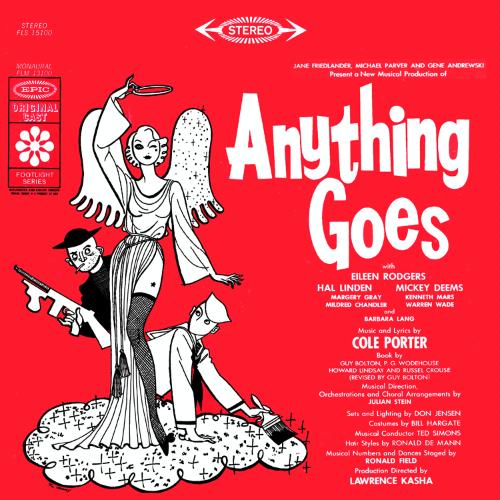
Anything Goes

 I Get A Kick Out Of You by Cole Porter (1934), Sung by Eileen Rodgers 1962, Encountered 1962

In the last two weeks of August 1962, I traveled to New York to visit with my father.  At this stage of his life he was teaching economics in the Columbia Graduate School of World Business.  He had just published his most important book, had either received or was about to receive his full professorship, and was three years into his successful second marriage.  He and my stepmother had recently bought a country getaway home in Tannersville, up in the Catskills.  In short, I was visiting a man at the top of his game.  After years of struggle, it was all going his way.  And he wanted to share it with me.

I could sense the excitement.  And it rubbed off onto three things that I remember happening.

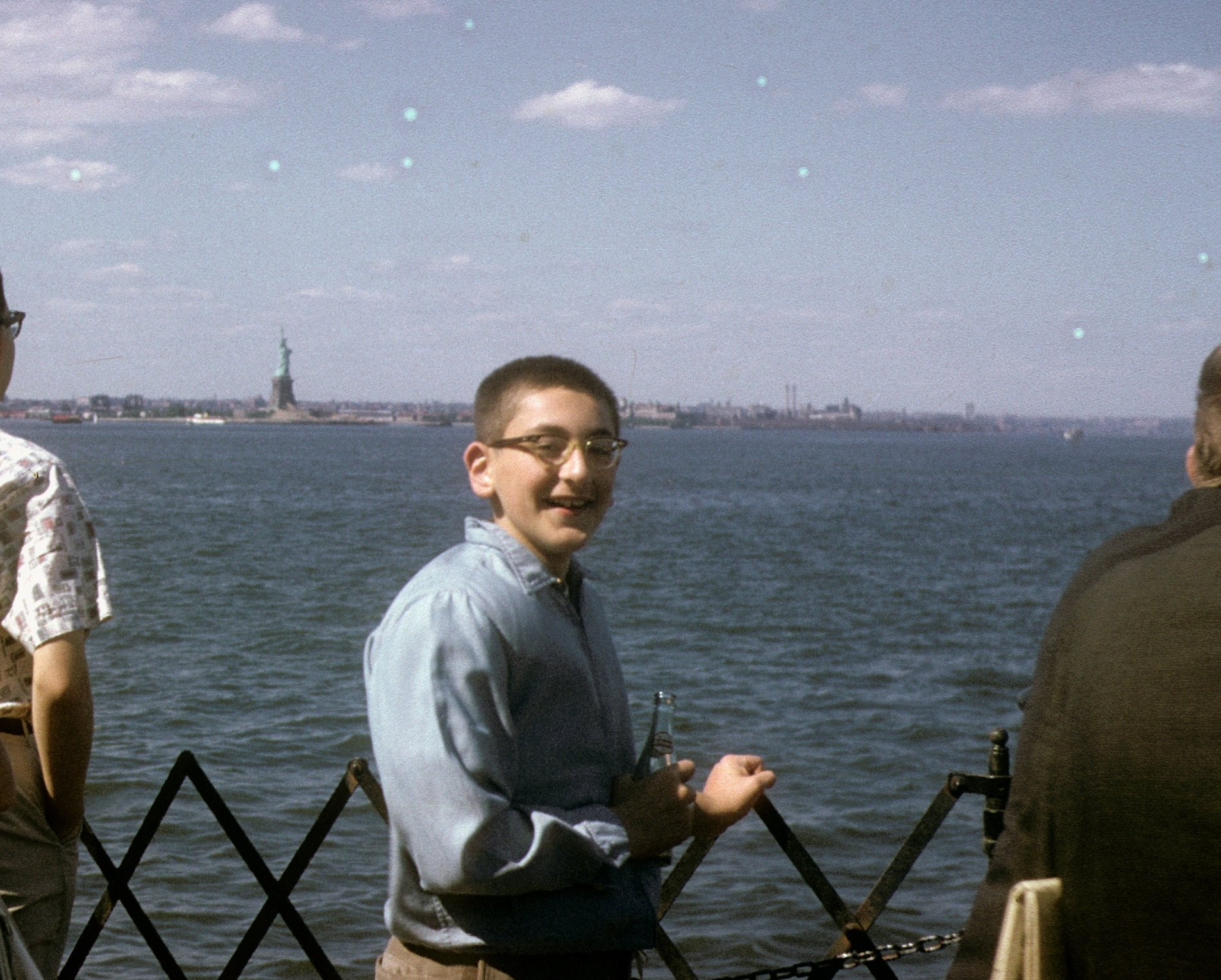
One was that he took me on the Staten Island Ferry to pass the Statue of Liberty, and there’s a picture of me doing that.  It was a big gulp of the sheer glamor of the town, and I was duly impressed.

Another was that a girl I’ll call Patricia and her mother visited.  And a third was that my dad took me to see the revival of Cole Porter’s Anything Goes off Broadway at the Orpheum Theatre and bought me the album.  And the second and third of these events converged somehow in my mind.

I was now a rising eighth grader.  Back in my fifth grade, Sister Rose Irene, one of those charismatic teachers who makes indelible contributions to your growth, had decided that four of her charges were getting too little out of the grade school library, and had sent us up to the high school library instead.  That began one of the great friendships of my youth.

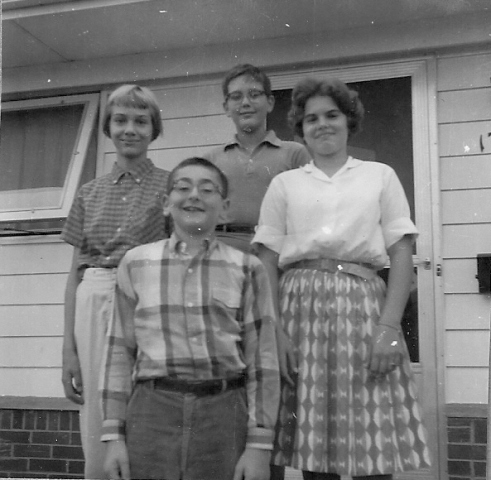
The four of us, two boys and two girls would not just climb the stairs to mingle with our elders, we began to hang out together at each other’s houses.  One of them was Patricia, a slim, tall, thoughtful girl.  We talked on the phone a lot, and with her I could talk about almost anything.  I visited her home sometimes even if there were only two of us, and not the foursome.  And by the beginning of eighth grade I was beginning to have feelings for her.   There’s a photo of us here.

The Four. “Patricia” is behind me to my right.

I’ve described in my previous Theme Songs entry where I was in my thinking about girls.  Perhaps I’d moved on just a little from that stage to the moment I am speaking of, now that I was turning Patricia over in my mind.  Together, we’d been picked out as special.  Having her as a friend, someone with valuable things on her mind to share, and to appreciate the most important things about me – that was of far more moment than the thought that, for instance, we might be smooching some time.

And what was one of the most important things about me then?  Why, the fact that, though I lived in Ann Arbor, I had something of a second life, with a dad and stepmom in Manhattan.  So when it befell that Patricia and her mom would be visiting in New York at the same time as I, it was like manna from heaven.  I could bring Patricia into my New York life!  She could see (and hopefully admire) that side of me.  I agitated with Patricia’s mom and my dad for a meeting in Manhattan.  And the parents complied.

My dad lived on the Upper West Side in a University-owned apartment, so Patricia and her mom came up there.  We were a couple of blocks away from the Riverside Cathedral, the nondenominational Gothic structure that towers over Morningside Heights.  So we all went sightseeing there.  You’d think, considering how important it was, I’d remember more details of that visit.  But that’s memory for you.  I don’t remember much about it.  I remember climbing the steeple with Patricia and her mom.  I remember being very excited about the whole thing.  And that’s about it, at least as far as events go.

But as far as feelings go, there’s definitely more.  The excitement didn’t go away.  Patricia may only have been a girlfriend in my mind, but now she was in on my second life.  We could talk about it, which was huge.  It made me long to get back to our phone calls, when I got back home.[1]

In the meantime, though, I was also an avid theatergoer, a taste my dad shared.  And so down to the Village we went, to the Orpheum,[2] to see a revival of Cole Porter’s Anything Goes.  Although you could hardly grow up in that era with parents marinated in their own generation of pop culture and not be exposed to Cole Porter, you could (and I did) do it without listening to the songs very hard, and certainly without registering his name.  Porter wrote first and foremost for the stage, and when you heard his songs in context, a lot of things swam into focus and you would not forget the name any more.  Percy Hammond of the Herald Trib[3] commented on the original 1935 show that Porter’s songs were “ribald and sentimental.”  That nails it.  Much of the best of Porter is ribald and sentimental all at once.  That’s a combination that chimes with the deepest vibrations in a young adolescent’s developing soul, whether or not he recognizes the receptors for them in his mind.

Although there’s nothing x-rated about the lyrics,[4] and high schools can and do put on productions of the show without offense, when you see the whole package (chorines dressed as angels but fluttering their diaphanous dresses like strippers, a revivalist anthem, Blow, Gabriel, Blow, that says farewell to carnality and worldliness with utter Broadway razzamatazz, and a gangster’s girlfriend showing off her underwear doing high kicks) you know you’re in the presence of ribaldry.

But by the same token when you hear expressions of longing like I Get A Kick Out of You and All Through the Night, you cannot be blind to the fact that the lyricist knew a thing or two about the emotional side of love as well.  He knew about being in love when the object of your affections doesn’t reciprocate – which is in fact the situation limned by I Get A Kick Out of You.  Indeed, that was the one obvious thing I shared with Cole Porter, after eliminating, for instance, being grownup, or gay but stuck in a straight marriage, the way he was.  And the contrast was more marked with Reno Sweeney, the character singing the song (Ethel Merman in the original, Eileen Rodgers in the revival).  Unlike Reno, I was a) male, b) young, c) unfamiliar with drugs and alcohol, d) not accustomed to flying airplanes, and e) never known to go “out on a quiet spree,” whatever that exactly means.  (In Porter’s case it probably meant trolling the louche bars of the Left Bank for the relief of easy male companionship.)  So there was a lot I couldn’t identify with in the song.

But the heart of it was all me.  Like Reno and Cole, I understood that the secret obsession one might entertain for the object of one’s affections would make every other amusement pale a little.  I don’t think that I would have described going to movies, playing board games, or hanging with my friends (my competing satisfactions) as “my idea of nothing to do,” as Reno phrases it, but there was no question that the pinnacle of my emotions right then was reached when I was talking on the phone with Patricia.  This song spoke powerfully to that[5] – and the distinctions between me and the writer, and/or me and the singer, were just static, just statistical error.

And so I listened a lot to that album.  It was more than getting a fix of ribaldry and sentiment.  It contributed to my musical ear too.  The musicals whose records I’d grown up with to this point had all had full orchestras.  Anything Goes featured a charming but distinctly pared-back ensemble, in which you can hear every instrument clearly, and every instrument counts (it has to).  I was in love with the sound of that pit band.  I must have listened to the overture a dozen times just to hear its sonorities.  And when it came to I Get a Kick, somehow the trumpet’s melancholy in that song made it for me more than Rodgers’ voice.

That was the beginning and end of my Cole Porter experiences until the Rock Era, when Porter would come back in a different setting altogether.  But that’s a later story.

The tale of Patricia took a while to wind down too, but I can summarize.  Matters reached their crisis the following year, the Saturday after Kennedy’s assassination.  I was walking along with her and, in my mourning and my longing, tried to put my arm around her.  The reaction I got made it clear that this was not at all a direction she’d ever thought we might go.  She more or less fled.  And that ended up being more or less that.

I get a kick,
Though it’s plain to see
You obviously don’t adore me.

Amen.


[1].  It’s hard to convey now – when everyone has a cell and can talk across the country for the same price as across the street, and can e-mail, instant message, post on Facebook, or tweet – how the limited number of party-line landline phones in one’s home, phones that one’s parents could eavesdrop upon, and the barrier posed by Long Distance rates loomed over the early adolescent effort to have confidential talks.

[2].  For a little background on the Orpheum theater, see here.

[3].  Quoted in Curtis F. Brown’s excellent liner notes of the recording of the 1962 revival discussed here.

[4].  Well, almost.  The reference to cocaine (“I know that if / I took even one sniff / It would bore me terrif-/ ically too”) had to be changed for the movies and probably doesn’t get used in high school productions.  But in those more innocent (or is it sophisticated?) times, cocaine was viewed more neutrally by popular culture, as an intoxicant of a legitimacy on a par at least with that of alcohol.  In 1934, when these words were first sung, cocaine was regulated in the United States as a narcotic (incorrectly, since it is actually a stimulant), which meant that it could be possessed and used with a license.  And apparently there was little or no enforcement activity directed at it until it was classified as a Controlled Substance in 1970.  Meanwhile, and by way of significant comparison, Prohibition has just been repealed two years earlier.  The unjustified banning of alcohol doubtless diminished the respect Porter and his contemporaries would have felt for attempts to stigmatize and illegalize cocaine.  Whether their views about either alcohol or cocaine were right or wrong is beyond the scope of this essay.

[5]   After Frank Sinatra, most singers have jazzed up the song.  This is a perfectly legitimate use of the material, but not the best.  It was designed to be sung slowly and longingly.  Don’t be deceived by cheap imitations.

Copyright (c) Jack L. B. Gohn
Theme Songs Page | Previous Theme Song | Next Theme Song

The Psychopath’s Challenge

The Big Picture Home Page | Previous Big Picture Column | Next Big Picture Column

The Psychopath’s Challenge

Published in the Maryland Daily Record November 1, 2010

             Many parts of the law, especially criminal and tort law, have their roots in our communal values.  It goes without saying that most of us believe that people should not harm each other, that we should respect each other’s lives, property and feelings.  And that shared belief is expressed in legislation and common law.  Even were the laws to vanish, most of us would have something inside us – call it empathy, call it conscience – that would prevent most of us, most of the time, from committing most crimes and most torts.

I keep using the word “most.”  Partly that’s because there are bound to be disagreements about any rule – we lawyers know that better than anyone.  But also it’s because there are those among us who lack any care for the rights or feelings of others.  The psychiatrists have a name for these folks: psychopaths.  (Well, these days the label for the condition is Antisocial Personality Disorder, but everyone still uses “psychopath.”)  It is estimated that 1% of us are psychopaths.  What distinguishes that 1% is not necessarily what most of us would call evil; rather it is a fundamental lack of interest, however well disguised, in anyone else’s well-being.  Psychopaths may act like your best friends whenever you can be useful to them.  But if it works out better for them to lie to you, steal from you, or humiliate you, they’ll do that.  Because to them, their own goals matter and yours don’t.

And incidentally, psychopaths can’t be cured.  (Think of Dr. Melfa trying to fix Tony Soprano.)[1]

It can be seen, then, that there is a clash between the empathic world view, the conscience, that informs our laws, grounded in a respect for others, and the psychopath’s.  So who is right?  Mother Teresa, or your generic murderous totalitarian dictator?

In what would facially seem like a completely unrelated development, the atheists seem to be gaining ground.  Not only is church attendance down, but hostility to the notion of a divinity seems to be everywhere in our culture.  Books by Richard Dawkins and Christopher Hitchens, not to mention the latest bestseller by physicist Stephen Hawking,[2] all tell us that the universe, properly understood, is barren of any sign of a Creator or a caring Providence.  Now it is not an argument for God’s existence that if we stopped believing in Him/Her/It, we’d be lending credence to the totalitarian dictator’s view.  But I would submit that a Godless universe is one in which it may well be philosophically meaningless to say that the dictator is wrong and Mother Teresa is right.  As Al Sharpton, of all people, cogently put it recently: “There is nothing immoral if there’s nothing in charge.”

In the past, it was a standard proof that a God existed that most of us heard that still, small voice of conscience in what we called our souls.  We believed in the validity of those promptings, and recognized that for that validity to exist, there had to be a source behind conscience, that it could not be some mere socially or evolutionarily-conditioned prompting.  It had to come from beyond us.  Because we felt those promptings valid, we inferred a source religions had always named God.

Today, though, many humanistic philosophers and evolutionary biologists tell us that conscience, biologically hard-wired into most of us and reinforced socially by mechanisms like the law, is nothing more than a kind of distillation of the principles that assure the greatest good for the greatest number, and designed best to assure the success and survival of the species.  None of that gives conscience any objective validity, though.

What? you say: Isn’t the survival of the species the most important thing?  The psychopath would beg to differ; nothing matters to him so much as he himself does.  And in a God-less universe, he cannot be refuted.  We cannot look to a divine nature that is the source and pattern of values to make the survival of the species more valuable than the satisfaction of the psychopath’s goals.  In fact, even in the universe that believers and unbelievers both think they occupy, it would appear impossible for the species to survive indefinitely, however any of us behave.

As a species, we are in a series of death traps.  Assuming we don’t kill ourselves off with global warming or war, physicists tell us that eventually the sun will boil the oceans, rendering life on earth unlivable.  And even assuming we escape the planet, it’s only a matter of time before the Second Law of Thermodynamics assures that the entire universe cools down to temperatures that will make human life impossible.  A lot of time, to be sure, perhaps 1032 years.[3]  Still, there’s no happily ever after for the species.  For many believers, there’s a happily ever hereafter, but that’s quite different.  The fact must therefore be confronted: there is no way to save the species forever, but there may well be a way on any given day to give your local psychopath precisely what he wants.  Now, explain again why he’s wrong.

My father, a man of philosophical bent, might have been assaying that explanation when he wrote in his last book of the inevitable eventual passing of humanity that “a tragedy long deferred is, to an extent, a tragedy minimized.”[4]  In his view, it was not necessary to promise that the eternal survival of the species would result from one’s conduct to make the conduct worthwhile; it would be sufficient to foster humanity for as long as possible.  But that still begs the question of whether humanity itself has value, as he admitted.

The Existentialists struggled with the psychopath’s challenge, and came up with the answer that without a God each of us must serve as his or her own source of values.[5]  That’s not a problem for the psychopath, though: that’s what he already does.  And in theory it shouldn’t be a problem for the Existentialist with a conscience: he or she might well choose the path of altruism and the law that expresses it while acknowledging it to be a matter of personal preference only.  But the Existentialist would have to agree that, given that all is personal preference, there’s no way to prove that his particular choice is right and the psychopath’s is wrong.

At most, therefore, we can say that the consensus of the 99% of us who feel a sense of duty to each other often will prevail as a working convention.  We can make that consensus into a body of law.  But no fair pretending, without positing a God who ultimately sets the moral laws, that there’s any objectiveness to our views.  Given a God-less hypothesis, we just prefer, whether as a result of evolutionary conditioning or arbitrary taste, to treat each other with respect.  And the laws we pass can have no greater dignity than that.

It’s not much, but for the unbelievers, it’s what there is.

And the psychopath stands unrefuted – though hopefully alone.


[1]           To be fair, not everyone thinks Tony Soprano was actually a psychopath.  Most viewers would regard Tony as living by some kind of code.  That would be inconsistent with true psychopathy.  See this comment.

[2]           As of October 2010, I have a review of Hawking’s book, in which I address his logical and philosophical shortcomings, coming up in the National Catholic Reporter.  When it comes out, I’ll hyperlink it here.

[3]          My summary of facts here owes a great deal to Michio Kaku’s informative and entertaining book Hyperspace: A Scientific Odyssey Through Parallel Universes, Time Warps, and the Tenth Dimension (1994).  The 1032 years figure comes from Page 305 of the Anchor Books paperback edition.

[4]          Emile Benoit, Progress and Survival: An Essay on the Future of Mankind (1980) at Page 6.  (Despite the difference in last names, he was indeed my father – and I was the posthumous editor of this book.)

[5]           A fine quick discussion of this notion can be found in the Wikipedia entry on Existentialism, under the subhead “Freedom.”

Copyright (c) Jack L. B. Gohn
The Big Picture Home Page | Previous Big Picture Column | Next Big Picture Column

Previews of Love

Theme Songs Page | Previous Theme Song | Next Theme Song

Previews of Love


Do It Again, sung by Judy Garland 1961, encountered 1962?

Lazy Afternoon, sung by Marlene Dietrich 1954, encountered 1962?

Strange how potent cheap music is, Noel Coward advises, in an understatement.[1]  Such power isn’t merely over our emotions; it also informs our thinking.  That’s particularly true if we happen to be just entering adolescence, before we’ve had any meaningful seasoning of reality to counter or at least temper what the cheap songs tell us.  I think Plato wanted to keep the poets away from youth for just that reason: the notion that they would mislead the kids.[2]  Poets misleading kids I don’t know about; songwriters and singers, definitely.  But being misled that way is part of any fully-lived adolescence, if you ask me.  With apologies to Plato, I’d rather be deceived and misled in my impressionable youth than do without my cheap music.  In fact, being deceived and misled was an enjoyable part of growing up also.  And I’ll bet you found it that way too, gentle reader.

And so we come to a couple of numbers that misled me a bit as I was beginning to think more seriously about girls.  I was then about thirteen.  I had all these, uh, feelings, and was trying to match up some kind of plausible scenario to them.  Enter two popular chanteuses to serve up suggestions: Marlene Dietrich and Judy Garland.

Bit of background: Dietrich had been an immense favorite during the War, but I think by the early 60s she was becoming a bit vieu jeux with the public at large, though with people of my parents’ generation, then nearing their fifties, there was great loyalty.  I sensed that in buying all Dietrich’s records, my parents were clinging to an increasingly old-fashioned taste, which meant that I felt a little bit sophisticated sharing it.  (I was just a year or so too young to be tempted to be embarrassed because I liked something out of date.)

Garland was having a different career trajectory, going up and down all the time, but mainly up.  And she had just at this point enjoyed the biggest night of her career, her big concert at Carnegie Hall in 1961.  Everyone loved the double album that came out of that.  My frenemy Paul, fiercely competitive with everyone, had the album before anyone, and knew all the songs by heart.  I mention this because Paul was the type to have a sense what was acceptable and what was out among us young teens, and was not the type to have publicly indulged in a taste that was unacceptable.[3]  The album charted for 73 weeks on the Billboard chart, including 13 at No. 1.  So responding to that album was simply a different matter from responding to Dietrich’s – even though neither of these ladies was prime teen-listener material (at their respective times of recording the songs I want to talk about Garland was 38, Dietrich 53 – and Dietrich was in her sixties at this point).

At this point, my mom and stepdad and I would spend a lot of time socializing with other faculty families.  For whatever reason, I tended to be the oldest kid a lot of the time, and so I tended also to be the one up latest after my younger peers had been put to bed, which meant that I spent the occasional evening in houses with grownups doing their thing (drinking, smoking, arguing, laughing) while I was sometimes the only one doing my thing.  And the problem sometimes was that I wasn’t exactly clear what my thing was.

But somehow my thing, especially at late hours when I was the only youngster awake in the house, came to include thinking about girls.  Not so much any specific one, although that would start happening soon enough.  But right at this point, I was just trying to imagine what it would be like to – well, there isn’t a good word for it.  Sex (of which I’d understood the mechanics already for a few years) was definitely not what I was trying to imagine.  As a good Catholic schoolboy, I knew that that kind of thing wasn’t on the program until I got married.  I guess the best way to say it was I was trying to visualize romance.

Judy gave me one idea.

You really shouldn’t have done it,
You hadn’t any right.
I really shouldn’t have let you kiss me.
And although it was wrong,
 I never was strong.
 So as long as you’ve begun it,
 And you know you shouldn’t have done it,
 Oh, do it again.
 I may cry no, no, no, no, no, but do it again.
My lips just ache to have you take
 The kiss that’s waiting for you.
You know if you do you won’t regret it.
Come and get it.

            The way Judy sang Do It Again in that Carnegie Hall presentation told me a lot, maybe not all of it right, about female longing.  But it made conceivable, perhaps for the first time, that women might like kissing, even if they didn’t admit it right off the bat.  Overcoming their reluctance sounded like fun, so long as the reluctance was only – what? – not feigned, but provisional and temporary, like Judy’s.  I never visualized forcing a kiss from someone who really didn’t want to.  But that was the problem in a nutshell: how could you tell before you tried?  And there was a secondary problem: how were you going to deal with the embarrassment if you discovered they really didn’t want to?  (A dilemma that I believe continues to haunt nice young men through the generations.)

It’s not just the words, of course.  Judy makes her voice soft and naive and virginal.  Had Ethel Merman sung the same thing, it might have rung a bell or two with adult listeners, but not with a 13-year old.  Thank goodness, too, I had the old LP, and not the CD reissue, which includes about 1:20 of monologue after the applause dies down, all about how Judy might have a cold, having perhaps “picked up an old fungi in Atlanta.”  And all of the sweetness is gone from her now-New York-accented voice, a cultivated but recognizably Gothamite accent like my father’s and my aunt’s – way too grownup.  What my young adult son now calls a buzzkill.  My early adolescent fantasies might not have been the same.

The funny thing about that lyric is that the key phrase, “do it again,” reportedly originally came into the compositional process when lyricist Buddy DeSylva was urging on composer George Gershwin to repeat a musical phrase.  I guess it’s part of the genius of songwriting to transmute simple directions into expressions of longing.

Well, in my fantasies, somehow I was going to get over that obstacle of finding the girl who actually wanted to kiss back – how, I wasn’t certain, but it was going to happen.  Then what?  That was where Marlene came in with Lazy Afternoon.  She presented me a plausible fantasy about what the blissful communion of two lovers might be all about.  I should hasten to add that it was about the only completely graspable thing on the album where I encountered it: Marlene Dietrich at the Café de Paris (1954).

This vinyl platter was a mass of confusing semiotics (a word I learned much later in life, of course) that it was going to take me years to work my way through, but I sensed I didn’t get the half of what was going on.[4]  One of the few songs I thought I really understood was Lazy Afternoon.  It suggested what I and the girl might do once we discovered we really, really liked each other.  We could walk out to the countryside together and sit very, very still, and let nothing happen, and it would be incredibly intimate:

It’s a lazy afternoon
And the beetle bugs are zooming
And the tulip trees are blooming
And there’s not another human in view but us two
It’s a lazy afternoon
And the farmer leaves his reaping
In the meadow cows are sleeping
And the speckled trouts stop leaping upstream as we dream
A far pink cloud hangs over a hill
Unfolding like a rose
If you hold my hand and sit real still
You can hear the grass as it grows
It’s a hazy afternoon
And I know a place that’s quiet except for daisies running riot
And there’s no one passing by it to see
Come spend this lazy afternoon with me

            The orchestration is simple, alive with shimmering strings that suggest a sultry afternoon.  It’s all very, for Dietrich, unambiguous.  In recent years, the song has been recorded by everybody (AllMusic.com lists 500 recordings including Barbra Streisand, Vanessa Williams, and Wynton Marsalis), but Dietrich’s was almost certainly the first,[5] and there still weren’t many by 1962.  So this came at me as a breathtaking first.

It provided me with a plausible picture in my work-in-progress fantasies of what might happen after the Do It Again kisses.  In Ann Arbor of 1962, you could still walk from the center of town to real farms (much harder now).  And with my parents, I would sometimes be driven to places that were just a little further out that were so unpopulated you could truly be alone.  I’d slip away from the grownups, and go for a long walk in deserted fields and by deserted ponds, and think about what bliss it would be to have someone who loved me to share it all with.  That sounded pretty good to me.

Strange how potent cheap music is!


[1].  Private Lives, Act I (1930).

[2].  Glance around Book II of The Republic.

[3].  De mortuis nil nisi bonum.  Paul’s life was full of vagaries, and he died of a very bad disease.  It’s startling how little animus one can feel about a contemporary in light of such facts.  I’m getting too old, regrettably, to hold good grudges any more.

[4].  We start with the cover, Marlene with her face probably plastic-surgerized and definitely airbrushed to such a ridiculous extent one stares at its featureless smoothness in wonder. She is swathed in white furs against a backdrop of Tiffany blue, coming across like some vision of young perfection, when everyone (even I) understood she was getting on for ancient.  On the back she is pictured in a diaphanous gown that looks as if she’s naked, yet one knows she isn’t.  And again, no woman her age (and few of any age) has such a perfect-seeming body.

She’s introduced in couplets by Noel Coward (warning: not on the .mp3 download issued in 2010) in a paean to her sex appeal. A sample: “For female allure, whether pure or impure, has seldom reported a failure.”  Well, probably it reported a failure with nearly-out gay Noel Coward.    And what about the fact that Dietrich was fairly lesbian herself?  Or the liner note by Jean Cocteau, also gay?  A sample from him: “Marlene Dietrich!… Your name, at first the sound of a caress, becomes the crack of a whip.  When you wear feathers, and furs, and plumes, you wear them as the birds and animals wear them, as though they belong to your body.”  Coupling that saluation with the white ermine adorning Marlene on the cover, would I be the only one hearing echoes of Sacher-Masoch?  No, actually not: in another liner note Kenneth Tynan, a known S/M fan, made it explicit, calling Marlene’s persona as she presented this performance “the Venus in furs.”

Moving on to the music, there’s the odd blending of German accent with a Western song from Destry Rides Again, the sort of playing with men and kicking them to the curb stuff that she patented from The Blue Angel, and just layers of irony and self-conscious showmanship covering everything she did.

It’s all good, of course.  Nothing at all wrong with polymorphous themes running just under the surface.  Just confusing as hell to a 13-year old.

[5].  The performance from which the recording was taken occurred June 21, 1954.  The song apparently came from the musical, The Golden Apple, lyrics by John Latouche, music by Jerome Moross, which had premiered in March of the same year to great acclaim but what turned out to be a limited run.  Dietrich must have snapped it up as soon as she or her people heard it.  When she announces some of the songs, there’s a big cheer from the audience that tells us the song was familiar to them.  With this one, there’s no such reaction.  While the musical was still playing on Broadway on the recording date, the Café de Paris, where Dietrich was singing, was in London.  That might account for some of the unfamiliarity, but surely the recency of the song had more to do with it.

Copyright (c) Jack L. B. Gohn

Theme Songs Page | Previous Theme Song |  Next Theme Song