My Pepper Moment

Theme Songs Page | Previous Theme Song | Next Theme Song

My Pepper Moment
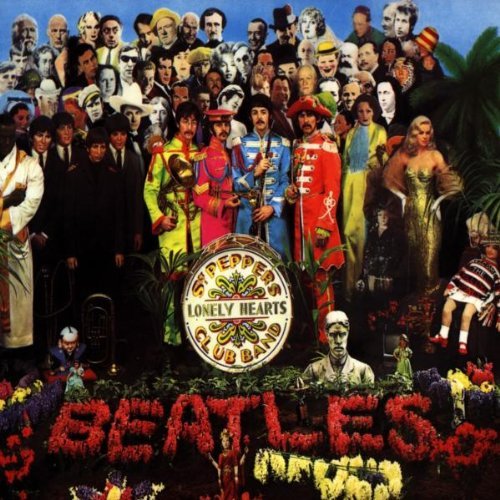
 

Sgt. Pepper’s Lonely Hearts Club Band, by the Beatles (1967), encountered 1967

 Buy it here[1] | Lyrics here | See it here[2] | Sheet music here

             Graduation.  Commencement.  Moving on.  All hopeful, terrifying words.  You hope and expect that wherever you’re headed improves on the world you’re leaving behind, and you’re terrified that you’ll wish later on that you could go back.  You’re being expelled as though from a womb.  The next stage, you know, is likely to put you and your parents in different places, in different households.

            It has to happen.  You and your parents have to disentangle.  They need to have their lives be more about them, just as you need to have your life be more about you.  On both sides, the “us” of your family identity needs dialing back.

            Not All About Me

            Formally, the date of my own graduation/expulsion was Friday, June 9, 1967.  Actually, the process had begun back on Sunday, May 14 when my stepdad had come down with violent abdominal pains.  Over the next couple of weeks, much of them spent in the hospital, he was diagnosed with diverticulitis, a disease of the bowel.  He would have to undergo a major resection of the bowel three days before my graduation.  His life was going to be more about him at this point, however I felt about it.  I might be taking finals, going to honors assemblies and proms and such, experiencing the highs and lows of this inflection in my life; he wasn’t going to be there in my cheering section. 

            And I wasn’t going to be available much to support him, either, I was furiously busy, as absorbed in this final spasm of high school life and my other amusements as he doubtless was with his own uncooperative guts. 

            This proved to be a moment of transition for him as well.  Up till that point, one would have described him as in decent health for someone with his generation’s standard bad habits (born in 1922): smoking, drinking, overeating.  He’d had a health crisis with scarlet fever a couple of decades back; he’d done pretty well since then.  And he would have stretches of reasonable fitness afterwards.  But serious bad stuff kept menacing him from this point onward.  This diverticulitis attack was the moment when the Reaper started sizing him up – and never looked away for long after that.  My stepdad kept saying that he thought he’d live to an old age, but be sick the whole time.  The prediction was based on grim experiences that began here.[3]

            Graduation Day

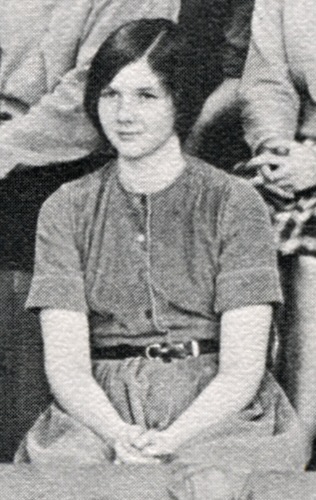
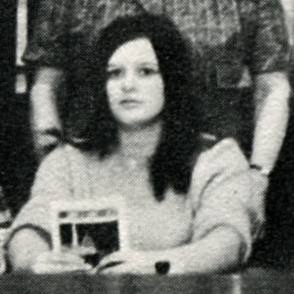
           It’s hard to recall how bad it actually was, having him and by extension my mom subtracted from my affairs at that moment.  The one place I do remember really missing him was at the graduation itself – and having the feeling that my mom was just going through the motions of being there.  Our parish priest had driven her to the graduation direct from the hospital.  There was no one to take pictures (never a skill of my mom’s); I only have this one from the newspaper.  (I’m the figure on the extreme left of the top row.)
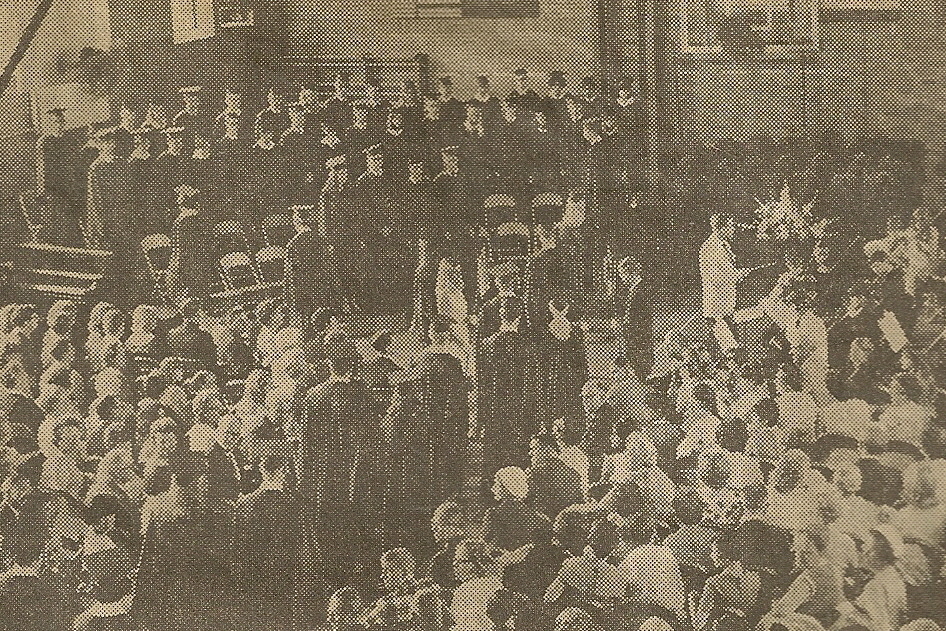
            That was one of the reasons the ceremony itself felt rather empty to me.  Another was knowing that we were leaving almost nothing behind us; it had been announced that there would only be one more graduating class after ours before our school shut down forever.  When you’re leaving a school, you want there to be something to return to from time to time, so as to draw sustenance from and measure yourself against some kind of ongoing tradition.  Even if you can’t return, you want what you had and were still to be going on for someone, in some form, or some way.[4]  At a graduation, you’re supposed to be the one doing the abandoning; it isn’t supposed to be about the school saying with relief: They’re gone!  We can close up shop. 

            The final fly in the ointment for me about that graduation was the awfulness of the music.  Our school had a great choir, but the orchestra was an embarrassment.  That orchestra, which I’d just walked past a few moments before the news photo above was snapped, was playing that familiar march from Die Meistersinger,[5] very badly.  I couldn’t feel full of pomp and circumstance with that cacophony going on.

            So whatever people might like graduations to feel like, mine wasn’t much.

            Vernors With Something Huge On The Side

            The after-party, though, was another matter.

            There had been a series of class parties over the extended goodbye we were all saying to each other.  The very last one was that afternoon, at our classmate Dave’s house.  This was the last time we would all[6] be together before you’d have to call it a reunion.  Dave was not a special friend of mine.  I was one of the smart kids, he was one of the jocks, about the fastest runner I witnessed in my brief stint as manager of the track team.  Dave was not the greatest student, and not very friendly towards those of us who were.  But I was glad to be there, if only because it was a great place to have a party. 

            Dave came from one of the established mercantile families of Ann Arbor.  There was a store on Main Street with the family name, and his home was on a circle that bore the family name too.  There was a large pool in the back yard, and he’d set up (or maybe the family just had) a real live soda fountain to help us beat the June heat.  I still remember that fountain with longing.

            To explain this, I first have to explain Vernors Ginger Ale,[7] to the extent anyone can explain it.  Though I can now buy a product by that name in Baltimore, the true Vernors was a Detroit thing, an intense, pungent ginger-and-vanilla experience, heightened by the deliberate overcarbonation of the beverage.  And if you happened to put that overcarbonated treat in a soda fountain beside a pool on a hot summer afternoon, it made for indescribable wonderfulness.  You more inhaled it than drank it, especially if you knew to spritz in only shallow drafts.  The foam gave you all the flavor and little else.  I believe there were other flavors in the fountain, but I only had eyes for Vernors.

            So there I was, drowning my sorrow in Vernors, and then someone turned on the record player.  That was my first opportunity to hear Sgt. Pepper’s Lonely Hearts Club Band.  The U.S. release of the album had been either June 1 or June 2.[8]  So the album had been out a week.  I might have heard something of it on the radio, but there were no singles from it in release.  The album came out only as an album, the only right way for it to be heard.  So I’m pretty certain that up to this point I’d only heard of it, not heard the thing itself.

            Most critics call this the single greatest album of the rock era.  I agree about that, but sheer abstract greatness was not the quality that made the first hearing unique for those of us sitting around that pool.  What struck me, and don’t think I was alone, was how strange the album sounded.  It starts with an orchestra tuning up in a concert hall against a background of crowd noises, not a very typical way for any production in the world of rock to have started.  As the vinyl rotated, we heard a whole lot of other stuff we’d seldom or never heard before: merry-go-round pipe organ sounds, sitars, an orchestra doing chromatic upwards slides, foxes and hounds, string chamber ensembles.  We heard lyrics about things no one else was lyricizing about: a young woman leaving home, getting old, meter maids, and whatever Lucy in the Sky With Diamonds might be about.  Picking up the album cover (and I remember I did that) was to encounter things we’d never seen before: a group shot that included the Beatles dressed up in Victorian band-leader uniforms and waxworks of the Fab Four, Marlene Dietrich, a bust of Oscar Wilde, Laurel and Hardy, you name it.  The interior opened up to reveal a closeup of our heroes as the band-leaders against a harsh gold-yellow background.  The back had them awash in scarlet with all of their lyrics (not a common thing in those days.)

            Did everyone instantly drop everything and listen?  No, it was a pool party.  Did anyone ignore it entirely?  I can’t speak for everyone there, but I seem to recall a lot of dumbfounded comments.  Those who were paying any kind of attention knew that they’d have to pay a lot more attention, later on, that we’d all have to listen to it several times to get out of it a reasonable helping of what the album had to offer.  But hey, we had the time.

            That was the beauty of the moment for us.  We had the time.  No more teachers, no more books.  No more living at home.  No more anything familiar.  In our first official post-high school moments we were being offered something original, something we had not encountered before.  It was bright and shiny and challenging and exciting. 

            I remember little else about that party.  I do remember hearing that record, though, and feeling great.  We were leaving home, bye-bye.    


[1]   This links you to a CD.  So far as I know, the only downloadable version as of this writing (March 2011) is on iTunes.  But I have no direct link for that.

[2]   This version actually uses the music of the reprise rather than the opening cut of the album.  However the quick montage of Pepper images is remarkable.

[3]  My stepfather died just shy of his 76th birthday in 1998.  Age being such a relative thing, you can make up your own mind whether the first part of his prediction came true or not.

[4]   I’m called to mind of the ending of the second of the Winnie-the-Pooh books, The House at Pooh Corner (1928):  “So they went off together.  But wherever they go, and whatever happens to them on the way, in that enchanted place on the top of the Forest a little boy and his Bear will always be playing.”  In one sense it’s a beautiful lie.  Christopher Robin stops being a child, grows up and dies.  He plays nowhere now.  In another it’s very true; by the magic of his invocation of a lovely moment in a boy’s preadolescence, A.A. Milne has created two books that will enable other children, especially boys, to live for a while in that safe, amusing imaginative realm, probably for as long as there are readers.

[5]   To hear it performed as intended, download here.

[6]   When I say “all,” I’m guessing with a great degree of confidence that a few of us wouldn’t have been there.  Unfortunately, there were one or two kids who had been singled out, by the cruelty of which young people are so capable, for mistreatment by almost everyone to some degree.  It may have been aspects of their bodies or their personalities; whatever it was, our treatment of these kids was inexcusable.  At our 20th reunion in 1987, a classmate of ours reported that over the intervening years he had run into one of these “goats,” who had wanted nothing to do with him.  The classmate commented that we had collectively been cruel, and if he’d been the former “goat,” he wouldn’t have wanted anything to do with him, either.  We saw one of these kids at one of the reunions (our class “reunes” a lot), but basically they have turned their backs, and who can blame them?

And what was my own part in all this?  So far as I can recall, I never participated in anything like persecution, but I didn’t do anything about it either.  I never tried to befriend these kids.  I dealt with them where it was called for, but that was it.  In my defense, the class I joined as a ninth-grader had mostly been together for eight years at that point.  The roles of persecutors and victims had long since been set.  I do not to this day think I could have achieved anything.  Should I still have tried?  Yeah, I think so.

[7]   You can see an apostrophe in the logo.  Somewhere along the line, the apostrophe got dropped from the name.

[8]   My sources differ.  Ian MacDonald’s ferociously knowledgeable book, cited before, says, at Page 232, that the date was June 2.  Allmusic says, on undisclosed authority, that the date was June 1.

Copyright (c) Jack L. B. Gohn, except commercial images
Theme Songs Page | Previous Theme Song | Next Theme Song

A Brief Glimpse

Theme Songs Page | Previous Theme Song | Next Theme Song

A Brief Glimpse

Main Title to Blow-Up by Herbie Hancock (1966), encountered 1967

Buy it here | See Bobby Hutcherson cover of music with stills here

               My mother’s diary reports that I first saw Blow-Up on Saturday, February 25, 1967 with my friend Keith, and again with my best buddies Stefan and Walter the following Saturday.  It was far from unheard-of for me to see a movie more than once, but this one really seized my imagination – and my ear.  I’m betting I dragged Stefan and Walter.

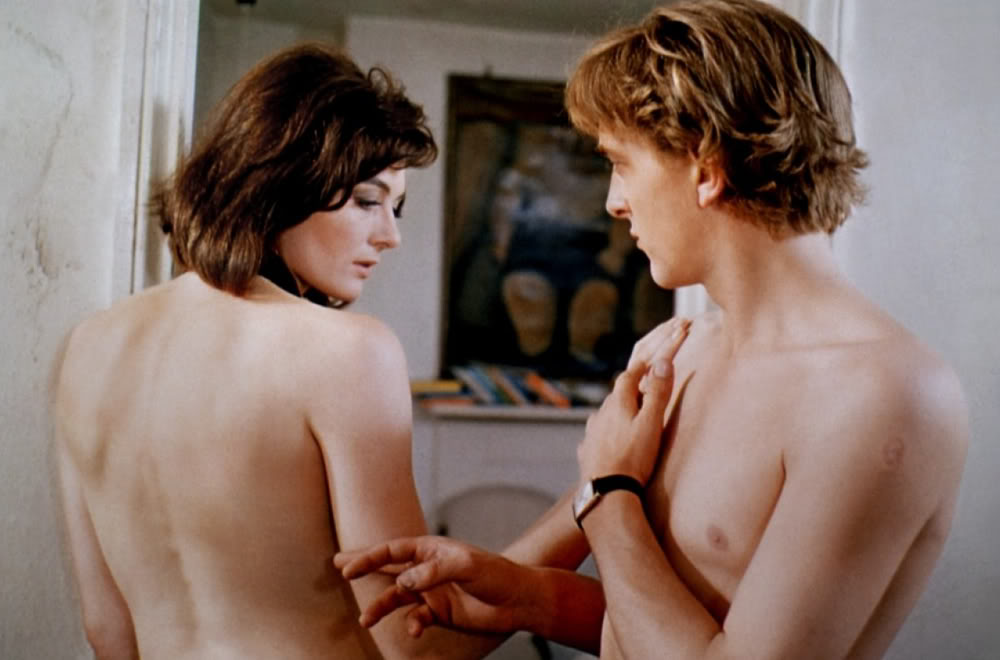
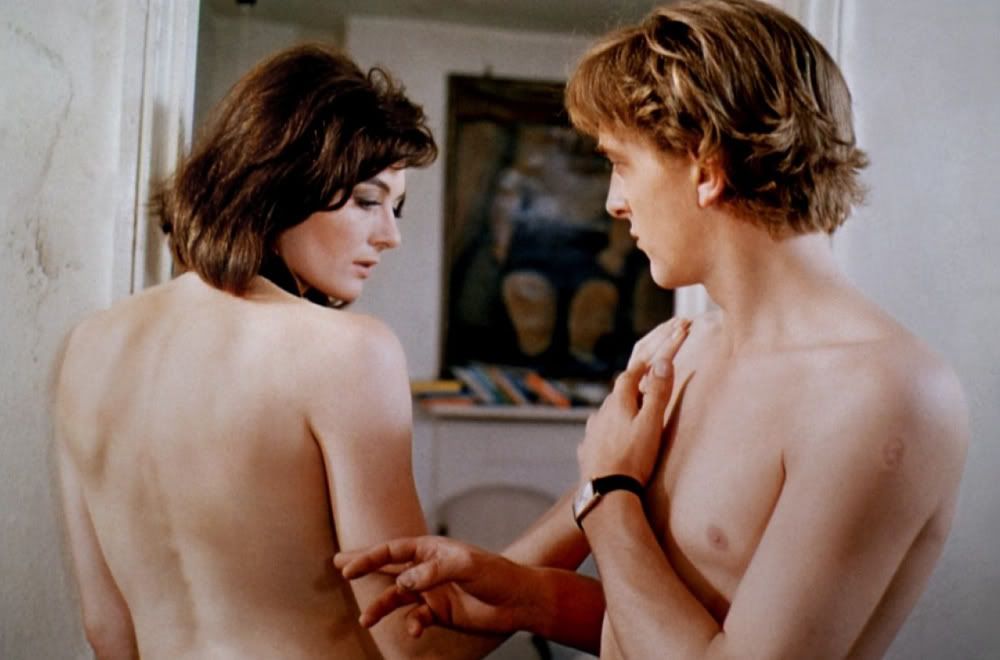
               On the imaginative front, as I recorded in my journal, I responded to Michelangelo Antonioni’s movie because it was Continental in sensibility, there was gorgeous photography, I liked the surrealism, and, oh yes, there was this bit about the “sexual candor,” as I labeled it.  As I’ve already mentioned, I’d seen some on-screen nudity the preceding year with Dear John, and now there was this: Vanessa Redgrave topless, and David Hemmings romping on purple paper with Jane Birkin and Gillian Hills, plus Sarah Miles making love.  But if this movie was largely about sex, it sure wasn’t about intimacy.  Call it the anti-Dear John in that department.

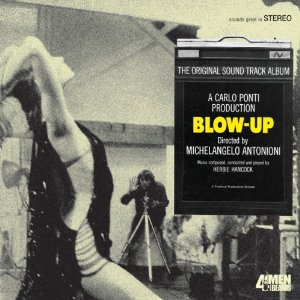
  Source: http://i577.photobucket.com/albums/ss218/Jedimoonshyne9/BlowupLarge2.jpg             In what seemed like a panoramic view of the Swinging London of that era, it seemed that intimacy, accountability, reality itself, had all gone missing.  The conversations were truncated and stripped of context, people only had sex with people they didn’t like, and the meaning of everything seemed to be constantly shifting.  I don’t want to play faux naïf; I’d been seeing other films with that hard, disenchanted European perspective.  But this seemed to nail it down.

               I was personally quite the optimist, and didn’t subscribe to that outlook myself, but I was braced by the exposure to it.

               More important was the music. I walked home whistling the main title theme.  I’d recently become a member of one of the record clubs that were popular then – I think the Columbia Record Club.  This was one of my selections.  I must have listened to that yellow-covered LP dozens of times.  I still have it today.

               The big draw, of course, was the main title and the rest of the source music and score by Herbie Hancock.  Unbeknownst to me, Hancock was providing me a brief (far too brief) glimpse of the main current of jazz at that moment: modal jazz.  If you listen to that main title, at least as rendered on the LP,[1] you’ll hear that about half of that brief minute-and-a-half is taken up with powerful rhythm guitar and then blasting trumpets doing complicated things that resonate with the G-major 7th and G-minor 7th chords Herbie Hancock is laying down on the piano.[2]  This willingness to work away at single chords for extended musical passages, along with not worrying much about orienting entire pieces toward single keys, is the hallmark of modal jazz.  I heartily recommend the discussion of the crystallization of the modal jazz phenomenon in Ashley Kahn’s book, Kind of Blue (2000).[3]

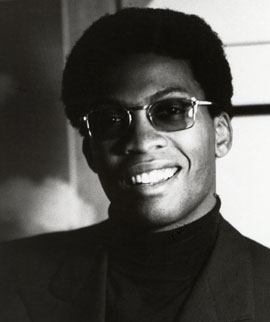
 Source: http://www.herbiehancock.com/#media.php              While Hancock (shown here as he looked in 1967) and his sidemen serve up a wide variety of jazz in a brief compass on the album, including some very accessible sort of lounge-y stuff, the main title and its companion, what’s called the closing title,[4] are harder-edged, and clearly black.  I don’t think a white-led group could have given us that sound in 1966, when the score was recorded.  (Of the seven musicians that I think I can hear on that cut, only one was white.)[5]  Though racial generalizations are always dangerous, I think it’s safe to say that black and white jazz musicians of that era were largely involved with separate projects.  Bop and modal jazz were deliberately off-putting to an ear trained to expect Western melody, and they made great technical demands on the players.  Many of the players and composers were self-consciously pursuing a kind of racial authenticity.[6]  This was, after all, the beginning of the era of Black Power as slogan and ideal.  And a sort of hard, somewhat inaccessible, and technically dazzling musicianship was the stylistic weapon of choice.

               Later on, I could have illustrated that point with examples.  For instance both Freddie Hubbard (whom you hear in that title music) and Maynard Ferguson were great trumpeters, but you’d never mistake the one for the other, and part of what made their sound distinct was that Hubbard was black and Ferguson white.  Ditto pianists Herbie Hancock and Dave Brubeck.  I didn’t know enough then to make such comparisons.

              Later on, I also asked myself why Antonioni put Hancock’s music in Blow-Up.  How is that music properly the theme for this movie?  Reflect, there is no jazz club pictured that I could discern (even though Ronnie Scott’s, for instance, already enjoyed worldwide fame),[7] no jazz musicians (indeed, the only musicians pictured are the proto-punkish rockers, the Yardbirds).  In fact, there are hardly any African or African American faces to be seen (two black nuns in the early going stand out, but nuns don’t bring jazz to mind).  If this was supposed to be the theme music of this story, what was the commonality?  I’ve never come to a convincing answer.  Some of Hancock’s score makes it into the story as source music, which tells us that Thomas, the antihero, is a Hancock fan.  And, as is mentioned in the first endnote, it appears the Hancock score that made it into the movie was actually recorded in New York.

              The best I can come up with is that the world of Blow-Up was hip and modern, and so was the sound of Herbie Hancock, and perhaps Antonioni thought as well he could create the same kind of splash with an African American jazz score as Louis Malle had done in 1958 with Miles Davis’ contribution to Elevator to the Gallows, which snagged a Grammy nomination.

               Whatever prompted Antonioni to invite Hancock into the movie, I was blown away by what Hancock did there.  Because I didn’t know what I was hearing, I didn’t know how to look for more of it then (more about this in later entries).  I had no one to teach me about it, and the rock was blaring so loudly in my ear (it was 1967, after all) that it’s no wonder I laid down that thread and didn’t pick it up properly again for some years.

               Most of my Theme Songs stand out as reminders of something else.  But my moment with the Blow-Up music was important for itself.

               Nothing much came of it right then.  But a marker had been laid down.  Notice had been served that something remarkable was happening in the vast world of jazz, something I would need to get to know, someday.


[1]   Renting the 2004 Turner/MGM DVD to bring myself back up to speed to write this entry, I discovered to my surprise that pretty much all of the music on the LP is either differently mixed from the way it is mixed in the movie, or perhaps comes from alternative takes.   It emerges that the DVD is a butcher job which, among other things, supposedly leaves out the entire first scene (which I barely remember), and a lot of the crucial scene in which the murder is discovered (which I remember better).   I say supposedly as to that first scene, because I recently found my old copy of the published edition of the script (1971), and I have to report that that scene isn’t in the script as published.  Meaning either that it had already been cut by 1971 and not by Turner/MGM, or that memory is playing tricks on me, and on the person who wrote the just-hyperlinked comment.  (And for another thing, I could have sworn I remember seeing Vanessa Redgrave completely topless; funny how such things stick in the mind.)  Meanwhile, there were apparently two competing recording sessions; reportedly, Herbie Hancock did not like the product of a London session, and so redid the score with a group of musicians in New York.  Given both the unreliability of the DVD and the fact that the score was recorded twice, I cannot be certain whether differences between its sound and that of the soundtrack album are owing to the album using material from outside the movie, or Turner/MGM taking liberties with the sound of the movie (perhaps using the London takes instead of the New York ones?).  Neither would surprise me.  I can only discuss the place of the album in my life and the development of my musical ear.

[2]   I oversimplify when characterizing the chords, I’m sure.  Hancock is a master of chords that you can’t quite tell what they are.

[3]   Check out Pages 66-75 especially.

[4]   Not heard on the above-mentioned DVD.

[5]   I think I can hear Ron Carter on bass, Hancock on the piano, Jimmy Smith on organ, Jack De Johnette on drums, Freddie Hubbard and Joe Newman on trumpets, and Jim Hall on guitar.

[6]   It led Hancock himself, for a little while, to an absurd place.  His funk albums of the 70s are, in my opinion (and I know there are those who differ), a big embarrassment.  I’m convinced that part of what motivated him (in addition to the wish to make some money doing what was hot) was a desire to do the black thing.

[7]  The Yardbirds are playing in what apparently was a recreated Ricky-Tick club, where some American jazz was reportedly to be heard.  However Ricky-Tick was devoted to all sorts of music like the rock music on display in the scene, and the Yardbirds were Brits.

Photo Sources: Movie image: http://i577.photobucket.com/albums/ss218/Jedimoonshyne9/BlowupLarge2.jpg .  Hancock image: http://www.herbiehancock.com/#media.php .

Copyright (c) Jack L. B. Gohn, except for commercial images

Theme Songs Page | Previous Theme Song | Next Theme Song

Tiananmen to Tahrir to … Capitol Square?

The Big Picture Home Page | Previous Big Picture Column | Next Big Picture Column

Tiananmen to Tahrir to … Capitol Square?

Published in the Maryland Daily Record March 14, 2011

            However it turns out, the confrontation between numberless hordes of demonstrators and the governor at the Wisconsin State Capitol these last couple of weeks illustrates how thoroughly imitation flatters.  Undoubtedly the non-stop cast-of-thousands demonstration was modeled on the street uprisings that have swept the Arab world in the last couple of months.  But Wisconsin is an adaptation, just as the gatherings at Tahrir Square in Cairo and Pearl Square in Bahrain were adaptations of the unsuccessful Tiananmen Square uprising of 1989.  For the Capitol Square demonstrators, it is more than a case of using what works; their quotation from the Arabs is also a deliberate rhetorical choice.

            The Lessons of Tiananmen and Tahrir

            At Tiananmen, the world learned that in a contest between large masses and a government that is willing to massacre its own citizens and has all social institutions behind it, particularly the military, the government wins.  Tahrir illustrates the opposite point: the military broke in favor of the demonstrators, and the government fell.

            The military was pivotal in each case because in a totalitarian state the laws are always set up so that anyone seeking regime change will have no legitimate means to effect it.  One cannot appeal to any independent social institution or branch of government because there are none.  There nonetheless has to be a real military in most countries, including, if not particularly, totalitarian ones because almost every country has enemies.  So you can dispense with or fake a constitution, a legislature, a supreme court, an electoral commission, but it’s hard to fake an army.

            But real militaries tend to be closed societies; once established, they hew to their own mores and rules.  Even in totalitarian countries, they function independently to some extent.  That’s one reason Stalin put political commissars in each Red Army unit, to try to maintain his control.  If uncontrolled, the military has veto power over every government.  (Just ask Salvador Allende.)

            However, where the military is neutral, then the people can, as we have witnessed, mobilize themselves as their own branch of government, at least for a while.  And I suspect that the visionaries behind the recent Arab uprisings made the bold and correct calculation that the armies in their countries would not act as the Chinese army did at Tiananmen.

            The Dialogue About Legitimacy

            The consistent reaction of the dictators to these uprisings has been furious and dismissive.  And the indignation is not all for show; one senses that the despots have come to believe in their own legitimacy.  They may well agree with pretty much the entire world that the bedrock source of legitimacy is popular will; they simply believe that they have the popular will at their back.  This may seem hard to fathom, since dictators so assiduously cut off all means of bona fide popular political expression.  Having disabled the independence of each organ of government to which citizens desiring regime change might turn, having silenced, murdered, or exiled all potential challengers, the despots have still somehow convinced themselves that they speak for their subjects.

            This leads to a fascinating dialogue in which the critical argument by the people is the sheer number and representativeness of the crowds which appear on the street.  They tell the dictator and his supporters: How can you claim popular support when all of the people are out here?  What segment of society, other than your paid cronies, desires that you continue?  If divisive tactics, ridicule, thugs and weaponry do not dispatch the crowds, if, in other words, the public demonstrates constancy in demanding that the regime go, the regime falls.  Once the illegitimacy of the regime has been so forcibly shown, it must go.  All social institutions that, had they been independent, might have protected the regime are useless to the regime then, as they have no greater power, authority, or legitimacy than that of the regime which had coopted them.

            Thus in the last few weeks we have seen, in a number of countries, the example of extremely large crowds – call them hypercrowds – demonstrating, by their sheer bulk and inclusiveness of all of the society’s constituents, that the existing regime speaks for none of then, and hence lacks all legitimacy.

            The innovation of the Wisconsin demonstrators has been to take this model and apply it in a situation where the illegitimacy of the regime is a harder case to make.  No one can make a serious argument that Gov. Walker or the Republican-led legislature was not duly elected; no one can doubt that if they lost at the next elections, they would step down.  Nonetheless, the rhetoric of the hypercrowds borrows from that of the Arab world: If we’re all out here, you must be illegitimate.  What then is the inchoate theory of illegitimacy?

            Union-Busting As A Human Rights Violation

            I think the theory comes down to this: in attempting to break the public employee unions, the demonstrators are implicitly arguing, Gov. Walker and the legislature exceed some unstated limitation on their powers.  This limitation is not, at least formally speaking, constitutional.  No one has suggested that there is anything in the federal or state constitution which prohibits disabling public employee unions.  Rather, the demonstrators must be relying a notion that worker organizing is a fundamental human right, akin to expression or association.

            This is by no means universally accepted.  True, the right to unionize is explicitly recognized in Article 23 of the Universal Declaration of Human Rights, a compact the United States has entered.  But the Declaration has been deemed precatory only, and beyond the power of any court to enforce.  (We are, all too frequently, delighted to sign on to ideals with the proviso that we don’t actually plan to live by them.)  The Catholic Church also has a century-old tradition of viewing union association as a human right.  It seems the unionists want the right recognized as fundamental.

            If this view prevails, then, whatever is or is not in the constitution, the right to unionize will be recognized as beyond the power of the state to destroy, and not as one of the things Gov. Walker was or could have been elected to obliterate.  Hence, to the extent he tries to do so, he will in fact be seen as illegitimate.  This is the point the Capitol Square crowds are trying to make with their quotation from the Middle East uprisings.

            The opposing viewpoint also supports a fundamental right widely recognized: the right of the populace to control its government.

            It’s a truism most lawyers recognize early on: there’s no such thing as an absolute right, because every right collides with some other right sooner or later.  Wisconsin is one of those sooner or laters.  Another thing lawyers know is that when rights conflict, a solution that annihilates one of the rights is almost certainly wrong.  That is what Gov. Walker is seeking, and why his goal is illegitimate.

            Might union rights need to be exercised more compliantly with the will of the Wisconsin voters?  Most likely.  But is it legitimate to destroy the unions in the process?  Not if unionizing is a human right.

            And that is the point the Capitol Square crowds are making, as they play by Tahrir Square rules.

Copyright (c) Jack L. B. Gohn

The Big Picture Home Page | Previous Big Picture Column | Next Big Picture Column

An Unexpected Open Door

Theme Songs Page | Previous Theme Song | Next Theme Song

An Unexpected Open Door

Essence of Sapphire, by Dorothy Ashby (1965), encountered 1966

Buy it here

               When you’re young, at least if you’re lucky enough to be born and brought up a solid citizen of middle-class America,[1] your life is formally divided into predictable stages, sectioned off by school years.  Since I came up, the invention of middle school has moved the boundaries slightly, but in my youth, you knew that, after six years of grade school, you’d be moving on to junior high, and that after two years of that, you’d be moving on again to high school.  And then came a really big divide, between high school and what lay beyond: college, in the case of pretty much everyone in my school.

               Final Mastery

Now, if you continued to be lucky, and you’d done reasonably well in mastering those stages, you had the leisure to finish up each one and look forward to the next with a sense of satisfaction mingled with only just enough apprehension of uprootedness to come to give the moment some savor.  And that was how I felt about and during my senior year.

Of course there was a geographic component to it too.  I knew I was leaving Ann Arbor.  I knew it was unlikely I would ever live there again after that.  That final year, therefore, was not only consciously devoted to completing the high school life with a bang,[2] but also, only a little less consciously, my mastery of my hometown.

I’ve written elsewhere in this blog about my sense of gratitude at washing ashore in Ann Arbor after a complicated and chaotic, if exciting, first five years.  But that had been almost thirteen years earlier.  Remembering having lived in Vienna, and having the contrast of New York frequently before me, courtesy of my dad and stepmom, I understood that this town of less than 100,000 population was a small corner of the world.  I was determined to go to bigger, more central places.

Yet I sensed strongly that I had not quite exhausted the town yet.  And before I gave up my citizenship papers, I wanted to know it more completely.  So without any formal program, maybe without ever saying to myself that that was what I was doing, I set out to explore harder.  I had a bike I could ride anywhere, and a town in which pretty much nothing was too far away to walk.

I could devote a lot of space here to the wonders of the town when you really looked: the swimming pool nuclear reactor with the glowing blue heart I and friends twice wangled tours of, the other pool in which they tested ship hulls, the pathology museum with the pickled diseased body parts, the fields I walked and cycled out into further than ever before, canoeing under bridges, walking along rail lines.  But you, gentle reader, would lose interest long before I even got going.

This is about one discovery that will have to stand for all.  It happened one day when I was nosing around the Michigan Union.

               The Unmasterable Union

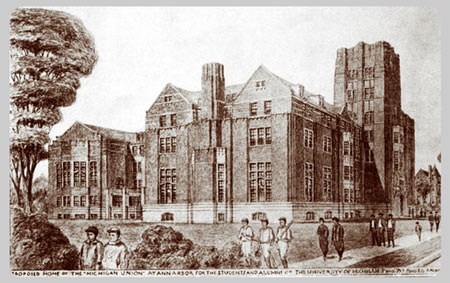
I don’t know if you are the kind of person who loves places, or stories about places that are too large and/or complicated and/or inaccessible to be known completely.  I know I am.  For instance, I thrilled to the parts of C.S. Lewis’ The Magician’s Nephew describing a dark passageway connecting the garrets of a set of rowhouses, that could lead into any house in the row, in which the characters never quite locate themselves with confidence.[3]  The Union was like that in real life.  It had been a constant in my life from the moment I’d set foot in Ann Arbor, but I’d never really mastered its crenellations.  You can get a sense of that from this antique postcard,[4] drawn before the 1954 addition that just complicated the existing architecture.

I started going there with my stepdad to get haircuts in the basement barbershop.  Later, when my father came to town to visit, he’d often stay in the hotel operation run there, and I’d see a completely different set of features: a swimming pool where you wore no swimsuit,[5] a bowling alley (which you could only get to by means of some kind of trick with the stairs that I had never reliably mastered), dining rooms.  In the year I’m speaking of now, I’d begun to frequent the pool hall at the top of the tower, often with my friend Keith, where I learned almost everything I know about the game.  Through all these visits, I came to the understanding that the only the parts of the building I really understood were at the front, near the main entrance where John Kennedy had first announced the idea of the Peace Corps.  This may have been partly owing to the subtraction of various features.  For instance, there’s no bowling alley or swimming pool today; they may have been removed at around this time, maybe just to fake me out.  Or it may just have been my not coming to grips with the layout.

               Dorothy Ashby

One day, however, I was there on my own.  I heard music from a room, one of the public rooms on the main floor with glassed doors and windows.  In the spirit of inviting myself in wherever I felt like, I opened the door and walked in.  There was a three-piece jazz combo playing; I’d heard jazz before, as I’ve recorded, but nothing like this.  The leader was an African-American harpist, with drums and either a bass or piano, I don’t remember which now for sure.  (I think bass.) I had never heard a jazz harp before, and I was entranced.  It was so powerful, so elegant.

The Beatles had recently come out with their second movie, Help!, which I knew had earlier been tentatively titled Eight Arms to Hold You.  That was kind of the impression I got of Dorothy Ashby’s harp – that she had some abnormal number of fingers and strings to syncopate with.  It was a preternatural experience.  Which, come to think of it, is exactly the kind of thing orchestrators rely on harps to convey anyhow.

               I knew immediately I had stumbled into something special.  I can remember nothing about the audience, none of the songs she played.  I just knew that I was hearing something wonderful and unusual.  I was willing to bet that none of my friends, none of my parents, none of my parents’ friends, had ever heard a jazz harp being played.  I remember being struck by the elegant appearance of Ms. Ashby as well, though I cannot picture how she was dressed.  This photo, one of the two that seems to be widely circulated,[6] gives no clue.  I do remember sitting there to the end.  My wanderings around town trying to find something new were over for the day.

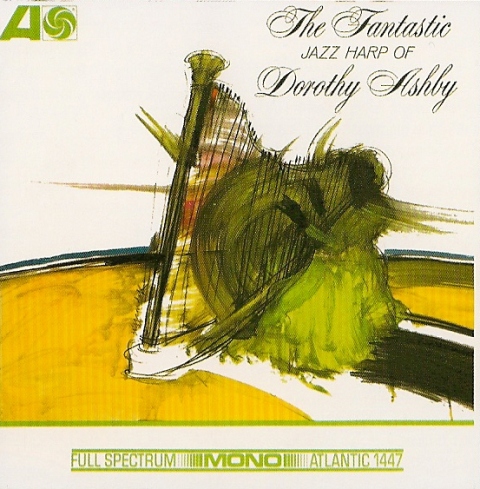
I know as well that I shortly afterwards went and bought her album, the cover of which is pictured above.  It was probably a bit of a rarity even then, but less so in that neck of the woods, because, as I later learned, Ms. Ashby was a Detroit radio personality – and not only a radio personality, but active with a theater troop seeking to bring black theater to that town.  And of course I listened to it over and over.

I tried sharing it with friends, but it wasn’t easy.  None of my contemporaries still living in Ann Arbor were into jazz at all.[7]  My good friend Stefan had a bent toward classical, though with an open mind about jazz (he would in a couple of years introduce me to Pharoah Sanders’ Karma, a transdendently great album) – but he was already gone, away at college in Boston.  It was, so to speak, my little secret, whether I wanted it to be or not.

When I hear it now, after all these years (recently reissued on a CD with a Junior Mance album), two things strike me.  First, it’s as good and as fresh today as it was back in 1966.  Dorothy Ashby herself is gone, but if she had never done anything else in her busy life except cut this LP, she would have had nothing to apologize to her maker for.  Second, The Fantastic Jazz Harp of Dorothy Ashby reminds me of my time for exploring and finding new things, even in a town I knew pretty well.  I wanted to locate things that no one else knew were there, not just my parents but my contemporaries.  There’s a line of Byron’s, “among them, but not of them,”[8] that sums up what I was striving to be (at least that part of the time that I wasn’t trying very hard to be one of “them” – hey, I was a teenager!).  Developing a taste for something obviously objectively very good, not just an affectation, which no one else I knew even knew about, that was one way to do it.

I’ve selected out Essence of Sapphire from among the ten cuts of the album, although really the whole album qualified as a Theme Song in my life.  I chose this track because it is the most stripped-down one in the album in terms of personnel: just Ashby herself, Richard Davis on bass, and Grady Tate on drums, quite possibly the very combo I saw playing that day at the Union.[9]  It conveys the essence of Ashby at that moment.

It conveys something about me at that moment, too.  Ashby was nearly unaccompanied, and so in a sense was I.  You may look at the endnote to this posting below in which I talk about what I was doing during my last year of high school and it may seem as if I was fully involved with my little community.  And it’s true, and yet somehow untrue too.  I was spending a lot of time in my own head then.  I don’t mean that that was a bad thing.  I was getting ready for a divorce from the whole environment that had nurtured me for so long.  That took some mental preparation.

Finding music to nurture me, music that no one around me had had a hand in exposing me to, was a useful way to prove to myself that I was capable of, and ready to, do this.


[1]   Let no one think I’m unaware of how fortunate I and my contemporaries were, growing up in a pocket of prosperity that was unprecedented in world history for its size and security.  What I took for granted as a norm was very rare amidst the times and places of this world.  Even my parents, with their tales of the Depression, were talking about a foreign country I had never seen and never expected to visit.  What I talk about above does not absolutely depend upon one’s growing up in that kind of world, but the further one gets from that kind of prosperity and security, the less likely such simple and mostly pleasant emotions are going to be.

[2]   In my senior year, I appeared in the school play and the Christmas play, took a graduate course in Latin at the University, managered (given that there was a coach and an assistant coach, saying “managed” seems a bit misleading) the conference champion track team, continued to write a column in the Ann Arbor News, and managed (here the verb seems appropriate) the campaign of the winning candidate for the following year’s student council presidency.  I also applied to several exclusive universities and got into one, going through the standardized testing and the interviews one went through and still does in such pursuits.

[3]   That setting is closely akin to the Professor’s home in Lewis’ The Lion, The Witch and the Wardrobe, in which tricks of the layout make it impossible reliably to avoid running into visitors one is fleeing, to Borgesian labyrinths, to the chateau whose layout is unknowable in Last Year at Marienbad, or the strange stairway of flexible length in Arabesque.

[4]  Source: http://umhistory.dc.umich.edu/mort/central/west%20of%20state/Michigan%20Union/index.html .

[5]   This in keeping with the fact that the institution had grown out of an all-male organization.  The women had their own single-sex club and a facility that was almost as impressive, the Michigan League.

[6]   Source: http://www.electrical.com/phpBB3/viewtopic.php?f=4&t=48026&p=1067096 .

[7]   Well, almost none.  My high school colleague Bob Hunsche introduced me to Dave Brubeck, as I shall recite in a later piece.  But we didn’t really talk about jazz together for some reason.

[8]   I knew the line then, though not the poem, because I knew Eugene O’Neill’s  A Touch of the Poet , which meant that I also understood that, in nurturing a vision of himself informed by that line, the central figure, Con Melody, was entertaining a false and unearned sense of specialness.  In other words, I understood that there was a kind of phony grandiosity attached to the phrase, and the lines surrounding it, all of which Melody recites in the play with reference to himself:

   I have not loved the world, nor the world me;
   I have not flattered its rank breath, nor bowed
   To its idolatries a patient knee, –
   Nor coined my cheek to smiles, nor cried aloud
   In worship of an echo; in the crowd
   They could not deem me one of such; I stood
   Among them, but not of them…

Source: http://www.gutenberg.org/dirs/etext04/chpl10h.htm .  So if I applied the line to myself, and let’s face it, I did, I nonetheless did so knowing the spiritual dangers and striving to avoid them.  A good Catholic schoolboy is not going to grow up fancying himself as unfettered the demands of conventionality as did George Gordon, Lord Byron.  Thank goodness!

[9]   Although I understand that her husband John Ashby was frequently her bassist.

Copyright (c) Jack L. B. Gohn, except for commercial images

Theme Songs Page | Previous Theme Song | Next Theme Song

Someone’s Hopeless Romance

Theme Songs Page | Previous Theme Song | Next Theme Song

Someone’s Hopeless Romance

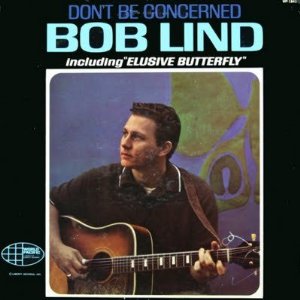
Elusive Butterfly, by Bob Lind (1965), encountered 1966

Buy it here | See it here and here | Lyrics here | Sheet music here

There are going to be a few times in these music memories when I can’t tell the story.  When it comes to this Theme Song, I have hit the first of them.  And fortunately it’s less important an omission than you might think, because the story is really not about me, but rather about some people that I knew and still know to this day.  Because this time it’s their story, and their privacy, and the major way I come into it is as an observer, which is to say it’s only barely my story, I’m not going there.

I will say just this: my elusive butterfly was someone I had feelings for and admired, and I was concerned for her at one point.

The song, by contrast, is not about a person, but rather about the elusiveness of love itself.  It’s kinda folk and kinda country (covered, for instance, by Glen Campbell and Dolly Parton), and as such pretty close to the margins of the kind of music I liked back then.  (I’ve said it before and say it again here: that was one of the glories of the Top 40 format: you could hear almost anything, including things you might not otherwise have been prepared to like.)  That kind of squareness is perfect for this song, however.  It’s about love without earthiness (the Four Tops’ version doesn’t work very well), love without cheekiness (you can’t imagine the Beatles doing it), a yearning for love without enough history of success or failure to have bred any depth or introspection (impossible to imagine a sadder-but-wiser voice like Tina Turner’s, say, singing it).  From the melody and Bob Lind’s presentation, it’s the call of the hopeless romantic.

Even in the fall of 1966, the period I mainly associate it with, Elusive Butterfly would never have spoken to me about myself.  Notwithstanding the ongoing history with Kate, I never thought of myself as a hopeless romantic.  I was a little tougher than that.  As the person with whom I did associate the song also fortunately turned out to be.

Copyright (c) Jack L. B. Gohn, except for commercial images

Theme Songs Page | Previous Theme Song | Next Theme Song

Rounding Second Base

Theme Songs Page | Previous Theme Song | Next Theme Song

Rounding Second Base

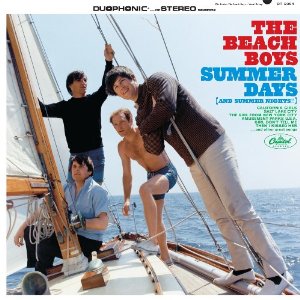
California Girls, by Brian Wilson and Mike Love, sung by the Beach Boys (1965), encountered 1965

Buy it here | See it here | Lyrics here | Buy sheet music here

            The parts of the summer of 1966 when I wasn’t writing loyal canons of contemned love for the absent Kate were largely devoted to my filling in holes in my education and curriculum.  I count the Driver’s Ed I took at Ann Arbor High in June as education, the Golf I took at Eastern Michigan University in July as curriculum.[1]  The proof: I use get behind the wheel almost every day; the last time I picked up a golf club was the last day of the class.

Almost immediately after the class ended, I spent a week visiting my father in New York.  And the day after I got back from that, my mother, my stepdad and I were on the road, out to circumnavigate Lake Michigan.  It stands out in my memory as the only strictly touristic trip the three of us ever took as a family.  Every other voyage with them as a family centered on some kind of family visit and/or meetings of my stepdad’s professional organization, the Modern Language Association; there might well be side trips or treats, but the main object on those occasions had been more utilitarian.  This one time was about seeing interesting places and a few friends along the way.  Period.

            Bearded and Curious

Before I can describe what happened on the trip, though, I need to mention two things.  One, I was sporting my first beard.  I liked the way it made me look older than my 17 years.  And in 1966 a beard was also a political statement.  Plus it made my mom nervous.

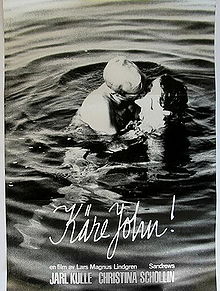
           She’d have been even more nervous if she’d known that my father had taken me to see Dear John up in the mountains, I think at the art movie house in Woodstock.  Now that’s a movie no one has heard of these days.  It was quite a statement in its time, though.  I quote myself in my journal — a nascent film critic:

…a Swedish movie drenched in sex.  In fact it was the most sexually explicit movie I’ve ever seen…. It was the story of two people lonely beyond belief who desperately try to find refuge in making love to each other.  And then they discover that they really made love…. It stirred me deeply.  It was truly a religious experience …

            That last phrase in particular might have alarmed my mom about what was going on in my head.  I was beginning to reevaluate this whole line on sex I’d been fed by my church.  Why couldn’t I come to my own conclusions about what was right and wrong – even if that meant concluding that what had been forbidden was actually sacred?  And I have no doubt that my Quaker (and born Jewish) dad knew exactly what he was doing when he took me.  After all, he read movie reviews in the New York Times.  And I know he had something of a taste for the offerings of the Olympia Press, purveyor of high-class erotica in that era.  There was no mistake there.  I’m sure he wanted to get a few licks for a more bacchanalian point of view than I was being taught courtesy of my ultramontane mom.  My journal also contains some positive comments about Playboy at this point.  So what was going on in my head wasn’t hard to figure out.

So there I am: bearded and curious.  And on the road.

            Sex On The Beach

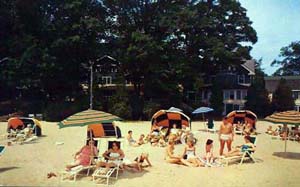
Our second stop was on a Saturday night in Whitehall, north of Muskegon, at a place called Murray’s Inn.[2]  It sat at the end of a peninsula separating a coastal lagoon from Lake Michigan proper.  Here’s a vintage postcard photograph of the place.[3]

To my parents, it was a kind of disappointing evening, I think.  There was no liquor license, and I guess they must have gone to bed early.  At any rate, I wasn’t with them.  I’d been tipped off by a bellboy that the kids, many on staff, all gathered together in the snackbar downstairs at the end of the shift.  And sure enough the party started up.  We played cards, Crazy Eights.

Sitting across from me was a Betsy, my age, blonde, from a Chicago suburb.  “I like Johns,” she said when I introduced myself.[4]  Shortly thereafter she said, “I like your beard.”  Not too long after that, she was suggesting we go for a walk on the beach, which I said I’d love to do.  Even then, I recognized that this was a girl with an agenda, but I was unable to rush into making a first move.  Of course she’d already made the first move, conversationally.  But the ball, I knew, was in my court, and I was not bold about advancing it.

So we just walked and talked, with the light from a lighthouse brushing over us every twenty seconds.  And the conversation was, as I recorded in my journal, “rather dull.”  Meanwhile the wind was blowing colder, and she was wearing shorts.  We decided to go for a longer walk, but she had to check in with her parents (and I’m guessing she wanted to change into something warmer).  We held hands on the way back to the hotel, but that was the end.  The parents were upset that she’d gone out without checking in with them in the first place, and she was grounded for the evening.

We arranged to meet the next day, Sunday, and as I recorded, this was “the most unendurable and long night.”  I knew what was going to happen the next day – and I also knew there was a tight schedule.  Mass was at 10:00, checkout at 2:00.  Not very romantic to be thinking this way, you might comment, and I couldn’t disagree.  Kate was about romance; this was about something else.

Come the morning, my folks and I breakfasted at 8;30, and, leaving the dining room, met Betsy.  (My parents were “not impressed,” per my journal.)  I told her I’d call as soon after 11:00 as possible, and with that, I followed Mother to Church.

The service was at someone’s private estate, high above the Michigan waters.  I can’t bear to quote directly what I was thinking while at Mass; it’s just too jejune.  Let’s just say I was wrestling with the right and wrong of what I was about to do.  I decided, let us further say, that I could go pretty far into the sacred mysteries, if not “all the way.”  My conclusion: “I received Communion with a prayer for guidance.”

Then back to the hotel, where I was told we’d be checking out at 1:45.  I went by Betsy’s room, picked her up, met her dad, who told Betsy I seemed like “a good boy.”  Her dad, she told me, always thought the boys she went out with were good boys.  A remark full of implications.

The sequel was surprisingly long-drawn-out, considering our tight schedule.  We went down to the end of the boardwalk and out onto the beach.  I took a dip in the freezing water.  My parents walked by, and either were or pretended to be oblivious.[4]  We returned to the sand near the boardwalk.  My folks came back, exchanged pleasantries, left.  We were all alone.

And then, finally, we got around to it.  I’m not going into the particulars, though I went into them in lip-smacking clinical detail in my journal.  Call it a solid mutually satisfying second-base experience.  We exchanged a ritual remark about not making out just to make out, that we felt something.  But of course it was not true on either side.

            Even More Sex On The Beach

And two days later, it happened again, with a Kristine, in Traverse City.  This time with the added fillips of being mean to another boy who had a real crush on her, and trying to charm the girl’s father right after having my way with her – or at least as much of a way as either of us was ready for.  Call that one a solid third-base experience.  And of course no sooner had I tagged third than it was time to pile into the car and make another getaway.

So I was getting further around the base-path than ever before.  But, as I confided to the journal, I really wasn’t comfortable.  It didn’t have much to do with the apotheosis of sex, the sex-blending-into-love stuff I’d seen depicted in Dear John and which I’d used at that Mass above the waters to justify what I was about to do.  And I tried to talk myself into feeling good about weaseling Kristine’s old man and humiliating that other boy, but when I got down to it, it humiliated me to behave that way.

This Casanova stuff was terribly exciting, but in the psychotherapeutic language we all use today, I needed to process it.

            Processing

We pulled into Charlevoix on Tuesday, with me sitting in the back seat, processing like mad.  We got out and walked along the waterfront.  I remember looking into a boathouse where three young guys were working on a boat.  And I could plainly hear the LP of Goldfinger playing.  (It had come out the preceding year, and I had that LP myself.  I knew every note, and recognized it instantly.)   James Bond, hero of that movie, was a master of the love-‘em-and-leave-‘em, the very stunt I’d just pulled twice.  If I couldn’t feel a little good about that, what was anything worth?, I asked myself.

We drove on to Petoskey, lunched, and then drove north of the town where the road climbed upward to where we could see far out over Lake Michigan.  We pulled over the car so we could enjoy the scene.

            California Girls Moment

And that’s when I had my California Girls moment.

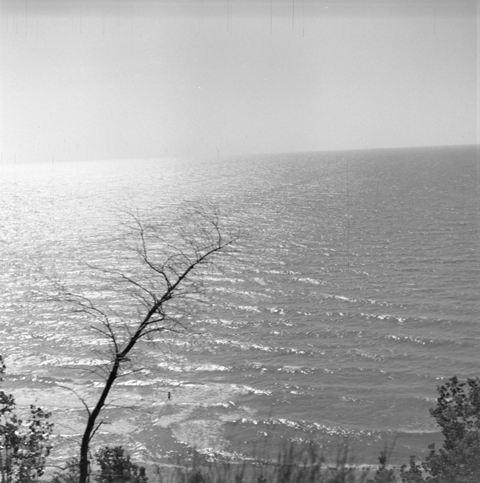
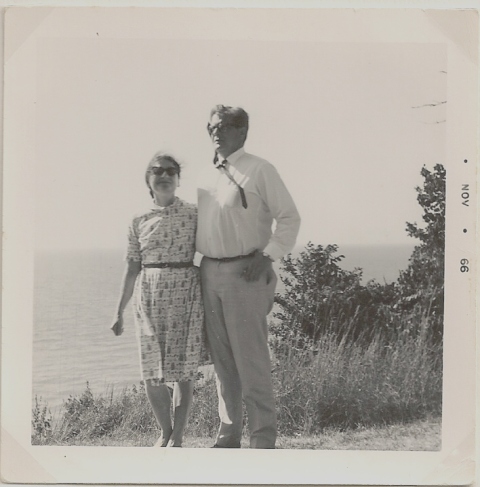
I whipped out my camera, the DeJur reflex my father had given me, with the huge-field 120 film, and just tried to encompass the scene in front of me.  Here’s what I managed to ensnare, with the afternoon sun glinting off ten thousand billows:            And then I turned the camera on my parents, and got them at a happy moment when they were still relatively young and relatively healthy (their decline being only a few years off).
            After that, my parents let me walk down to the beach by myself.  There was some kind of wooden stairway.  And the wind was gently blowing in my face, and for a moment I felt utterly at peace.  And as I did so, California Girls came powerfully into my head.

It didn’t happen because I was asking myself what was the perfect song to come into my head right then; it came unbidden.  But it doesn’t take much reflection to see why that particular song came into my head.  Let me count the ways.

First, there was something evocative of spacious horizons in that music that exactly fitted the scene before me at that moment.

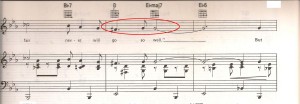
Then too the melodic tension through all the key changes in the “Wish they all could be California,/ Wish they all could be California” is resolved in a way that sounds as if it’s coming down in a strange and beautiful place, in a new key.  (Actually it’s not; it’s the same Bb chord we started with, but Brian Wilson and Mike Love have spun us around so we don’t hear it the same way.)  You feel as if you’ve just arrived somewhere new, musically.  Which I had just done in a different way.

There’s the carnival feel in the organ chords, evocative of a locale devoted to pleasure – a locale on a left coast, looking westward toward sunsets.  Exactly the kind of place I’d been visiting for the last three days.

And then there’s the lyric, limning the charms of the girls of all sorts of places, topped off, however, by a somewhat ambiguous wish that they could be something else.  No question that I had a someone else in mind too.

            Not Very Creepy

I’ve already commented that there’s something slightly creepy in the lyrical trope found here and in the English lyrics to Calcutta and other songs like I’m a Wanderer (Dion, 1961), the notion of a guy wandering around the world sampling everyone’s charms but committing to none.  If you’re going to go down that road, however, the Beach Boys’ approach is the way to go; the singer admires women the world over, but for aught the lyrics disclose, he may never have laid a finger on any of them.  Call him an admirer, a connoisseur, not a promiscuous letch.

As for me at that moment, I didn’t know – and don’t know now – what I was, or what I should have been called.  Partly I was intoxicated by the vistas opening up before me; certainly I was thrilled that if I wanted, I had some of the basic skills and equipment to be a ladies’ man.  But was I really going to wander out into those vistas just yet?  Would I wander into the water, like that swimmer who’s a speck at the bottom of my seascape photo?

Or would I, instead, clamber down to the bottom of those stairs, stand for a moment on the beach, and then clamber back up again, to continue riding around with my parents?  And would I, in less than two weeks, surrender the beard upon demand of the principal and headmaster?  Even before I reached the bottom of those stairs, I knew the answer to those questions.  It wasn’t my time yet.

But it certainly was time for that glorious song.  I’ve indicated before that Walk On By remains my all-time favorite song; this is my all-time runner-up.


[1]   I needed another Phys Ed credit, and there would be no room in my senior year curriculum for three languages if I had to spend part of my school days getting sweaty.  But through my stepfather’s affiliation with Eastern, I wangled the opportunity to audit the college golf course for high school credit.

[2]   I believe it is probably the establishment now known as Hollister’s The Water’s Edge Lodge.

[3]  Source: http://www.waterwinterwonderland.com/beaches.aspx .

[4]   I went by Jon then, rather than Jack, which I switched to the following year.

[5]   My mom’s diary suggests she knew something of my movements – but obliterates Betsy entirely.  That entire passage reads: “It’s rather cold on the beach + no one is in the water.  Jon takes a dip and we just wade.”

Copyright (c) Jack L. B. Gohn except for commercial images

Theme Songs Page | Previous Theme Song | Next Theme Song

Kind of a Drag

Theme Songs Page | Previous Theme Song | Next Theme Song

“Kate,” Part III

Kind Of A Drag, sung by the Buckinghams (1966), encountered 1966

Buy it here | See it here | Lyrics here

            [To paraphrase Huckleberry Finn, you don’t know a thing about this story without you have read the two previous entries.  Read them first, and then come back.]

I learned upon getting back to high school in the fall, and finding Kate in my German class, that she was not tied up with the guy from the party now.  (Maybe all my hallooing had done some good.)  On a Saturday at the beginning of October, Kate let me take her to a University football game.  She let me put my arm around her in the cold, and hold her hand, and she did not demur when I told her she was the only girl in the school worth troubling with.

            No Making Out

But.  But we talked about “making out,” which I commented to my journal had been the real thing I thought had come between us the previous year.  I paraphrased her stance as “She doesn’t like to do it except when the situation calls for it.”  Whatever that meant, it couldn’t be good for anyone hoping to do that with her.  Useful information to me, though.  I could do respectful; I could do it well. And she faulted the late unlamented Jim for spending all his time doing that with her replacement.  She blamed his proclivities that way for her dropping him.  So I thought maybe I could provide some kind of contrast.

I was smitten in a way I had never experienced before.  Too beautiful for words, I called her.  I admired her strength in class.  I admired her vulnerability discussing her parents’ impending divorce, now shared with me.

She certainly kept me off balance.  We went to the theater a couple of times.  But then there were other times when she would not come out with me, and I thought she didn’t really want me.  Then she would tell me, for instance, that she would blow off her Saturday night Quaker group to go out with me, whatever I wanted.

            Swoon

And so we approach the crescendo.  And here my journal fails me.  It was both too confusing and too painful to write down coherently.  But in brief, a competitor appeared at her Quaker teens’ circle, and he played in a brass rock band.  I should have known I held no cards to match those.  But still I kept on, and still she accepted some of my invitations for a while.  So for a time I regarded myself as in a contest I could perhaps win (the Four Seasons’ repeated refrain notwithstanding).

This much the journal confirms: There came a moment when I kissed her and told her I loved her, and that was kind of the end.  I have a picture in my mind – a picture of whose accuracy I am not sure – of the location and some of the circumstances.  I think this happened near my house, when we were walking from there.  I cannot construct a plausible explanation of why it would happen so far from her house or so near to mine.  I seem to picture her face filling with dismay after my kiss and my avowal, and her refusing to let me hold her hand the rest of the way to wherever we were going.

This I did not write down, but am absolutely clear on it: I lost several hours.  This has only happened that one time to me.  After that moment when I had put my heart on the line and knew I had lost, I went back to my room, and lay on the bed for several hours, my mind a complete blank.  I mean I was not even conscious of being unconscious.  The time just passed without my being in any sense aware of anything.  Swoons were very popular in the 19th Century, I read.  I think this may have qualified as a swoon.  I came to with my mother calling me for dinner.  My heart was officially broken.

            A Drag

Yet even this was not the end, exactly.  I drew the conclusion I should have been more bold – not recognizing the insuperable advantage that being in a rock group and part of Kate’s Quaker circle gave Michael.  I got invited by Kate to go to a coffeehouse and see Michael’s group perform – and had to agree I found him likeable myself.  (How much better it would have been if I could have hated him!)  I went around miserable a lot of the time.

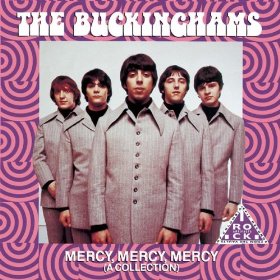
And eventually, sort of – I got over her.  And when, in December 1966, the Buckinghams’ Kind of a Drag started climbing the charts (“Kind of a drag/When your baby don’t love you” – over upward cascading brass choruses – brass, damn it!)[1] – that became my theme music for a while.  Well, until Sgt. Pepper pushed it and everything else into oblivion right around the time of my graduation that June.  (More about that in a later piece.)

Nor, interestingly, was it quite the end of the story with Ella.  Just after graduation, Ella came back into my life for a few dates.  They were fun, if frustrating.  She let me take her canoeing, and allowed me to me nibble on her ear as July 4th fireworks went off, though I saw her holding hands with another boy a couple of days later.

Kate managed not to deal with sex with me, but she had to do it with someone, and in fact it was reportedly Mike from the brass band.  She confided to me worriedly that summer that she was concerned that the liberties she was allowing him might result in her pregnancy.  At my school, that wasn’t a far-fetched fear,[2] but Kate was spared that.

            And Nowadays

You might think that at some point I would finally have washed my hands of the friendship underlying the yearnings.  But that didn’t happen.  We have stayed in touch, off and on, over the years.

The Buckinghams prophesy that “Girl, I still love you,/ I’ll always love you,/ Anyway.”  That’s the way it feels at the time, but of course we all move on, especially from yearnings that afflict us in younger years.

When I see Kate now, I am glad to see her.  It is a very pleasant time, but I do not hope for sparks to fly, and they do not.  Effectively, our relationship now is a descendant of our friendship, not of what I tried to make of it.  My on-again, off-again romancing for a couple of years almost half a century back is not even referred to, and is simply not a factor, not even as a trying experience that somehow bonded us.  This is not uncommon, I have found.  A business associate and friend of mine today is a woman with whom I was, shall we say, close as our respective first marriages were crumbling.  When we socialize now, as a middle-aged Carly Simon ruefully sings: “I don’t try to seduce you/ We don’t even flirt.”[3]  I certainly appreciate her attractiveness, but only the friendship remains.  If you live long enough, you can get over pretty much everything.

Ella never married, I learn from Kate.  She lives happily on the West Coast.  I think what Ella thought she was doing with me was summed up by another female colleague of mine who spoke appreciatively once of all the boys she had kissed.  At first blush I thought she meant all the boys she had had sex with.  But then I reflected that this woman is quite unembarrassed about herself (I learned in more clinical detail than I cared for about a pregnancy of hers), and far freer with the expletives than I have ever been.  If she had meant fucked, she would have said fucked.  No, she meant kissed.  She was telling me that there was a stage in her life when she had luxuriated in flirting with boys and sharing kisses with them.  I believe that this was what I was to Ella: one of the boys she kissed.  Something fun that she correctly surmised would wind up, quickly enough, in her rear-view mirror.  And I now know that there was nothing wrong with that, though it was a little harder to accept at the time.

Zsuska is not even mentioned between Kate and me now.

I do not long for Ella or Kate.  I long for the feelings I had then.  I long for the intensity that a few strains of music could stir up in emotions, when love was as yet unachieved, when sex (a somewhat distinct thing) was terrain I was exploring at my own leisurely pace, when, in one’s expectations (doomed though one might have sensed they would prove to be), embraces and endearments could lead to lifelong magic, magic in whose presence the music in one’s head would never stop.


[1]           I don’t think it’s accurate to speak of the Buckinghams as a rock band with brass the way Blood, Sweat & Tears or Chicago were.  When you look at videos of the Buckinghams from that era, all you see are the core guys, none of whom goes anywhere near a mouthpiece.  The brass players must have been added in production, probably by James William Guercio, who became their producer toward the end of 1966 and who very shortly went on to produce both Blood, Sweat & Tears and Chicago, where the brass were full members of the band.

[2]   Out of the approximately 30 girls in my class we had four unwed mothers.

[3]   From the song Happy Birthday from the album Have You Seen Me Lately (1990).  There seem not to be any videos out there of her singing it.  Buy it here.

Copyright (c) Jack L. B. Gohn, except for commercial images

Theme Songs Page | Previous Theme Song | Next Theme Song

“Kate,” Part II

 Theme Songs Page | Previous Theme Song | Next Theme Song

“Kate,” Part II

 I’ve Got You Under My Skin, by Cole Porter, sung by the Four Seasons (1966), encountered 1966

Buy it here | See it here | Lyrics and Chords here

            [To paraphrase Huckleberry Finn, you don’t know a thing about this story without you have read the previous entry.  Read it first, and then come back.]

Kate did come to my party.  Obviously, my guy friends didn’t get her; they were giving me grief.  They took exception to the girls holding hands with each other while we were all singing to guitars, for instance.  I took exception, too, when it came to Kate, but only because she wasn’t holding hands with me.

            The Power of Positive Thinking

I just thought about Kate all the time – well, all the time that wasn’t devoted to thinking about other girls.  A coed high school, even a small one like the one I attended, is a smorgasbord of sexual and romantic fantasies.  In between pining for Kate, there were some other distractions.[1]  But all this to-do with other girls still left the lioness’ share of my musings for Kate.

And so, as the winter rolled along, I contrived various ways of getting Kate to talk to me.  For one, I signed up (as she had), for the student matinees of a professional theater company resident at the University.  Sitting next to her once a month in the dark!  I would hope that our arms would brush, and frequently I’d sort of convince myself temporarily we were touching when I more or less knew we really weren’t.  And we had some long talks.  Once more, the dynamic of smart kids together made a bond.  Clearly we had been sitting in the dark watching the actors for much the same reasons.

Come February I asked her to the Sophomore Prom.  (Always held in the dead of February, as opposed to the summery feel of the Senior Prom.)  Kate said yes, to my delight.  I gathered that her parents were sick of the guy in the band and very pleased to hear someone else was taking an interest.  That nugget of information should have worried me, but I took it as a good sign.

            Big Date

On the evening of the Prom itself, I was a little ahead of time.  I might have wanted to loiter in the vicinity to contrive a less premature appearance, but Kate’s dog heralded my arrival, and there was Kate at the door, in a turquoise dress, wearing lipstick.  So uncharacteristic, but exciting.  I handed over the requisite white carnations.

I met the parents; Dad, I wrote down in my journal as “a television paterfamilias.”  I believe he had a red cardigan sweater and even a pipe, and seemed to my untutored eye to be radiating calm and maturity.  Mom seemed pleasant, too.  What I wasn’t seeing!  I must have been looking at a household in agony, well down the path to dissolution. Within three years, Dad would be teaching in another state, living with a girlfriend.  You’d think that a child of divorce like me would have picked up on something, but no, not a clue.  And Kate, whatever she might be going through, was giving nothing away.  (Well, she did that fall – but I’m getting ahead of myself.)

I offered to take a cab, but Kate was happy to walk.  Suddenly, we were on the same street as the school – and Ella’s home.  We could hardly not mention Ella.  Kate decried Ella’s choice to live with her half-sister, thought it was very mixed up – why I no longer recall.  What struck me, though, as really mixed up was the brute fact that the path from school to Kate led past Ella.

The dance I treasure in my memory.  Setting: the school library.  The band was, thank heavens, not the same band as had been playing that previous September night.  And shortly we were up and dancing.  Kate’s thick red hair tumbled in front of her face so much, I couldn’t see it clearly.  That just made her prettier to me.  Me ponying and freestyling, Kate doing the jerk.  I’d polished my foxtrot skills for the slow numbers, but Kate only did a two-step.  Not much time for anybody’s style of slow stuff, though, because in came – naturally – Ella and Tim.  Kate dragged me over to talk to them at the refreshment table.  Ella obviously still didn’t want to talk to me, though Tim and I got along fine.  (I later learned that a mutual friend had given Tim a backgrounder on Ella and me, to ease the diplomatic awkwardness.)  They only wanted to dance slow ones – well, join the club.

As it happened, I was friends with the drummer, and told him that in the second set, his band should keep mostly to the slow numbers.  Soon I was thanking goodness for my friends in high places.  When you’re 16 and you dance a number of slow dances with a girl, she does get more comfortable after a while, gets into the little liberties you take.

It is, I believe, a very natural reaction.  Nice boys are – well, were in my era anyhow – taught that girls know what they want, what their limits and desires are, and you can exploit those limits and then you’re done.  In truth, however, I don’t think it is really all that different for girls than it is for us: flirtation lays down a logic all of our bodies have a hard time not following.  And dancing is a license to flirt.  The closer the dancing, the less escapable the logic.

So, no escaping for Kate right then.  My leg was in between hers at times, pressing back that turquoise dress, and my head was resting on the nape of her neck.  (I did have to disengage a couple of times because her hair lacquer stung through my pores, and that lovely red hair would get in my mouth.)  I wasn’t forcing anything; she was as much a part of it as I.  We were both hot and sweaty, and I simply loved it.

After that, we repaired to a place my journal records as the Pizza King, of which I lack all recall.  I see that I had my arm around her waist the whole time, sans objection.  But when we sat down with Cokes, I lacked the words to press my advantage.  I couldn’t say I loved her, couldn’t use endearments, couldn’t ask her to be my girl.  We talked about some pretty racy stuff: topless bathing suits (Rudi Gernreich’s launch of this audacious item having happened little more than a year before).  But I lacked the words, and she the interest.  And so we went home, her arm admittedly around my waist, mine over her shoulders.

And no, no goodnight kiss.  I did get to chat up her parents some more.  Then we were standing at the door, and Kate was holding the cat.  “Say goodnight, Solomon,” she said.  I got to touch Solomon, and Kate’s forearm, by a different and more direct route.

Well, of course I was in a daze, notwithstanding.  My studies took a hit for a while, and as I was very serious about my grades, I eventually had to set diligently about fixing them, un-hitting them, if you will.  Meanwhile, Kate was proactive about seeing me again, inviting me to accompany her to a showing of Olivier’s movie of Othello.

I could tell myself whatever I wanted, for instance that Ella had just been a dress rehearsal, that at last I had arrived where I was heading – but the truth was I wasn’t quite there.  And there was little activity after Othello for a bit.  But I kept my spirits up on the strength of another invitation – this to an April party at Kate’s house. And it was some consolation that my grades had started to recover.

            Party Time

The party itself was the kind of party that artistic intellectual white kids threw in that particular era: music on the hi-fi, arguments about Vietnam, lots of making out, and a lone African American boy, whom we still would have spoken of as a Negro.  (And a little later, with growing self-awareness, would have called him a token Negro.)  I was probably the oldest one there, most of the guests being freshmen.

This was all happening down in Kate’s basement.  As I reached the bottom of the stairs, there stood a short, terribly buxom girl with, as I recall, a black page haircut, wearing white slacks and a green pullover.  I stuck out my hand; she introduced herself as, let us say, Zsuska.  I don’t know where she went to school, but it was neither of the places whose students I knew.

There was a girl there from another high school, tall, made up with a lot of dark eyeshadow, who was the date of the black boy, and she was proposing that we have a seance.  But no one else was interested in that.  Dancing was the big item that evening.

I danced a couple of numbers with a serious-minded girl I’ll call Cilla, had an argument with Cilla about Vietnam (I was still pro, she contra), and then found myself with Zsuska, whose looks did not appeal to me.  Zsuska wanted to dance, however, so we too stood up for a couple of numbers.  I became aware, however, that she seemed to have come with – call him Henry, a diffident young man, and Kate was talking with someone else named Jim.  So I tried to disengage myself.

In hindsight, this was what you call not going with the flow.  Item: Kate was going to spend the entire evening with that other guy, Jim, whatever I said or did.  Item: Henry was and remains to this day gay (regardless of how much vocabulary either of us had for this at the time – in my case very little and in Henry’s case conceivably none either).  Item: Zsuska was not going to let me out of there without me asking her out.  I have a distinct suspicion now that my fate may have been a matter of negotiation between Kate and Zsuska before I even got there.

I wandered around trying to make conversation, and found that this ever-so-slightly-younger generation was much more radical than my ever-so-slightly older one.  Just two years made a difference.  Everyone else thought President Johnson, whom I still idolized, was an evil to be resisted.

So I looked at some records.  Zsuska came over and told me I couldn’t wait around for girls to offer themselves to me, which of course led to my sitting back down with Henry and Zsuska.  Henry seemed oblivious to me, but Zsuska presently said “Henry, don’t you think we should let other people get a chance to dance with us?” – looking straight at me.  Henry had to say yes.

I soon discovered that Zsuska was nothing if not direct.  “I don’t know anything about you,” she told me, though I already knew this wasn’t strictly true, since she’d admitted Kate had told her something about me.  As we slowly danced, I gave her a capsule of my life, and she responded by telling me about her days as a child in other lands.  Then she asked me what I thought of her.  I tried to field this diplomatically, but I said I thought she was rather an aggressive person.  She replied that she had to be, because otherwise nobody asked her to dance, which surprised me.  She claimed no one had asked her out.  I responded with remarks about breaks being bound to come one’s way.  Not surprisingly, she was treating me as the very break I was describing, pressing her bosom hard against my chest.

I said, “Hey you really are being aggressive.”

She pulled back.  “Don’t you want me to?”

“No, I don’t mind at all,” I said, and she happily pressed even harder against me.  You don’t have to ask a 16-year old straight boy if he likes the feel of a girl’s breast against him; all the same I was worried about Henry, and when the lights were turned up to search for another girl’s lost earring, I extricated myself and went back to Cilla.  And yet, and yet I wanted to go back to Zsuska.  Don’t ask me why I was playing Prince Hamlet about all of this.  But Cilla called it a night, to my relief, and I immediately cut in on Henry-the-future-gay and Zsuska.

“How’s it going?” I asked Zsuska.  “Lovely, thanks to you,” she said, and looked into my eyes with a look that even then I called “naked desire” – in quotes.  It was as if she had studied what that was supposed to look like in the mirror, and was trying it on.  I mean, I didn’t mind, but I could not rid myself of the notion that it was a performance.  James Bond might have had that kind of effect on women: in my wildest fantasies, I knew that I surely did not.  My journal does not record what I said in immediate response, but she was telling me around then that I was too old for Kate, and that she (at 16 like me) was too old for Henry, Kate’s classmate.  I did note that when I said something about Henry later, she just “moaned sensually in my ear.”  Out of male trade unionism, though, I did insist that she let Henry cut in at some point, but only for a while.  I cut in myself yet again, and at this point Zsuska was trying to get me to kiss her.

Not there, I told myself, not in front of everyone.  But Kate and fate kept throwing Zsuska and me in each other’s way.  Henry and a boy left together, and it was Zsuska’s mom who gave me a lift home.  Of course there was a date arranged.

            Little Date

I have seldom been so humiliated by myself as that date made me.  We went to the theater to see a war movie, and from the moment I saw Zsuska at the theater, I knew it was all wrong.  She really was not attractive, not to me.  And I had to be polite and flirt, and hold her hand.  And all I wanted to do was get away.  I suppose that by now I was sort of in the position Ella had earlier occupied with me.  I desperately did not want to hurt or humiliate Zsuska, but I also wanted the date to end.  And I recognized that my lack of interest in her was not based on anything profound: I just didn’t care for her looks, especially in daylight.  I must have hurt her; she must have known.

I could be easier on myself, and point to the obviousness of the danger signs when someone comes onto you like that.  But that would be giving my younger self too much credit.  There was only one other thought contributing to my insensitive treatment of Zsuska: she wasn’t Kate.  And that I knew before asking Zsuska out.

            Hallooing To The Reverberate Hills

Kate, I guess, continued to date that other guy, Jim, until the school year ended.  That summer, she was somewhere else.  I knew she was out of town, and yet somehow, I kept finding reasons to visit her home.  Not knocking, not asking if anyone else was there.  Just walking by.

I was a bit like Viola’s notion of herself, were she in love with Olivia:

[I would m]ake me a willow cabin at your gate,
And call upon my soul within the house;
Write loyal cantons of contemned love,
And sing them loud even in the dead of night;
Halloo your name to the reverberate hills,
And make the babbling gossip of the air
Cry out ““Olivia!”” [2]

I wasn’t exactly making cabins at Kate’s gate, and my hallooing was strictly internal.  But the emotion was the same.  And to get to her gate, I usually managed to take the way from the school past Ella’s house down to Kate’s.

Which is not to say that I suddenly stopped looking at others.  I escorted a girl named Jill to the Senior Prom at the end of junior year.  And in a later piece I’ll talk about the girls of Lake Michigan who crossed my path that summer.

I just felt more deeply about her than the others.  But it wasn’t reciprocated, at least not to that point.

            The Perfect Song for the Imperfect Situation

That fall, the fall of 1966, the Four Seasons came out with a song that expressed exactly how I felt, their cover of Cole Porter’s immortal I’ve Got You Under My Skin.

Don’t you know little fool, you never can win
Use your mentality, wake up to reality
But each time I do, just the thought of you
Makes me stop before I begin
‘Cause I’ve got you under my skin.

            Not that I knew anything at that age about the Four Seasons’ version being a cover.  Unbeknownst to me, the song had been recorded hundreds of times, from its premiere in the movie Born To Dance (1936), where it netted a Best Song Academy Award nomination,[3] right up to the 1960s.  Never, so far as I was or am aware, had it been sung or recorded in similar fashion up to that point.

There had previously been two predominant approaches: croony, a la Bing Crosby,[4] and swinging, a la Frank Sinatra.[5]  I would not have been interested in either in those days.  Those approaches each maintained a certain distance from the pain and doubt in the lyric: the croony because crooning is by definition a kind of controlled and hence subversive approach to torchy emotions, and the swinging because the jauntiness in it is not merely subversive: it’s actively antithetical to torchy feelings.  I’m not knocking these approaches, which are perfectly valid – indeed, later in life I came to recognize Sinatra’s recording (arranged by Nelson Riddle) as an exhilarating knockout, a total masterpiece.  But one thing Frankie Valli and the Four Seasons never were was ironic or subversive.  There is a heavy-breathing, laying-it-all-on-the-line quality to this rendition which made it perfect for a likely-to-be-disappointed teenage lover.[6]

And there was something more: the harmonies.  Producer Bob Crewe spotted something in the song that no other version I know of to that date had picked up on: one little musical phrase that he took out of context, changed slightly, and turned into the centerpiece of the production.  This was the phrase sung to the words “go so well,” in the line: “I said to myself this affair never will go so well.”  As written, it’s F, F#, F#. Well, according to my sheet music, actually F#, G, G, since Crewe also moved the song down one key, from Eb to D (one presumes to give Frankie Valli’s falsetto a little more headroom).  Here’s what it looks like in the original (and I apologize for the blurriness):[7]

Crewe took this phrase, and instead of starting with Porter’s sophisticated and bluesy accidental (as the F# pictured above is if you’re in the key of Eb, and the F is if, like Crewe, you’re playing in the key of D), took the launching note for the phrase one half step down, to E, F#, F#.  It sounded squarer, more sincere.  And now Crewe had the essential building block for his recasting of the song.  He paired the revised cadence up with the bells and with the words “never win,” and played it and had the Seasons sing it over and over, at moments of heavy emotion including the false ending, either as E, F#, F#, or, to come close to resolving on the key, D, E, E.  He gets some gorgeous chords that way and manages to make the song less about obsessed hope than obsessed despair.  (“Never win, never win.”)[8]

It might have been better if I’d taken Crewe’s point to heart while I was listening to the song.  But I still thought maybe I had a chance.

[Continued in the next entry.]


[1]   I tried to take some liberties with another freshman, which were, mercifully, lightly rebuffed.  I asked out a future lesbian whose incipient sexual trajectory was quite obvious in retrospect; we were both probably clueless about that at that point, but I certainly never got to take her out.  There was senior too whom I’d taken to the Sophomore Prom the year before.

[2]   Twelfth Night, act 1, sc. 5, l. 268-76.

[3]   The initial singer was Virginia Bruce (1910-1982).  Her version is a straight-up croon.

[4]   I have a 10-inch LP of my mom’s issued in 1950 entitled Bing Crosby Sings Cole Porter with his rendition of the song.  It does not show up on AllMusic or in any of the other online resources.  So I can’t hyperlink to any source for it.  I think it’s fair to call this version a fox-trot, though Porter wrote it as a beguine.

[5]   See it here.  Buy it here.

[6]   If you can recall their hits, think how many of them deal gravely with the divisions (often matters of money or social standing) between lovers: Sherry (1962), Dawn (1964), Big Man in Town (1964), for instance.  I’ve Got You Under My Skin at least doesn’t drag this simplistic kind of explanation into the mix.  Cole Porter understood that love can be stressed or disappointed for all kinds of reasons.

[7]  This will take a moment to download, but is clearer: I’ve Got You Under My Skin Excerpt.

[8]   It’s my hope eventually to write in these pages about a 2009 recasting of the song.  And we’ll pick up on this theme again then.

Copyright (c) Jack L. B. Gohn, except for commercial images

 Theme Songs Page | Previous Theme Song | Next Theme Song

“Kate, Part I”

 Theme Songs Page | Previous Theme Song | Next Theme Song

“Kate,” Part I

I Got You Babe, by Sonny Bono, sung by Sonny & Cher (1965), Encountered 1965

Buy it here | See it here and here | Lyrics here

            There are some stories that sprawl over more than one of my theme songs.  This is one.  It’s a tale about girls I’ll call Ella and Zsuska and especially Kate.  And about how, just as Chris Rock said in the remark I quoted at the beginning of these essays, you are always going to love the music you were listening to when you first got laid – or actually, in this case, kissed.  Same difference, actually.  So this and the next two entries you can call my Kate story.

            The Rhythm Room

It starts in a setting we know from a thousand songs is where romance begins: at a high school dance.  It is a Saturday night in early September 1965. I am just beginning my junior year of high school.  It is my first visit to a mysterious loft-like place called The Rhythm Room atop the attached elementary school.  I am out of my comfort zone – well, is there such a thing as a high school dance that’s in anyone’s comfort zone?  How truly Doc Brown in Back to the Future calls them “rhythmic mating rituals”!  And mating, as we know, however tentative and inconclusive, is a serious, anxiety-filled business.

The most uncomfortable thing you do at a high school dance is stand around.  I did that for an hour and half, while friends who had dates were dancing to the music of the high school’s one rock band (my impression was and is that every school has one rock band, seldom two, and this was our school’s band).  They weren’t very good, and I had to be content to talk with an English teacher.  But eventually the band relented for a while, and someone started playing records.

Cue Sonny and Cher’s I Got You, Babe, with the ostenato double two-note oboe (or is it a clarinet?)[1] figure that positively begs you to dance.  Cue Kate, a tall ninth-grader, darting around the room with a friend.  I had seen her around the last few days, had registered the new arrival in the high school, had been struck by the thick red mane parted in an unusual direction, and by a quality I could not name then but would later recognize as an art student air.  She looked unconventional, different enough so I had to ask myself if she was attractive or not.  Listening to that song, I knew the answer: very, very attractive.   And yet, cursing my ineptitude, I could not get up the courage to put myself next to her and talk, let alone ask her to dance with me.  But oh, I wanted to!  Then the not very good band started to play once more.

           This moved fate into my corner, because the band had left a ukelele on the stage. Picking it up and plucking at it, I found I could more or less fake my way through a melody along with the group.  I worked my way over to the window where Kate and her friend were standing, picking along.  Kate’s friend broke the ice, and asked me if I played.  No, I said, but we started to talk.  I mentioned the band, probably praised them beyond their deserts in order to be saying something, and the friend told me that Kate was stuck on one of the members of the band.  And sure enough, in a moment Kate was consulting the friend about ways to get a chance to talk to the band member.  And in another moment after that, Kate was off to flirt with the guy.

Scrrratch that ambition!  However, the friend wanted to talk, and could do so easily.  I also noted the girl’s odd but attractive combination of finely-chiseled face and big bust.  (Well, give me credit at least for noticing the face!)  Whereupon the chair of the Social Committee, sponsor of the dance, happened past and more or less ordered us to dance.

You can see where this was going.  The girl was comfortable as a talker, stiffer as a dancer.  But I had picked up a certain sophistication about dance steps recently, and I was able to keep us on an even keel.  Ella really wanted to sit.  We ended up in a darker area, and then we danced some more, and then we sat on the stairs, and then we found some of the wooden playground things, a slide I think, and sat down there, and I asked “What do we talk about now?”  It turned out we shared an interest in bowling, and promptly made a date to do that.  Back on the dance floor, we limbered up, and, now that I was safely partnered with Ella, Kate came back and chatted with us.  Another one of their classmates asked me to dance with her, too.  I’d been interested in Kate, but I was suddenly paired up with someone else, which suited everyone’s agenda, including mine for the moment.  At one point, Ella let me hold her hand, and I let Ella order me to accompany her to her locker for her ride home.  So we had definitely reached the point of public flirtation.

            In Due Course

In due course there was a bowling date, and another dance with Ella.  And some other things.  Given the sexual precedents being set by others in my class, it might be surprising how slowly Ella and I were progressing, but in the silent negotiations that determine these things, I think Ella and I were nearly in accord about the pace.  I knew that whatever love was, I wasn’t in it with her, but felt that she was worth keeping with for the moment, to – I hardly want to say to see what I could get.  That makes it seem a lot darker and less respectful than it was.  But I wanted to try out physicality, gently.  And looking back, I think she probably thought it would be fun to go a little farther.

At this point we had been dating for four weeks.  And then we came to a football Saturday night. Football was not the big sport at my school; that was reserved for basketball, where we were really competitive.   As for football, that year’s yearbook writeup of the team began: “Even though this year’s team did not win a large number of games …” To be precise, we won two games that year, one of them on the evening we now turn to.

I wrote in my journal that Ella and I had “prearranged to sit together,” but didn’t.  Throughout the first half of what would be a 25-0 victory for our team, I sat with the junior boys and she with the freshman girls, and she wasn’t looking in my direction.  Actually, to be brutally frank, I wrote “every way but in my direction.”  I have to conclude now that if there had been any better male prospects out there that evening, the night probably would have ended differently.  But apparently there weren’t, and meanwhile I was all determination.  So when the juniors mainly took off for McDonald’s, and Ella was standing alone in the bleachers, I made my move.  I went up, we sat together second half, and then, as it came time to walk away, bliss.

I took her hand, and she pressed the back of mine against her thigh, where I could feel the complicated underwear girls wore then to hold up their stockings.  We went on holding hands while we waited at the gate of the field for the bus that would take us back to the school.  There was a dance then, presumably up in the gym this time, where she pressed her breasts against me, no longer holding back as she had that first night.

            The Big First

As it happened, she lived three blocks from the school.  So I got to walk her home.

Not too long ago, I retraced those steps on a similar night.  I was struck by how dim the street lighting is, and I’m guessing, it probably always was.  Perfect for my purposes.  By now the physical closeness I was asserting and she was acceding to could only lead to one conclusion, even for as inexperienced a boy as I was.  “Baby,” I said – I actually said, “I’m going to put my arm around you, do you mind?”  She simply responded by putting her arm around me.  I could have died and my life would have been complete right then.

Well, actually, what with me being taller and she being shorter, we had to rearrange our arms.  We weren’t talking about much; by then our bodies were doing the important dialogue.  Up the steps to her front door.  I squeezed her as we walked through.  And then we sat for a while in the living room off the front hall with her mom, who had a gentleman caller of her own.  The mom was gracious and seemed to like me.  (I understood that she was divorced and worked for the University administration.  She kept the house as neat as a pin.)  After a while I got up to go, and Ella accompanied me into the hall – and out to the porch.

And we stood in the dark facing each other, and I put my arms around her and started to tell her I was going to kiss her, but got cut off because we were already suiting the word to the deed.  My lips on her neck, hers on my cheek.  And then there was this cat that had followed us home, and was staring at us, and Ella commented about it, which I interrupted by pulling her to me again.  I wrote “I honestly don’t know whether we embraced or whether we kissed again.  But we were still holding hands, and the fingers came apart, one by tantalizing one.”

And there you have the First Kiss.  Looking up at the house today, it looks much the same, if a lot dirtier.  Ella’s neat-as-a-pin mother has left the building.  (Like my own mother, she has left all buildings now, as I later learn.)  It’s just beat-up student housing now.  The tiny porch and the big sitting-room, probably carved from some primeval larger porch, are still there.  It’s sacred ground nonetheless.  The first kiss just matters.

            One Little Problem

There was a fly in the ointment, though, as I confided to my journal a week later.  You could sum it up in two words: What next?  (You can bet I used a lot more than two words in the journal, but that was definitely the gist.)  I didn’t want to go steady with Ella.  Kate was still the one on my mind.  Yet the only one who would kiss me was Ella.  And probably Ella was having the exact same dialogue with her journal – or with Kate.

I’m sure now that something of the sort was in her mind, though, paradoxically, I found her subsequent behavior extremely upsetting.  For two weeks she “sprinted” – my contemporaneous word for it – in the other direction when she saw me coming in the halls.  I did catch up with her the night of the next football game, and asked her to sit with me.  She told me she’d be bringing a friend.  Same deal as the previous time: first half with our respective classes and genders, second half together, but with the friend, a girl from another school.  In the fourth quarter I took Ella’s hand, and, as my journal flatly reports, it was “limp and she seemed to be a little frightened.”  And then she got a tiny bit friendlier.  She let me dance one dance with her back at the school.  Then began a complicated business with the friend, who turned out to be a half-sister, in which, rereading the details, it is painfully, painfully clear they were trying to get rid of me and I couldn’t be gotten rid of.  I followed them home, but, needless to say, received no repeat goodnight kiss on the porch.

No more Ella after that.  By early November I was reassuring my journal that we weren’t going steady.  By December, she had said NO firmly when I invited her to a party I was giving.  (My comment: “I know she never wants us to speak again, and I’m agreeable.”) Not too long after that, she turned up wearing maroon bell-bottoms at a dance with Tim, a guy from my old school, plus the half-sister.

So that was Act One.

            A Kiss Is Still A Kiss

Why on earth do I associate with the episode that song that was playing before it even really started?  Perhaps it’s time I proposed Gohn’s Theorem of which Rock’s Principle is merely a special case: Any music addict will always have to find some music to love whenever anything important happens.  The whole thing really started the moment I realized that Kate was something special, and that was the song that was playing at that moment.  It was handy; it bonded itself to the experience, both the Kate half and the Ella half.  And both halves were important.  A kiss is, after all, still a kiss, even if hedged around with all the qualifications I am forced to acknowledge on this one.

Nor am I knocking Sonny Bono’s composition, which deservedly made it to Number One.  But it is interesting that the lyrics and the performance (see the videos hyperlinked at the top of this post) are all about a kind of assurance between two lovers that is about as far as you can get from what existed between me and either of those girls.

HIM: I got flowers in the spring
I got you to wear my ring
HER: And when I’m sad, you’re a clown
And if I get scared, you’re always around
HER: Don’t let them say your hair’s too long
‘Cause I don’t care, with you I can’t go wrong
HIM: Then put your little hand in mine
There ain’t no hill or mountain we can’t climb
HIM: Babe
BOTH: I got you babe
I got you babe

I may have scored a kiss, but I was a long, long way from finding that kind of love.  And I was still hoping that maybe I could find it with Kate.

[Continued in the next entry.]


[1]   In the second video listed above (the first is a mere lip-synch), the instrument seems to be a clarinet.  But when I hear the sound, I’m thinking oboe.

Copyright (c) Jack L. B. Gohn, except for commercial images

 Theme Songs Page | Previous Theme Song | Next Theme Song

(Saving) Money Is No Object: Tea Party Budget Thinking

The Big Picture Home Page | Previous Big Picture Column | Next Big Picture Column

(Saving) Money Is No Object: Tea Party Budget Thinking

Published in the Maryland Daily Record February 7, 2011

            Arguably the most important law of them all is the federal budget.  Its passage and contents are the precondition of the execution, enforcement and administration of all other federal laws and many state ones.  Its provisions embody some of the most important political choices we as a nation make.  So what politicians want to do with the budget really matters.

            However, it is not always easy to tell what they want.  Shortly after Barack Obama’s State of the Union Address and the Republican response voiced by Congressman Paul Ryan on January 25, presidential advisor David Axelrod acknowledged on television that neither side had yet “turned over their cards” on the specifics of how to address our budget problems, though that was clearly coming soon.

          A formal leadership position communiqué – sort of

            The third voice in our budgetary debates, that of the Tea Party, has, however been heard.  In a major above-the-fold op-ed piece in the Wall Street Journal on January 19, Dick Armey, former House majority leader, and Matt Kibbe, co-authors of Give Us Liberty: A Tea Party Manifesto, provided a very clear picture of how their movement would handle the budget.  This is the closest thing to a formal leadership position communiqué we are apt to receive from a movement that fancies itself as leaderless.

            One logical solution to our budgetary shortfalls, i.e. raising taxes, is not even mentioned.  We seem to have reached a point in our nation’s dialogue where the idea of diminishing private wealth in order to maintain or better public goods does not even rate consideration.  To be sure, the argument exists that increased taxes actually lower Treasury’s bank balance.  Armey and Kibbe cite the godfather of this kind of thinking, Milton Friedman.  But the self-contradictory theory that giving the government less money somehow gives it more remains but feebly supported by experience.  In real life it was called Reaganomics, and the evidence seems to have been that tax revenue increases accompanied the tax cuts during Reagan’s years, but also that directly increasing taxes would have grown revenue far more robustly and not left us with as huge a deficit as Reagan saddled us with.[1]

          Serious dismemberment

            Yet increased taxes are off the table in Tea Party-think.  That leaves only one route to budgetary balance, and that is cutting federal programs.  Well, “programs” is hardly the word for it.  These people are into serious dismemberment.  They would simply eliminate the Departments of Commerce and Housing and Urban Development, and the Small Business Administration, for instance.  They would de-fund NASA by 50%.  They would sell off the government stake in Amtrak.  They would end farm subsidies. 

            Now Commerce of course runs the Census, the Patent and Trademark Office, the National Institute for Standards and Technology, the Oceanographic and Atmospheric Administration, for starters.[2]  And HUD is at the forefront of programs designed to assure housing to those without market power to acquire it on the open market, like Section 8 and block grants to assist moderate income housing.[3]  There’s no suggestion in Armey and Kibbe’s piece that these programs would be relocated.  And obviously if they were, then the promised savings wouldn’t materialize.  So we have to assume they aim at the life of these programs, not only that of the departments that implement them.  (No Census, though?  Uh, doesn’t the Constitution require one?)[4]

            The Republican Study Group, a set of Congressman largely affiliated with the Tea Party, produced a report on January 20 that called for elimination of the Corporation for Public Broadcasting, the National Endowment for the Arts, and the U.S. Agency for International Development (the foreign aid administrators).  And most other discretionary spending would be cut by 15%.  Meaning, Democrats pointed out, that DOJ would have to fire 4,000 FBI agents and the DEA would need to ax 1500 DEA agents, and Agriculture would need to cut 3,000 food safety inspectors.

            And I haven’t even touched on what the Tea Partiers want to do with entitlements.  There isn’t space.  This discussion only covers “discretionary” spending.

          The real dynamic

            Does this seem like governing, in the sense of running the existing government?  Obviously not.  The dynamic here is that the Tea Partiers have seized upon the penury of our government as an excuse to try to change in very fundamental ways what government does.

            One common theme is that the Tea Partiers want the government out of the business of helping economically-disadvantaged citizens.  Hence the end of HUD, SBA and Americorps.  Another is that the Tea Partiers want the government to stop directing the economy.  The anticipated demise of Commerce and of farm subsidies is clear evidence of that, as well as the sought privatization of Fannie Mae and Freddie Mac.  A third theme is the drastic diminution of government spending on infrastructure, like the “privatization” of Amtrak (as if our freight railroads, which necessitated Amtrak’s formation by starving passenger service over two generations, would buy it) or the end of urban mass transit grants, also called for by Armey and Kibbe.  A fourth theme is attacking underwriting of the intellectual stimulation of the elite: CBP and NEA.

            Of this thinking, we cannot exactly ask cui bono in the classic sense,[5] as translated by Sherlock Holmes: “Who is it profits by it?”[6]  The truth is, if all these government services were discontinued, each of the Tea Partiers would be personally hurt in ways they have not stopped to imagine.  Yet, profit or no, their spokespeople claim to desire it and plan to work for it.

            One has to ask what kind of country the Tea Partiers desire, though.  Clearly it is a big step away from a commonwealth.  In Tea Party Utopia, it seems, the Partiers would get maximize their personal wealth, at whatever cost to the well-being of their fellow-citizens, even, or perhaps especially the poorest.  It’s a country where there would be no planning or direction of economic activity from Washington, apparently in the faith that an atomized economy could avoid obliteration by the better-organized economies of other nations.  And a faith as well, in the teeth of historical evidence, that privately-funded economic forces undirected by government, would give us an adequate infrastructure.  And in Tea Party Utopia, cultural elites would be denied the support and recognition that even the tiny sliver of the national budget dedicated to edifying them conveys.

          A more perfect disunion

            This would not be the “more perfect Union” the Framers envisioned in the first phrase of our Constitution.  This would be a more perfect disunion, in which most of us would at the mercy of the mercantile aspirations of those with money, with whatever amelioration might be imparted by Adam Smith’s Invisible Hand.  Somehow that Invisible Hand would magically provide for the environment and for future generations.  And consumers would be safe without safeguards (who needs those 3,000 food safety inspectors anyhow?) and informed without information (free at last, after NOAA’s demise, to make up their own weather reports!).

            You may ask what kind of people would want to remodel our country this way.  I’m not in the business of casting aspersions, so I won’t call anybody any names.  But personally I would be ashamed to attend their Tea Party.


[1]   I do not purport to be an expert in this area.  I am impressed, however, with the Wikipedia article on Reaganomics, last viewed by me February 6, 2011, which includes a large section analyzing in detail the revenue impact of the various tax laws passed during Reagan’s time, and which I think supports my generalizations above.  There is also a counter-argument to be made that at the end of the Reagan era, the tax cuts legislated at the beginning had all been effectively offset by other tax increases.  See this Forbes piece by Bruce Bartlett.  The issues here also get all tangled up with economic growth, which indirectly affects tax revenues.  However, my point here is focused on one pair of variables only: tax cuts and tax revenues.  And on those, I submit, the evidence is clear enough: the Economic Recovery Tax Act of 1981, Reagan’s big tax cut that changed the upper brackets forever, diminished tax revenues, and did not raise them.  And to the extent Milton Friedman or his latter-day apostles say otherwise, they are wrong.

[2]   To start learning about what Commerce does, start with the official website, and drill down.

[3]   Start here.

[4]   “The actual Enumeration shall be made within three Years after the first Meeting of the Congress of the United States, and within every subsequent Term of ten Years, in such Manner as they shall by Law direct.”  Art. I, §2.

[5]   A favorite expression of Cicero’s.

[6]   Found in The Naval Treaty (1893).

Copyright (c) Jack L. B. Gohn

The Big Picture Home Page | Previous Big Picture Column | Next Big Picture Column