Prohibiting Prohibition: It’s High Time

The Big Picture Home Page | Previous Big Picture Column | Next Big Picture Column

Prohibiting Prohibition: It’s High Time

Published in the Maryland Daily Record October 23, 2013

In another era, Uncle Burt would have been more of a paradox. His stock-in-trade was a dangerous and addictive substance sold to the public in full awareness of the danger. Despite this, Burt (a former in-law of mine) was a decent, law-abiding, respectable middle-class man. Both of his children attended fine colleges and became professionals. The apparent contradiction between his solid citizenship and what he peddled is easily resolved: Burt was a sales manager for a liquor distributorship. But it was all a matter of when he did it. Had he entered the workforce forty years earlier, during Prohibition, there would have been more of a disconnect. He would have had to be part of an underworld dominated by criminal gangs where turf disputes were settled with killings, and law enforcement officers existed to be bought. (As journalist Daniel Okrent put it, “Prohibition offered a graduate course for training in the gang industry.”)[1]

Same product, comparable level of consumption by the public, comparable toll in addiction and ruined health.[2] The difference was 40 years. Fortunately for Burt, by the time he came on the scene, commerce in his product was regulated, taxed and legal, and Burt could sell it without killing or buying off anyone. And most of us are happier that way.

Where the Comparison Gets Interesting

This is not at all to say that alcohol takes a negligible toll. Quite the contrary. Alcohol kills about 80,000 people a year. Chalk up another 440,000 to tobacco. And that’s where the comparison gets interesting. Heroin only kills about 2,000. Another 2,000 die from cocaine. We may lose another 1,000 to meth.[3] And absolutely no one dies from marijuana. It is madness that we (quite properly) let the Uncle Burts sit on the Chamber of Commerce while we derive tax money from what they do, but at the same time we spend perhaps $25.7 billion a year on Drug Prohibition, addressing a problem that takes only approximately 6% as many lives as does alcohol, and less than 1% of the death toll of alcohol and tobacco together.[4]

No one says drugs are good for you. But the Prohibitions are worse. They engender the criminal gangs, because only gangs are strong enough to withstand law enforcement. But once the gangs learn that trick, there may be no law enforcement left – witness the Mexican status quo. In any event, law enforcement will always lose in the long run. It was ever thus; Okrent in his book Last Call retells the story of the Prohibition “navy,” the huge new Coast Guard presence created to block rum running. It worked – for a while. Then the rum runners just started buying boats from the same shipyards that made the Coast Guard craft – and equipped them with machine guns.[5] The rum flowed again.

Iron Law

You can create policies that will predictably put violent criminals in charge of the marketing of addictive substances. But you cannot legislate abstinence, and in the face of that reality, Prohibitions will inevitably fail. In fact, they do worse than fail: they magnify the behavior they seek to suppress. That fact was recently borne out for the thousandth time by a new study on potency of cannabis, cocaine and opiates in the wake of our 40-year War on Drugs published in BMJ Open (a peer-reviewed publication of the British Medical Journal). The basic conclusion: everything is much more potent than it used to be – and cheaper. This substantiates yet again a widely-recognized “iron law” of prohibition, observed by many economists, including Milton Friedman: “The more intense the law enforcement, the more potent the prohibited substance becomes.” Likewise, there is little evidence to suggest that there are fewer users after all this.[6]

What prohibitions add to the toll of drugs is a trail of lives ruined by drug enforcement. It starts with the new generation of violent drug gangs, so knowingly chronicled in former reporter David Simon’s television show The Wire, successors to Al Capone and his friends. For statistics, you can read the National Drug Intelligence Center’s most recent National Gang Threat Assessment. Here’s a good one: “There are approximately 1.4 million active street, prison, and [outlaw motorcycle] gang members comprising more than 33,000 gangs in the United States.” They commit 48% of the violent crime in the whole country. And they typically start with drugs and then start moving into other endeavors, criminal and otherwise.

Wouldn’t you really rather have Uncle Burt?

Wasted Lives

Even the violent crime and the corruption, for my money, aren’t the worst. The worst is the over-incarceration. And here we get into statistics which are depressingly familiar. We imprison about 2.4 million of our countrymen, about 1% of our population, making us the undisputed champion jailer among the nations of the world,[7] and fully a quarter of the inmates are there for drug offenses, mostly thanks to mandatory minimum sentences. Beyond statistics, the reports on the quality of life there seem unanimous: they are places where human lives and potential are agonizingly wasted, under the supervision of staff who could not care less. Piper Kerman memorably commented, in the peroration to her prison memoir Orange Is the New Black: “What is the point, what is the reason, to lock people away for years, when it seems to mean so very little, even to the jailers who hold the key? How can a prisoner understand their punishment to have been worthwhile to anyone, when it’s dealt in a way so offhand and indifferent?”

And of course the ruination of drug offenders’ lives is only beginning when they are released. A felony record will make you ineligible for most professional licenses, will render you virtually unemployable, and, if you are an immigrant, will likely ensure your deportation. Almost every sentence thus becomes a life sentence. Even during Prohibition, we generally didn’t send ordinary users to prison, let alone stigmatize them with career-ending sentences.

The War Is Worse

We need to stop this insanity. Drugs are bad, but the War on Drugs is far worse. We should repeal this Prohibition as we did the last one. It really is beyond sane debate. The War has accomplished nothing good, and made many bad things worse.

Of course, however necessary, decriminalization is a scary thing to do. Maybe the Portuguese experience over the twelve years since that nation decriminalized drugs can be encouraging. There was a slight uptick in the use of drugs; HIV infections went down; treatment went up; adolescent use went down, as did the total of “problematic users.” As did the price of drugs. The world absolutely did not come to an end.[8]

Anyway, I’d rather have Uncle Burt managing the sales, as opposed to Al Capone or The Wire’s Stringer Bell, or Breaking Bad’s Walter White. And you would too.


[1]. Last Call: The Rise and Fall of Prohibition, at 272 (2010).

[2]. Having effectively wiped out a huge legal industry and driven alcohol production, distribution, and consumption underground, it is not surprising that Prohibition did, according to some statistics, momentarily depress the amount of drinking that occurred. See James Blocker’s article, which also maintains that, for a decade after repeal, the amount of drinking stayed lower than before Prohibition, and that when the level gradually rose again thereafter, it was far more likely than earlier to occur in the home environment, as opposed to the saloon. However, this may be a revisionist opinion. The more widely received view is that, while the imposition of Prohibition created a downward spike in consumption, drunkenness, disease, age of first use of alcohol, and alcohol-related arrests, the spike had been fully reversed well before Prohibition ended. See http://www.druglibrary.org/prohibitionresults.htm. See also this Cato Institute study, which reaches the same conclusion disparaging the effectiveness of Prohibition, even on its own terms.

[3]. I have been unable to trace this number to its source, however. It is reported here.

[4].

% of alcohol % of tobacco % of total
alcohol 80000
tobacco 440000
total 520000
heroin 2000

2.50%

0.45%

0.38%

cocaine 2000

2.50%

0.45%

0.38%

meth 1000

1.25%

0.23%

0.19%

total 5000

6.25%

1.14%

0.96%


[5]. Okrent, Last Call, at 278-81.

[7]. “The United States has less than 5 percent of the world’s population. But it has almost a quarter of the world’s prisoners.” Thus wrote Adam Liptak in the New York Times in 2008.

A Net in the Night

Theme Songs Page | Previous Theme Song | Next Theme Song

A Net in the Night

Guitars, by Rupert Holmes (1978), “encountered” 1983

Buy it here  |  See it here

Sometimes fate intervenes. In the midst of my unhappy marriage, on an extremely hot July night, at a party in a friend’s backyard, I sat down next to someone. Unlike my studied seductions of the previous two years, this was unsought and unforseen. In fact I was, uncharacteristically, trying to avoid another woman’s attentions,[1] and parking where the seats on either side of me were already taken so that I could not be followed. It was only polite to talk to the woman beside whom I had plunked myself.

Don’t Stop Talking

But we did not stop talking. It seemed we had enormous subjects in common. A friend who saw the two of at it said we seemed “intent.” But there was so much to talk about with her: books and movies and shared friends.

Of course I was honest; there was no studied avoidance of mention of my wife. (I had come alone on account of the anger between us, which had by then escalated, on this occasion, to fury.) But likewise there was no disguising the rapidly growing interest I felt, an interest it seemed clear was returned.

All I knew was, I did not want to stop talking to her. She drew me in with her sparkling eyes. And heaven knows I only had eyes for her.

As the party began to break up, by rights we should have gone our separate ways, if for no other reason than that she had a tennis date early the next day. But I begged her to stay up late and have a drink with me. And my lucky stars were with me, because after a moment’s consideration, she said yes. We would separately drive to a restaurant in an apartment house near the one in which she lived, also not far from where I lived.

As we walked out together, our host, who knew a good deal about the way I was living my life at this point, followed us out, his worry barely disguised. Apparently there was nothing subtle about what was happening: “Who was that woman leaving with Jack?” someone had inquired in our host’s hearing, as he sprang to follow us. He didn’t want her to get hurt.

But he was too late; the magic was already at work.

One Promise Kept

As we sat in the bar at the restaurant, I was speaking of my family, and she interjected: “It sounds as if your marriage needs work.” Demolition work, I thought.

It was late now, and it didn’t feel as if we had begun to scratch the surface. I invited myself back to her apartment, heedless of how late this would make me coming home. All right, she said, but don’t you make a pass at me. I was beginning to want her very badly, but understood that that was the price of admission, and agreed. (And I knew without even having to reflect that if I made myself untrustworthy at this moment, it might ruin everything.)

We went out into the sweltering night, and over to her sweltering apartment. And the conversation continued. At last, even I had to go. At the door I turned around, and we kissed. And, true to my promise, I walked out, down the apartment stairs, and out the front door.

Halfway down the block, I started almost seeing her face in front of me, thinking how beautiful she was, and how much I’d enjoyed being with her. Still, I got in the car, and even drove back to my house. By now I was thinking, lawyer-like, that my promise was discharged already. If I returned …

But more than that, I just wasn’t through being in her company. I wanted to be near her.

Doorbell

It was only a few blocks. I parked my car quietly in front of the house, and walked back to her apartment. My plan was to ring her doorbell and then – I had no plan beyond that. I was focused on that doorbell. I would press the button and see what happened.

When I got to the apartment doorway, though, my determination began to fail. I knew this was crazy. I was afraid. The middle of the night was just the wrong time to call if I wanted to continue the relationship intelligently, but I felt that if I didn’t act now, I might burst.

There was a moment, maybe a whole minute, of indecision. In theory I could call in the morning, or the next day, or the next week. I could do whatever married men do to push ahead decorously with an affair. But I had a strong feeling that it had to be now, that my whole life was passing through this moment, about to be determined.

My heart pounding with apprehension, I pushed the doorbell button. I heard her voice on the intercom, and said I was back, and could I come in? And she said yes.

There was no song I was listening to at that point which brings it back for me now. A mutual friend who was there at the party later said jokingly that strains of Some Enchanted Evening could be heard. Strangers in the Night would work too for that joke. But in later years I came across the song that now infallibly calls that night to mind for me: Guitars, by Rupert Holmes. To understand why, you first have to hear it, and practically no one has, as it comes from an obscure 1978 album that fetches over $100 now. So click on this link and hear it for free.

[I’ll wait.]

I Feel the Pull

If you’ve done that, you can see what I mean. I have to quote the lyrics a little:

 Taut and tight, there’s a net in the night.
The evening is strung with strings.
Power lines intertwine with the vines,
The telephone wire sings.
My pulse is racing.
I need to place you in this web of silver cords.
My heart is pumping in time to the theme that resounds in the stars;
I have to love you tonight while the earth is alive with guitars.
 
Drawn like steel across a drum,
My nerves begin to strum like a storm.
Drawn to you, I feel the pull
Of strings that ring so full and so warm.
 
Highly strung, we’re in love and we’re young;
The evening is laced with light.
Weave our way through the strange interplay
Of bodies that brush the night.
My heart is pumping in time to the theme that resounds in the stars.

 The vines and the telephone wires and the guitar strings are all one in a dazzling poetic metaphor, all ligatures that simultaneously vibrate in a siderial harmony and draw the lovers together. And that was exactly what it felt like: that the two of us were being drawn to each other by invisible and harmonious forces.

The music too conveys the sense of it, moving from the pulse of a single guitar hitting an E note that is gradually picked up by what sounds like a host of guitars,[2] and weaving an intricate web of harmonies, leading up to a flourish by all the guitars that sounds like a pack of cards being shuffled by a magician with perfect hands. And that is what falling in love feels like: a sight, a glimpse, something simple, that effloresces rapidly into something compound and intricate, and dazzling.

Her name was Mary.


[1]. An amusing if irrelevant story: I’d been trying to avoid the other woman in part she was there as another guy’s date. I much later learned that her actual capacity was as a “beard” to the gay politician she was accompanying, so there was nothing actually bad faith about her showing interest in other people.

[2]. I seem to recall a story that Holmes actually invited a group of the best session guitarists he could find to play this song, but I cannot substantiate it now. The liner notes list only two guitarists (Steve Khan and Elliott Randall), but they are credited as playing “lead electric guitar,” and I’d swear the guitars in the song are acoustic. So the story may be true.

Copyright (c) Jack L. B. Gohn

Theme Songs Page | Previous Theme Song | Next Theme Song

Our Metadata, Ourselves

The Big Picture Home Page | Previous Big Picture Column | Next Big Picture Column

Our Metadata, Ourselves

Published in the Maryland Daily Record September 15, 2013

John McCain recently expressed surprise that young people see Edward Snowden as a hero. It’s surprising he’s surprised. When, thanks almost exclusively to Snowden, we have learned of the existence of huge government programs that impinge drastically upon everyone’s privacy (in their internet communications, their telephone calls, their mail, and their own computers),[1] and we see the price Snowden has had to pay, is it any wonder there are people who think of him as a hero?

We Need to Know the Facts

These revelations renewed important questions about government secrecy and personal privacy, questions we urgently needed to have a debate about, and until Snowden’s revelations, we lacked anything close to adequate facts to have that debate intelligently.

When the revelations occurred, the security establishment’s apologists went on the counteroffensive, contending that disclosing the information that would enable the debate would destroy the usefulness of the subject debated. James Clapper, Director of National Intelligence, said as much[2] (after trying to forestall public awareness by lying to Congress).[3] If terrorists or hostile governments know we can listen in, they’ll change their tactics, goes the argument.

Well, up to a point. But if there really is no way to communicate unheard via any medium because the NSA has access to at least some information about every phone call, e-mail and piece of snailmail, isn’t it just as likely the bad guys may just give up communicating in any way except face-to-face? And isn’t chilling their communications also a victory? Be that as it may, the counteroffensive argument assumes what is to be determined: i.e. that listening in on bad guys is so desirable, it justifies listening in on everyone else. Bad as the bad guys are, could it not be rational to decide the cost is still too high? And how could we ever meaningfully decide that point without knowing the facts?

Size Matters

In weighing the cost, the critical fact, I’d submit, is the scale. Think about this gem we got courtesy of Snowden’s leaks: a November 20, 2007 legal memo from Kenneth Wainstein, Assistant Attorney General to Michael Mukasey, then the Attorney General, justifying the NSA “analyzing” the metadata it was sucking up. Dismissed early in the memo as hardly worthy of discussion was the notion that there might be an unconstitutional search and seizure going on. The theory being that we don’t have a “reasonable expectation of privacy”[4] in the metadata: in the fact that calls are made from Point A to Point B, and last certain lengths of time; in the fact that Computer C sent Computer D a message of a given length on a given date; in the information shown on the face of the envelope when a letter is mailed. So it doesn’t rise constitutionally to the level of a search – says the memo.

We can fully acknowledge that there is a lengthy stream of Supreme Court rulings to justify each of these propositions, but this is all case law relating to individuals. And when you change the scale of collection and analysis, you change the meaning of those acts. You flip what’s normal; it now becomes the norm that the government has everything. And in the face of the new norm, it can indeed be said that we lack any reasonable expectation of privacy.

A Bad New Norm

This is new. True, we have always known that the outside of any envelope we place in the mail can be seen. We have always known that the phone company had access to “pen register” information, and that the bits and bytes that make up our e-mails are “known” to the various providers transmitting them. But we also did expect that the keepers of the media would take no interest in our metadata, would in fact be bound by rules of confidentiality, and that they would not only safeguard the contents of the communications, but also, to the extent practical, the fact of the communications too. We certainly didn’t think that the metadata would be analyzed by a government agency.

The metadata is tremendously revealing about our private lives. When you analyze whom we call and when, odds are you know what the call was about. When you know as much as an internet service provider does about what we search for or whom we write to, you can frequently surmise things about us we would not share with our friends or spouses. Know our metadata, or worse, analyze it, and you may well have plumbed the depths of our being. So our expectations regarding metadata were expectations of privacy.

A Reasonable Expectation of Lack of Privacy

For the moment, it appears that the government is largely proceeding via warrants,[5] and warrants, as we know, are sought on the premise that reasonable expectations of privacy are being breached. But warrants for everything about everybody do erode what we can all reasonably expect. Warrants or no warrants, these programs are likely permanent,[6] with permanent effect upon us.

And the effect is this: In order to have a meaningful life, we must communicate, generating metadata available to the keepers of the media. The new expectation, however, will be that the keepers will turn all metadata over to government agencies who will analyze it. Therefore, the price of living a meaningful life will be surrender of any privacy we might think resides in unanalyzed metadata. And since the metadata are pretty much the whole ballgame in terms of secrets we’d like to keep from government, we can henceforth expect to keep no secrets from the government – and the Fourth Amendment will be close to a dead letter. (No reasonable expectation of privacy means no way to violate it and hence nothing for the Fourth Amendment to do.)

No Difference

President Obama’s recent attempt to reassure us that only the metadata was normally being read[7] makes a distinction without much of a difference. The metadata are the whole privacy ballgame. And even if the current administration behaves responsibly with the metadata, it has forged a tool for blackmail and tyranny. Who could expect the data would always be used properly in a country that gave us the Alien and Sedition Acts, the Trail of Tears, the unlawful imprisonment of Confederate sympathizers, the World War I Red Scare, Prohibition, the Japanese internment in World War II, the Cold War Red Scare, the prosecutions of Freedom Riders, Watergate and Guantanamo, to name only a few examples? Not to mention a persistent history of allowing the occasional ascendancy of law enforcement officers with no discernable sense of limits, like J. Edgar Hoover or Sheriff Joe Arpaio?

As Justice Powell aptly observed a generation ago, the exercise of First Amendment rights seems to provoke surveillance that raises Fourth Amendment problems. In United States v. United States District Court (1972), he wrote for the Court: “History abundantly documents the tendency of Government … to view with suspicion those who most fervently dispute its policies. Fourth Amendment protections become the more necessary when the targets of official surveillance may be those suspected of unorthodoxy in their political beliefs.” If the government successfully establishes universal surveillance, this effectively abrogates as to communications the “Fourth Amendment protections” Powell mentioned, and the consequences for dissenters and nonconformists will foreseeably be disastrous.

Pretty Heroic

Maybe, just maybe, Snowden helped head this off. I’d say that was pretty heroic.

The increased surveillance probably does save American lives. But the cost of those saved lives in lost privacy may not be worth it. Our assignment now is to discuss it. And thanks to Snowden, we can have that discussion.


[1] Snowden’s leaks to date include the following: XKeyScore (a program that tracks the use history of any internet user without an individualized warrant); PRISM (the NSA’s database of internet communications); the degradation of protections against abuse on the Stellar Wind telephone surveillance project; and the U.S. “black budget”. In addition, Snowden has leaked about a British program called TEMPORA, which shares international internet and telephone snooping results with the NSA and offensive cyber-operations of the U.S. government against foreign computer users. Snowden was apparently not the source of recent leaks concerning the U.S. Postal Service that surfaced in the New York Times, to the effect that the metadata is collected from every piece of mail that passes through the U.S. Postal Service.

[2] “Discussing programs like this publicly will have an impact on the behavior of our adversaries and make it more difficult for us to understand their intentions.” DNI Statement on Recent Unauthorized Disclosures of Classified Information, Thursday, June 06, 2013.

[3] For a concise analysis of the misleading testimony, see here.

[4] Under Fourth Amendment jurisprudence, in order for a search to require a warrant, it must be in a place where the object of the search enjoys a “reasonable expectation of privacy,” in the phrase of Justice Harlan concurring in Katz v. United States (1967).

[6] After all, they are justified by the attacks on us by Islamic radicals, attacks which will probably be continuing for the foreseeable future. And the drive of the national security state apparatus to hold onto its institutional powers would not be easy to thwart even if the attacks stopped.

[7] “And if you look at the reports — even the disclosures that Mr. Snowden has put forward — all the stories that have been written, what you’re not reading about is the government actually abusing these programs and listening in on people’s phone calls or inappropriately reading people’s emails. What you’re hearing about is the prospect that these could be abused.” News conference, August 9, 2013.

Copyright (c) Jack L. B. Gohn

The Big Picture Home Page | Previous Big Picture Column | Next Big Picture Column

A Break in the Clouds

Theme Songs Page | Previous Theme Song | Next Theme Song

A Break In The Clouds


Caverna Magica (… Under the Tree – In the Cave …), by Andreas Vollenweider (1983), encountered 1983

Buy it here | Watch it here

Like most people, I could never be morose all the time, any more than I could be happy all the time. When you’re young(ish) and you have your health and you have interesting work and there are people out there who like you, you’re not likely to spend all your time moping. There are bound to be things that will light up your eyes and hold your attention, and even make you feel good. And this held true for me even at a point when there was a big problem with my marriage

One of the things that certainly had that benign effect on me was getting my first computer.

Ghosts of Technology Past

Things have moved so quickly in the last thirty years that telling this story forces me to invoke ghosts of technology the reader may not even have heard of. But it can’t be told otherwise.

Back in 1980, computers were owned by companies and governments. Working at a computer meant sitting at a terminal and interacting with a “mainframe,” a very large and very hot machine that typically needed its own air conditioning system. Doing this work required extensive training that only a few people were lucky enough to receive.

For an aspiring lawyer, this meant interacting with the specially-trained women (it was mostly women) called word processors, who would sit in some central room not far from the mainframe, and would take your written or typed draft documents and input them into the computer, so that it would print out your documents as pages, either mechanically typed on glorified typewriters or buzzed onto pages by noisy dot-matrix printers.

Taking a Word Processor to Lunch

In that year, as I’ve written elsewhere, I was clerking at a big firm. In very up-to-date fashion, it had a room full of “word processors,”[1] toiling away at terminals for the firm’s IBM System 6. There were also a few terminals out at the secretarial stations. (Here’s what a terminal looked like.)[2]

I craved the control the word processors and the select secretaries had. All my life, being both an indifferent typist and a persnickety writer, I had found myself dissatisfied again and again with whatever I’d produced sitting over a keyboard and a platen. This led to many, many time- and patience-consuming retypings. Unlike me, these women could simply fix the problem and tell the printer to do the retyping. But of course no one was entrusting law clerks with control of one of these gizmos, let alone the training to operate them. We were simultaneously too high and too low on the totem pole. So I would hang around the word processing room just watching the women at work. I burned to know their secrets.

At last I hit on a plan. I approached one of the women and offered her a deal: I’d take her to lunch if she’d show me how her machine worked. She was agreeable, and allowed me, after the stipulated luncheon, to sit in her chair and touch the magic keys. I was entranced – and attentive. And having learned the rudiments from the lady, I embarked on a campaign of sitting at the secretarial workstations during their proprietors’ lunch breaks, and writing memos, and then longer works.

The System 6 took some learning, and it could be frustrating. I remember, for instance, one delete key it was easy to hit by accident. This would spark a minor disaster, since the key would delete the entire page you were working on in a single gulp. And I don’t think there was any “undo” key that would bring your page back. Still I forged ahead. I wrote an entire independent study project, later published in the Georgetown Law Journal (and republished in this blog) on that System 6.

Everybody Wang VS Tonight

I’ve also already written how after law school I went to work for the judge. If there was a word processor anywhere in that courthouse in 1981-82, I never met her, and I never saw any computer devoted to generating documents. But I made up my mind that I was going to push hard for my very own terminal at whatever firm I joined thereafter.

I’ve also written how I ended up at the firm I call Funhouse, P.A. Part of what drew me there was being told by the partner I’d report to that “we’ll have a lot of fun.” But part of it was being promised by the managing partner, upon my urgent request, that I’d get my own terminal. In fact, I’m sure that promise had clinched it for me.

I was to find out that that partner’s promises were not always to be relied upon. I think I was at Funhouse for three years before I actually received a terminal to their system: the Wang VS. But I would sneak into the word processors’ center after hours to write a novel[3] (and occasionally do billable work) on their system. It would be easy to make fun of the VS now, but that system really was the gold standard for law firms for a while. The terminal looked like this: [4]

This all absolutely whetted my desire to own an actual computer all by myself. And in 1981, it suddenly became theoretically possible, when IBM introduced what many call the first true personal computer, known by the chip that powered it, the Intel 8080. I’ve written in earlier pieces about lusts of the flesh: this was lust of the machine, and it was every bit as powerful – and more reliably satisfied as well.

But not cheaply. The hardware and the software were staggeringly expensive by modern standards. After long and obsessive shopping eventually led me to buy an 8080 (two floppy drives, no hard drive) with a monochrome text-based CRT monitor, a binder containing a floppy disk with an MS-DOS operating system, a binder of WordPerfect software, one Lotus spreadsheet program, and a single frivolity, the proto-computer game called Adventure: all for the price of around $5,000 in 1983 currency. Here’s what the 8080 looked like: [5]

L’Avventura

The computer was installed in the converted attic of our home (we were now living in the very pleasant Oakenshawe neighborhood), and I would hide out there and romance the computer. I would write about my marital woes and hide the disks – and I would play Adventure, also known as The Colossal Cave Adventure.

In the modern era, when computer games mean handling a dedicated controller and walking your avatar down hellish galleries slaying orcs and aliens and bad guys that jump out at you with near photo-realism, it is difficult to convey the feel of Adventure, but there’s a great Wikipedia article that goes a long way toward conveying the experience. Adventure was a text-based game in which, by typing in directions, you found a way underground through a “springhouse” and entered a cave of many galleries, in which you came upon various helpful objects, were assaulted by and killed or were killed by dwarves, and encountered many wonders, as you attempted to assemble a number of hidden treasures.[6] For whatever reason, I never became much of a computer game devotee (solitaire games excepted), but this one did grab me, and I devoted a lot of hours to working on it.

The fun lay, for me, not in the mathematical working through of the puzzle, but in getting to know the imaginary world, as primitively constructed as it was. And while happily embarked on this voyage, I would often listen to a cassette that made the perfect accompaniment: Andreas Vollenweider’s Caverna Magica (… Under the Tree – In the Cave …), also released in 1983. Vollenweider, a Swiss harpist, together with a small collective of collaborators, created a sort of psychedelic acoustic environment that definitely was also a cave filled with adventures. The cassette starts with the scuffling of feet on gravel as a man and a woman are exploring, and then one of them exclaims (in French?): “It’s a cave!” Shortly thereafter you hear water dripping from a stalactite or two, or three. The dripping slowly morphs into a jazzy rhythm, and then a mysterious whistling sound joins it, then the harp joins in, and you’re off on an amazing musical adventure. Each side of the tape is designed to be played straight through, although there are definite movements, with names that may mean something to Vollenweider but don’t tell us much. The movements on Side 1, for instance, are entitled: Caverna Magica, Mandragora, Lunar Pond, Schajah Saretosh, and Sena Stanjena?. It is bright, imaginative, and ever-shifting music.

The Light at the End of the (Cave) Tunnel

The journey Vollenweider and friends charted out felt less sinister and dangerous than the one the programmers responsible for Adventure had contrived, but they each appealed to the same place in my head. Jointly these two creations, the game and the album, served as the perfect expression of the computer journey I embarked on at that point, one which has lasted all my years since then, and, doubtless, the rest of my life. You venture into mysterious places, develop new skills, and bring back all sorts of treasures from those mysterious caves we now call cyberspace.

But at that dark moment, they served a special purpose: reminding me that, outside of my private circle of misery, there was a world full of wondrous things. And if that world existed alongside the miserable one, I ought to be striking out for it, and not giving up to despair.


[1]. Actually, the first time I’d heard the word, two years before that, it had been used in a somewhat more modern sense. Commuting by train to Washington for my two years as a court reporter, I’d made friends with a fellow-commuter who sold “word processors” to the government. When he used the term, he meant computers dedicated to generating documents. But in the Baltimore legal world of the early 1980s, the term meant the people who ran those computers.

[3]. This was the “Conflicts of Interest” book described earlier.

[6]. According to the Wikipedia article: “Microsoft released a version of Adventure in 1981 with its initial version of MS-DOS 1.0 for the IBM PC (on a single sided disk, requiring 32kB of RAM). This was released on a 5¼ inch disk and booted directly from the disk. It could not be opened from DOS. This version contained 130 rooms, 15 treasures, 40 useful objects and 12 problems to be solved.”

Copyright (c) Jack L. B. Gohn, except for graphics

Theme Songs Page | Previous Theme Song | Next Theme Song


Command Influence at the End of a Rope

The Big Picture Home Page | Previous Big Picture Column | Next Big Picture Column

Command Influence at the End of a Rope

Published in the Maryland Daily Record August 21, 2013

On November 22, 1944, the United States Army hanged Privates Arthur Davis and Charles Jordan for the crime of rape. They were likely not guilty. But they were African American. What happened to them happened to many others, their real transgression being soldiering while black, in a racist army, in a racist part of France. Mary Louise Roberts, who teaches history at the University of Wisconsin-Madison, has put before us Davis’ and Jordan’s story and those of many of their compatriots, in her recent book What Soldiers Do.

Statistics

Roberts starts with some amazing statistics: From the Normandy invasion in June 1944 to October 1944, there were 152 U.S. rape trials by court martial in the European Theater of Operations; in 139 of those cases the defendants were “colored.” In the years 1944 and 1945, 29 GIs were hanged for rape; of them 25 were African Americans. And the U.S. invasion force was 90% white. This begs the question what on earth was going on.

It appears, as Roberts carefully parses the available evidence, that a lot of things were going on, some of them of contemporary relevance.

Sexual Myths of Various Sorts

Roberts devotes several expository chapters to the background. American soldiers, black and white, came to France primed for sex. This was no accident; in-house propaganda, for instance in Stars and Stripes, the military daily newspaper, unsubtly conveyed the message that France was full of willing jeunes femmes (e.g. the repetitive shots of liberating GIs being kissed by pretty young women, language lessons for GIs imparting seductive phrases, for instance “Are your parents at home?”). For young men in the prime of life, far from home and exposed daily to the trauma of war in the bocage, this would have been throwing fuel on a fire. Military leaders have always known how soldiers instinctively recoil from Thanatos into Eros; in General Patton’s phrase: “If they don’t fuck, they don’t fight.”

Nothing could have prepared France for this wave of amorous Americans. There was an existing officially-regulated system of French brothels, but it simply fell apart once the Invasion came, as impoverished women freelanced as independent prostitutes, often in exchange for the cigarettes and chocolate in servicemen’s rations. All accounts of the era seem to agree that the wave of prostitution kicked off by the American arrival in France was epic and unprecedented.

And there were also accounts of rape. Roberts notes that there were two waves of rape accusations, in summer 1944 and spring 1945, each coinciding with “breakout” periods of the Allied offensive, and that a great many of those accusations were proven unfounded, 41% in July 1944, for instance. Roberts contends that this wave of often patently false accusations was largely a reaction to the anxiety specifically among the Normans and Bretons at the presence among them of black American soldiers (an anxiety not shared by Germans who by contrast did not blame black GIs disproportionately for rape). It turned out that prejudice against people of color was not simply an American phenomenon. The French came by it independently, based on their own experience as colonizers in Africa, a bit of social history Roberts documents convincingly.

Paris Was Only a Neighborhood

This might not have been what Americans, black or white, had been led to expect. African Americans who had visited Paris during or after World War I might have mistaken what one might call the Josephine Baker neighborhood for all of France. Actually, Paris was the one area in France where color did not matter much. In places like Normandy and Brittany, where the war was fought, the stereotype of dark-skinned people as sex-crazed savages, unfortunately also prevalent among Americans, enjoyed considerable currency. The consequences of this stereotype could be devastating: women, whether prostitutes or girlfriends, found with black servicemen sometimes cried rape to avoid the stigma. And, because of the language barrier, the actions of a black soldier trying to romance a Frenchwoman or negotiate a trick might be misinterpreted, as might the Frenchwoman’s response.

It was also a historical fact that the American soldiers best situated to be making such overtures were behind the front lines, and those were disproportionately black; black soldiers were largely segregated in support specialties and placed in rear areas where interactions between civilians and soldiers were more likely to occur.

But according to Roberts, the doom of soldiers like Davis and Jordan was really sealed by the agendas and outlooks of American commanders. It was no secret among the brass that the aggressive sexuality of the U.S. occupiers had become a significant irritant with increasingly restive French, and that this irritation could trigger a stateside public relations problem. If the French complaints came to the ears of American wives and girlfriends who had lent their men to the war effort, this could have an effect on morale on the home front. Consciously or unconsciously, the decision was to brand the claimed epidemic of rape on black GIs.

Framing a Race

It was shockingly easy to do. Complaining witnesses were pressured to identify black suspects. Credible alibi claims were simply ignored by prosecutors. Defense counsel were not made available. No efforts were made to procure defense witnesses from units that had moved on. Military judges, all white, routinely accepted the word of white witnesses over that of black defendants. There seem not to have been appeals, though there were some instances of clemency. And time was manipulated in ways not remotely consistent with due process; the time from charge to trial could be less than a week, which meant there could seldom be meaningful trial preparation, and there might be a short timetable from sentence to execution.

And so the public relations problem in France was contained. Contained because, as Roberts shows, the French press had recovered only to a rudimentary state, so the real objective was to use word-of-mouth to stimulate a public awareness that something was being done. The local public does become aware when the hangings are public and staged near the site of the alleged crime, which was how the military did it. And the hoped-for public conclusion would be that the bulk of the occupiers, the white ones, were not to be feared. That conclusion, however, would be strictly for the French, and not for stateside Americans, particularly not black ones. There was a conscious and remarkably successful effort to keep the black American press just as ignorant of the prosecutions and hangings of black soldiers as the rural French were aware of them.

Charging with Rape: Either Too Opportune or Too Inconvenient to Leave to Command

This story has some contemporary resonance. These days, the argument over rape courts-martial starts with the complaint that offenders are under-charged and under-punished because of command interference. On its face, this sounds like a contradictory story to the one Roberts tells. And yet command interference seems to be at the root of both problems. Roberts’ book is a powerful argument that we should get commanders out of the process of deciding who gets charged with rape, whether defendants are convicted, and what the sentence should be if they are. History shows that rape charges are too explosive, either too opportune or too inconvenient to the military mission, and too tied up with public opinion, to be fairly determined in any way by those whose focus is the mission.

Copyright (c) Jack L. B. Gohn

The Big Picture Home Page | Previous Big Picture Column | Next Big Picture Column

Nightmare Time

Theme Songs Page | Previous Theme Song | Next Theme Song

Nightmare Time


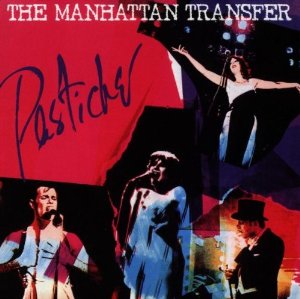
Who, What, When, Where, Why, by Rupert Holmes, performed by the Manhattan Transfer (1978), encountered 1983

Buy it here | See it here | Lyrics here

It’s Not the Spotlight, by Gerry Goffin and Barry Greenberg, performed by the Manhattan Transfer (1978), encountered 1983

Buy it here | See it here | Lyrics here

I wrote last time about the wonderful dream we all have in which we find we can fly. There’s another dream we all have, though, the one where you confidently go somewhere to do something but then realize you haven’t done it and can’t find your way back to where you started. I may have dreamt that first dream, but it never came true for me. The second one did.

Bewilderment

My affairs hadn’t brought nirvana, but they (and other things not to be discussed here) had brought our marriage to a state of mutual anger. I had more than a passing disposition to anger anyway, at that age. But one thing I hadn’t realized, a thing that came as a shock to me, was that you couldn’t take anger off like a suit that you wanted to change. The bargain I’d made with myself at the beginning of all my running around was that anytime I wanted to I could always turn around and rejoin my life’s earlier course. But when I decided I wanted to, I found anger was blocking that path back.

My mind literally could not cope with this. Looking today at notes I’d written to myself at that stage, I see the starkest evidence of disordered thinking, of my thoughts running in endless circles that cannot be stopped, cannot reach resolution.

I was bewildered. I had come to an impasse I was – we were – clueless how to handle.

And while I was stewing, I was listening to the Manhattan Transfer’s album Pastiche (1978). (After the Transfer’s 1979 album Extensions had made such a hit in the household, we gradually acquired the other, earlier albums and about this time were getting to know them.)[1] There were two songs right next to each other that nailed where I was.

Looking for the Roots

One was a cover of Rupert Holmes’ Who, What, When, Where, Why, from his 1976 album Singles.[2] The singer of this song of sexual jealousy looks obsessively for what brought him to this pass, to the roots of the situation.

You won’t be my love
You won’t be my friend
But won’t you at least help me comprehend
What’s happening to me
‘Cause after you go
My one consolation will be to know
The places and names, the reason and rhymes
The facts of the matter and points in time
I tried for your love
But you won’t allow
This guy to do nothin’ but ask you how –
 
And – who (who)
What when where why (why)
Who is the guy
What made you need someone new
Tell me
Who what when where why
When did it die
When’d we go wrong
Don’t you lie, tell me why —

It’s not that this interrogation was precisely applicable to our situation, but it was precisely applicable to my mood. I knew how things were supposed to go, and if they weren’t doing that, there had to be an explanation, and I was going nuts trying to find it.

Reconverge?

The other song, It’s Not the Spotlight (by Gerry Goffin and Barry Greenberg), captured my sense that, while we might be on paths away from each other, something might make it possible for us to reconverge at some point:

If I ever feel the light again shinin’ down on me
I don’t have to tell you how welcome it will be
I felt the light before but I let it slip away
I still keep on believin’ it’ll come back someday
 
It’s not the spotlight, it ain’t the candlelight
And it ain’t the streetlight of some old street of dreams
It ain’t the moonlight or not even the sunlight
But I’ve seen it shinin’ in your eyes and you know what I mean

Of course, this is a breakup song, and all the talk about shining lights is a big metaphor for the possibility of reuniting. But it also suggests that the reunion would be at the cost of subsequent relationships:

If I ever feel the light again, you know things will have to change
Names and faces, homes and places will have to be re-arranged
And you can help me come about, if you’re ever so inclined
Ain’t no rhyme or reason why a woman can’t change her mind.

And we hadn’t broken up, not yet, so what this reminded me of, with awful vividness, was the cost of a breakup. And of course that terrible notion was beginning, just beginning, to insinuate itself into my mind.

It was a nightmare time.


[1]. The record was bought as part of a common enthusiasm. It is entirely typical of this phase in a breakup that we were still pursuing joint tastes, and perhaps clinging to these shared pursuits if for no other purpose than to convince ourselves that we were still functioning as a couple.

[2]. This extremely rare album is out of my price range as I write this in 2013, but I have heard a clip of Holmes’ rendition of this song, and it seems the Transfer have it about right.

Copyright (c) Jack L. B. Gohn, except for album art

Theme Songs Page | Previous Theme Song | Next Theme Song

Superman

Theme Songs Page | Previous Theme Song | Next Theme Song

Superman

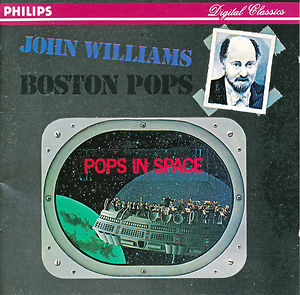
Superman Love Theme, by John Williams, performed by John Williams and the Boston Pops (1980), encountered 1982

Buy it here | See it here[1] | Sheet music here

When my father died, I inherited all of his photographs, and within a few years I started trying to organize them. One summer’s day I sat down with my stepmother to ask her about some “unsubs” in the photos, people I couldn’t identify. There was one black-and-white, obviously taken in the Fifties, of an attractive women in a calf-length summer dress, standing beside what looked like a driveway in the country in the bright sunlight. “Did you know who she was?” I asked. Etta, my wise stepmother, paused for a moment, and then, looking and sounding her most European, she said, “You know, Jack, when a marriage is in trouble, there are always affairs.” She shared only a few more details. The woman in the picture was named Gertrude; she had been my father’s translator as he drove around Austria in 1953, spreading Marshall Plan money.[2] And evidently she had been something more as well.[3] And, in keeping with Etta’s aphorism, my parents did in fact go their separate ways at the end of that year.

Didn’t Know It Yet

My stepmother spoke truly, and the converse of her aphorism is true as well: when there are affairs, the marriage is always in trouble. Sometimes you just don’t know it yet.

In 1982, I didn’t know it yet. As I wrote last time, the judge for whom I clerked until midsummer ran a straitlaced and businesslike chambers, and that kept my extracurricular activities in check. The firm I went to after that was exactly the opposite and would have exactly the opposite effect on me.

Things might have been a little different. Before going to work for the judge, I had been on a path to conventional BigLaw, as it’s called these days; the firm that eventually morphed into DLA Piper had offered me a job, but the offer wasn’t good if I took the clerkship, which I did. And when I came a-calling as the clerkship was coming to a premature end,[4] they had no open slots for starting litigators. Since I really did want to litigate, that was that. Meanwhile this other firm (let’s call it Funhouse, P.A.) was keenly interested in me. I knew it was different; I didn’t realize how different for a while.

Funhouse, P.A.

Many high-class firms have former Assistant U.S. Attorneys fronting their litigation departments, but mostly in those outfits, the former AUSAs have moved from prosecuting bad guys to defending big economic interests that mostly play by the rules. A fair number of the former AUSAs at Funhouse – and the firm were stacked deep with that kind of talent – had gone instead from prosecuting bad guys to defending them. Among more conventional, and conventionally virtuous, clients, the lawyers at Funhouse attended to the legal needs of well-off criminals, politicians with questionable lives, rich people getting divorced, psychopaths who ran businesses in shady ways and had the short temper and sense of entitlement that always went with it, tax dodgers, and people who ran savings-and-loan associations into the ground.[5]

Of course, being comfortable with disreputable clients is no discredit; it’s when their qualities begin to rub off that the problems come. There was some rubbing off at Funhouse, and in one or two instances what rubbed off stuck. But looking back from thirty years later, it’s amazing how many of these lawyers grew more solid and respectable as they went on. But integrity, though it did ultimately arrive, came late to many of them. When I got there, I think it’s fair to say it was the most talented group of litigators ever assembled under one roof in Baltimore, and the largest cast of prima donnas, psychopaths – and horndogs. These distinctions were not unrelated.

For instance, the junior lawyer I had been brought in to replace had apparently been let go because his sexual intrigue with a client had ended up compromising the representation in some way; I never learned the details, even though I took right over with the same client, or, more precisely, group of clients. But it was made plain that it wasn’t the intrigue that caused his departure, but the blowup the intrigue happened to cause.

By contrast, the lawyer I reported directly to for some time was known to be cheating on his wife with many of the attractive young women who were just then finally entering the profession in significant numbers. The partner’s playmates came in contact with Funhouse as associates, adversary counsel, and law clerks, as well as the more traditional quarry for libidinous male lawyers: secretaries, court reporters, and courthouse personnel. He must have treated them pretty well, because I kept track of many of them, and I never heard a single one say an uncomplimentary word about him later.

Not so with another lawyer I spent significant time working for; he was known to the women in the firm as someone to stay away from because the passes he would make at them would be pronounced, odious, and unwelcome.

An associate of mine was an open devotee of the strippers on The Block, Baltimore’s row of nudie bars; a junior partner was a closeted one. Another colleague of mine, a legendary cocksman, wandered into and out of a marriage while we were at Funhouse, never, so far as I could tell, altering his promiscuous ways much.

Monkey See, Monkey Do

I think the sex was not sought so much for itself as for an expression of our sheer importance in the universe. It was an era of Jaguars and trophy offices and getting photographed walking out of the federal courthouse with rich and powerful malefactors. The partner I reported to stated the philosophy very starkly one day when we were getting on a train coming back from a deposition in Newark where I had carried his bags. (We were representing some people who had absent-mindedly sold the same hotel twice, much to the inconvenience and annoyance of both sets of buyers.) We made for the club car where we ordered martinis. I tried to pay for mine and he waved his hand impatiently: “No, Jack, the clients pay for it. They want us drinking on them.” And out came the partner’s credit card (and I have no doubt the charge appeared on the next monthly client bill.)

As for me, then, it was a case of monkey see, monkey do. In fact, I followed in my predecessor’s footsteps and had a relationship with someone from the very same client group in which my predecessor had ill-advisedly met his disastrous inamorata. I still would have said I loved my wife and wanted to protect my children, but I also wanted to walk with the big guys. For the most part, they were superlative lawyers, if not always great successes as human beings. And, smart as I was, I had begun to lose the ability to distinguish between what I should be imitating and what I should not. I couldn’t afford a Jag at that point (a yellow Corolla was more my speed) but I could have little flings, the way the big boys did.

Not Much Fun

Looking back, it seems to me these outings weren’t even that much fun. The women I got involved with all pushed back against the limits I tried to set. One tried to trap me in a blizzard so I would have to be stuck with her for a day or two rather than going home to my family. Another told me pointedly on a getaway weekend that she was tired of having me talk about my home life. Another one willingly accompanied me to a night of dancing while I was away at a seminar in New York City, and then made herself so unpleasant on the train back we didn’t want to see each other again. And I don’t blame a one of them. They were only looking out for their own needs, and I’m sure I was no more fun than they were.

In retrospect, I don’t think I was doing it for how good it actually felt. No, I was looking at a theoretical picture. And in that theoretical picture I was practicing law at a high level, reaping some of the rewards and prestige associated with it, and part of that system of rewards was the occasional bit of fun on the side, the sort of thing a morally sophisticated person condones.

And yes, in retrospect it was fatuous. But while the illusion lasted, it was an ecstatic thing, no matter how miserable the realities.

A Gem of Orchestration

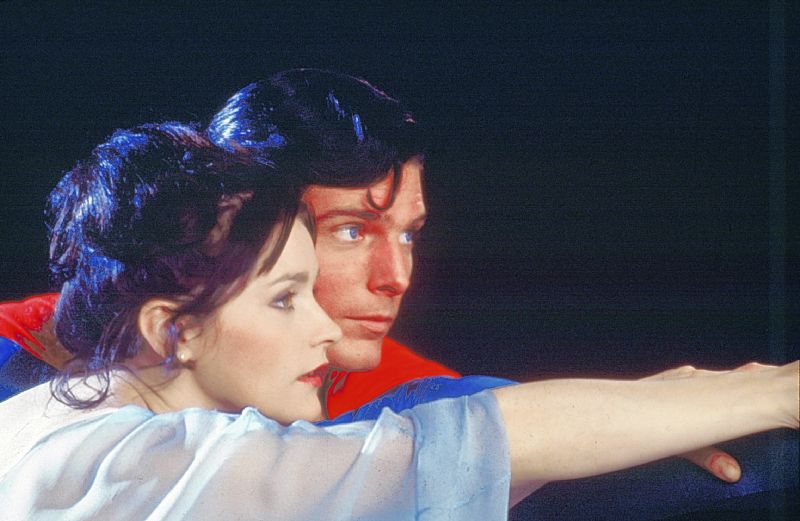
There was a piece of music from that era that expressed it beautifully for me, the Superman Love Theme, from the Christopher Reeve/Margot Kidder epic that hit the screen in 1978. That was one of eight orchestral pieces[6] packaged by the composer, John Williams, in an 1980 release: Pops in Space, featuring Williams at the helm of the Boston Pops, his home base from that year, as he succeeded Arthur Fiedler as its director. I bought the record in 1981 or 1982. I would play that record and feel good about what I was up to.

Williams was really hitting his stride as the ne plus ultra of American film composers at this point. And this piece, an utter gem of orchestration, remains for me the best expression ever of the sheer wonder of love. It runs in the movie as Superman appears on the balcony of Lois Lane’s apartment, dines with her, and then takes her for a flight. At first she is apprehensive, but soon discovers she is safe floating above Metropolis through Superman’s magic. The scene in the movie is scored a little differently, heavier on brasses and strings, and definitely more playful and less langorous than the concert version. I prefer the concert version from my 1980 record; the sweetness of the music is to die for, as the theme is first introduced by the oboe and nurtured by the woodwinds before being released to the whole orchestra. I could talk for a long time about the orchestration, giving a blow-by-blow,[7] but the point is simple: in both versions, but especially in the concert version, Williams provides a musical metaphor for that wonderful dream we’ve all had sometime, in which we learn to fly. And that dream is in turn a serviceable metaphor for the erotic ecstasy of Superman and Lois.

High Above Everything

That was how I wanted to think of myself then: freed from the bonds of conventional morality, accompanying professional success with sexual release, floating high above everything.

Of course, there is no Superman and no Lois. I wasn’t really having such a good time. And what I was helping to do to my family did not bear thinking of.

I was about to wake up on the ground.


[1] There is only one video I’ve found on the web of John Williams conducting the piece, and it is of terrible quality. There’s also a song version, with lyrics: Can You Read My Mind?

[2] By then, the Marshall Plan had technically expired, but the program was the continuation of the Marshall Plan. In 1971, I spent the night at a hotel in Innsbruck he’d put back on its feet.

[3] In 1957, around the time Etta and my dad got married, they went back together to Austria, among other things to meet Etta’s family. But the photo collection also shows a reunion between Gertrude and my dad, which Etta attended, at a rooftop restaurant somewhere near St. Stephen’s Cathedral. It would seem they got along well.

[4] It had been slated to run for two years, but at the end of the first, the judge offered me an out, and I took it, to the relief of both of us.

[5] In the course of my years at Funhouse, I personally would be part of the representation of, among many others, a corporate treasurer who had committed murder to cover up his defalcations, a corrupt union boss, and a bill collector who threatened to break my kneecaps if I didn’t save his professional license. I also got to work around some of the best lawyers I have ever been privilege to encounter.

[6] The others being the Superman March, three pieces from the Empire Strikes Back, two from Star Wars – Or Part IV as the called it later on, and a suite from Close Encounters of the Third Kind.

[7] There is quite an extended orchestral analysis – of the film version – here. Its author, Andrew Drannon, obviously has golden ears.

 Copyright (c) Jack L. B. Gohn, except for artwork

Theme Songs Page | Previous Theme Song | Next Theme Song

AWOL

Theme Songs Page | Previous Theme Song | Next Theme Song

AWOL

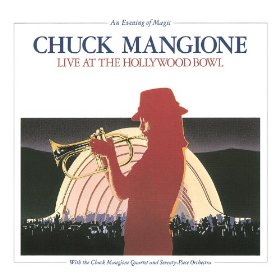
Chase the Clouds Away, by Chuck Mangione (1978, released 1979), encountered 1981-82

Buy it here | Hear it here| Jazz band score here

When I felt that rush of law school success described in the last piece, about the first thing I did with my hubris was have my first extramarital fling.

Wrecking Ball

I tried to start writing about this with a grave acknowledgment of wrongdoing. But then I deleted the mea culpa; it wasn’t true to what I’d felt then or feel now, sorry as I am for the pain it ended up helping cause others. The closest I can truthfully come is to say that I only behaved this way at one discrete point in my life, have not done it since, and would not do it now. And that’s partly because what I did and where it took me and who it made of me taught me unforgettably the destructive power of such behavior. You want to take a wrecking ball to your marriage, screw around.

The thing was, I was then in a marriage that needed demolition.[2] Again, I say this with no disrespect to my ex-wife; if you’ve read these pieces, you understand it was just a fact about us. And I think, though I consciously denied it, I already recognized that fact, deep down, and that’s partly why I did what I did. Of course, simply being horny and in my early thirties played its role as well.

Call it my late-blooming Rumspringa. I’d largely blown my chance at the freedoms of the Sexual Revolution during my college years, and I was coming late to the adultery game too. I knew this from the enormous literature that existed then glorifying infidelity, or at least making it seem not so bad.[3] I’d read or seen it all, with increasing envy. I’d been good for so long.

Too long.

Releasing the Brake

And so, at the end of 1980, I gave myself permission. I didn’t do anything immediately. The car stayed parked, as it were. Just releasing those brakes was enough for a little while.

But come the new year, my freedom stopped being just theoretical, thanks to a married secretary at the big law firm where I was working my last year of law school. She was the aggressor, giving me a copy of The Delta of Venus and telling me her panties got wet looking at me. And even with all that, I was actually kind of slow in the uptake. So we staged quite a courtship of a strange sort, mainly conducted over lunches in fast food restaurants (which is what law students and secretaries can afford), before we actually got down to business. But after one get-together she wanted no more (I believe owing to issues in her marriage, not the bedroom). I was hurt, I was frustrated, but I was not deterred.

I was not deterred because I had already crashed through the guardrail. None of my training could stop me now. I remember that at the very moment of entering the lady, I felt a sense of stepping off a diving board though unable to see any pool, of terrifying transgressiveness. Having gone ahead and stepped off anyway, and not died (for I didn’t die, just got my pride bruised when she turned me away), it was much easier to come back and do it again, even with someone else.

Shortly thereafter I started a short relationship with someone single I’d picked up at a library but I was too married to be interesting to her for long. And then I lost my sense of discretion, and started quite publicly pursuing numerous women in my immediate environment. I became heedless of what people would think and say. I betrayed no judgment as to how my female friends would react to being hit on by me. I forever lost one of my best friends because of my persistence in the face of her gentle rebuffs, a loss I still hate to think about.[4] Word of my indiscretions preceded me; one law school colleague, at a law school graduation party, shamed me by telling me in so many words – before I had done anything yet – that she knew I was working up to propositioning her (she was right about that), and not to bother.

A Last-Minute Offer

In mid-July of 1981, I had a meeting with a federal district judge whose intended law clerk, due to have started the next month, had just unexpectedly reneged on his commitment. The judge, always direct if not necessarily always complimentary, told me that I was the best “blue chipper” he could get at this short notice to take the job, clearly implying that, good as I might be, I had betters who had proved their betterness by having landed offers already. This evident limited regard was to set the tone of our relationship; I still signed on, because he was a federal district judge, and a very well-respected one at that.

Working for the judge slowed down my AWOL campaign. When, in mid-August, I reported for work at the federal courthouse on West Lombard Street, even I had the wit to understand that frank and open licentiousness would be the wrong style. I guess I was worried that the notoriously upright judge would find his initial assessment of me confirmed if he learned of my loose ways.

So I think there was only one woman, a fellow-clerk, with whom I allowed myself to be at all indiscreet, and she would have none of me. (I’m old enough now so most of my colleagues only know me from the conventionally virtuous years that followed; she can still remember, and I’m sure it comes to her mind when we meet professionally, my unrequited lurch in the direction of misbehavior in the back halls of the courthouse.) There was also an assistant public defender we’ll call Antonia with whom I had a friendship, but I never tried to make anything more of it.

Conflicts of Interest

Instead, I tried to become a philosopher and theorist of infidelity. I was still at a point where I had a notion I could affirm both a marriage and departures from it, though there was absolutely no denying the tension between these apparently antithetical things. With the benefit of legal and literary sophistication, I could liken that tension to the conflicts of interest built into most legal undertakings, including the fundamental one between the lawyer’s desire to serve his own interests, for instance in maximizing fees, and his commitment to serve the client, or between the lawyer’s commitment to humanitarian goals and the lawyer’s allegiance to the client’s goals, which are seldom humanitarian.

I actually started a novel called Conflicts of Interest to dramatize my thoughts about these intertwined subjects. It was much better written than my high school novel or even my grad school novel[5] had been, and I finished a first draft of it after the time I am writing of here. But I was never able to make a second draft complete. The themes did not work out; I couldn’t work them out in my head — because, of course, I couldn’t work them out in my life.

But Antonia, the assistant public defender, though in real life I never tried to lay a finger on her, inhabited the pages of my book, her character exemplifying a purity of legal purpose, and sexual promise and availability.

Music for Antonia

I placed the climactic sex scene between her and the hero, a married judicial law clerk, in the house of a friend of mine in Baltimore’s Federal Hill. There may have been parts of my book that were inadequately imagined, but not this scene. I knew exactly, from well before I wrote it, what the characters would do, and what they would say — and what music I wanted playing when, later on, someone made a movie of it.

That song would be Chase the Clouds Away,[6] performed by Chuck Mangione and his band along with a seventy-piece orchestra, the third track in a 1979 two-cassette set called simply Chuck Mangione Live at the Hollywood Bowl. Notwithstanding all the uplifting strings, the song is really a dialogue between Mangione, playing crunchy chords on the electric piano, and Chris Vadala, a redoubtable reed man, here playing piccolo, flute, and especially a throaty alto flute, in a melody that presents half-step intervals as near-octaves as it zigzags upwards by unpredictable steps, and takes occasional brief forays from minor into major. It is a shame that this performance was not captured on film as well as on tape, but one can get a decent sense of what the dialogue at the heart of it must have looked like with this video showing Gerry Niewood holding down the Vadala role about 15 years later.[7] What you hear, whether on tape or on video, is a song that is all longing and throb, thrusting upwards to several climaxes: true makeout music, except that somehow it conveys something stronger and more insistent than merely the passion of two people writhing on a couch, great as that is.

In other words, it conveys that longings are important, and their satisfaction powerful and healing. It chases the clouds away.

From a Boombox

And in 1981-82 I frequently played that song in my office on a boom box that the judge hated but mostly held his tongue about, as I typed up proposed opinions for him to issue. And as I did, I thought about the love scene I would write for that music. (Listen to it, and make up your own.)

What became of my own effort to dispel the clouds will be the subject of the next few pieces.


[2] Sorry, no details will be provided, collateral damage of the rule I’ve stated often in these pages that I am telling only my own story.

[3] See, for instance: Portnoy’s Complaint (1969), Bob and Carol and Ted and Alice (also 1969), Fear of Flying (1973), The Joy of Sex (1972), Open Marriage (also 1972), The Road Less Traveled (1978), and Thy Neighbor’s Wife (1980).

[4] You can wreck friendships, not just marriages, this way.

[5] I seem not to have discussed it here; call it an hommage to Kingsley Amis’s Lucky Jim.

[6] Reportedly it first made its appearance as incidental music to the telecast of the 1976 Olympics.

[7] Niewood, I learn, died in the Buffalo plane crash in 2009. There’s also a video of Mangione doing a duet with Marilyn McCoo, of the Fifth Dimension, in which she sings forgettable lyrics and he plays flugelhorn. Their performances are each winning, but for my money what they assemble is not half so lovely as what results when Mangione plays keyboards against a flautist.

Copyright (c) Jack L. B. Gohn except for album graphic

Theme Songs Page | Previous Theme Song | Next Theme Song

Star-Crossed Revivals

Theater Reviews Page | Previous Theater Review | Next Theater Review

Star-Crossed Revivals

Published in The Hopkins Review, New Series 6.3, Summer 2013

“We’re looking at movie stars! My God, it’s so exciting,” the 60 year-old man in the seat next to mine exclaimed to his wife. Precisely. In today’s theatrical environment, to revive a play on Broadway seems to require movie stars, or at least television stars, to create the excitement.  To become bankable on Broadway, a classic play itself is not enough, and arguably not even required. What counts is to include two or three actors whose first appearance will be interrupted by applause from groundlings so delighted to see a face familiarized by the mass media they cannot contain themselves until the familiar face has spoken a line or done anything specifically deserving of applause on this occasion.

First-Entrance Applause and the Economics of Screen Stardom

The first-entrance applause phenomenon has been deplored for years by various Broadway reviewers, but it is especially wince-worthy when the initial applause is much greater for actors whose previous service to the legitimate stage is minor or even nonexistent than it is for their colleagues who are true thespians. This kind of applause is a shout-out by the theatrically unsophisticated to the performers who make them feel safe. And it’s a shout-out over the heads of the more knowing audience members. It seems so unnecessary: does Broadway really intimidate the uninitiated to that extent?

Of course, when mass-media gods and goddesses deign to tread the boards on the White Way, they necessarily bring a kind of economic scarcity with them. They all have shooting schedules that will enable them to play thespian for only a short while, so the runs are almost always time-limited. A hit musical, by contrast, will just wheel in a new cast member or three when original contracts expire; for a play whose drawing power is pretty much limited to the marquee names in the original cast, however, the window of opportunity closes when, in short order, that original cast becomes unavailable. And that in turn will mean three- or four-month runs, and a concomitant investor pressure to make the money back through higher ticket prices. Investors, like the rest of us, can only make hay while the sun shineth.

Sour Play, Sour Revival

This is not a good thing. By any earlier standard, the cost of admission is thereby forced too high. Economists might differ, because almost every seat was filled at the three shows I am about to discuss, and clearly willing buyers and sellers were present at the transaction over each seat. Call me an adherent of medieval just-price theory if you like, or acknowledge with me that this expensive dependence upon mass-media stars has driven out the kinds of productions that might have been viable if career Broadway actors were more consistently recruited as leads. What survives the new marketplace realities may well be enjoyable, but it tempts directors to under-direct and dumbs down audiences.

I cannot even honestly say that I enjoyed the revival of The Heiress with Jessica Chastain, Dan Stevens, and David Straithairn. Chastain, fresh from her triumphs in The Help, Zero Dark Thirty and Mama, is a Hollywood star par excellence. She brings a watchful intelligence and an ability to command the attention while saying little that remind one of the early Clint Eastwood. But even with her initial training at Juilliard, she is not a stage actress, or at least was not directed like one. As the titular heroine, she seemed to have but one trick responsive to the challenges of the script, which calls for her character to alternate between reticence and disclosure: she drops her voice a few pitches and projects languidly but loudly when required to move from the former to the latter. But the script expects more, a heroine whose reticence conceals a secret life, and whose occasional loquaciousness bespeaks more than a truculent willingness to surprise listeners who did not credit the character with depth of feeling. This one trick cannot convey all that.

Not that the script would provide much to work with even if the central figure had been cast with a more robustly theatrical actress. Adapted in 1948 from Henry James’ novella Washington Square, it evinces the familiar Jamesian obsession with moneyed women and the pursuit of them by men who may be fortune-hunters. Perhaps in 1880, when Washington Square came out, this was a more gripping subject than modern readers may find it (though I speak as one who has always found James a crashing bore, no matter the subject, however heretical it may be to say). And the playwrights, Ruth and Augustus Goetz, tried to adapt the novella to the mind-set of mid-20th Century America, when, even if The Feminine Mystique was years away, from a legal perspective women still enjoyed much more agency in the modern sense of the word (ability to act for oneself) than they did in James’ time, and when, from a popular perspective, women were more admired than they had been in James’ time for wielding it. Thus the Goetzes diverge from James by making the titular heroine, Catherine Sloper, confront and ultimately in a sense vanquish her father, and also have her turn the tables on the suitor who had jilted her. So the action of the play is definitely more adapted to modern tastes than the dry and event-starved story that James told.

No Sow’s Ears Out of Silk Purses

Even so, it is a sour tale, and not very believably told, in part because of this all-star ensemble. It starts with the casting of Jessica Chastain as Catherine. The novel, and for that matter the script, call for Catherine to be plain. That is critical, since it establishes from the outset that the attentions of Morris Townsend (Stevens) are not based on true feelings. In deriving this conclusion from the fact of her reticence and lack of attractiveness, her father Dr. Sloper (Straithairn) comments: “It’s a diagnosis, my dear.” Yet, even equipped with unflattering wigs, this is Jessica Chastain we are talking about. She may not be the most glamorous actress ever, but she cannot believably play plain. She can play asexual, as we saw in Zero Dark Thirty, but not plain. A Jamesian storyline is not going to go to the opposite extreme and depend upon sheer animal magnetism as storylines by Inge and Williams do (as we shall discuss momentarily), but that hardly helps here. James is nothing if not literal-minded, and if plainness is a plot point, we need to see literal-minded plain.

The contrast with Sondheim and Lapine’s Passion (1994) is instructive. Donna Murphy, the original Fosca, was and is not unattractive, but somehow she could credibly play it, and it was critical that she do so, as her character’s plainness was the peculiarity that made the story so striking (Fosca winning a handsome young lover away from an attractive, loving and sexually compliant woman, at the cost of Fosca’s own life and the near-loss of others).

In a different way, Dan Stevens was a questionable bit of casting. Handsome and affable, he comes to us associated indelibly with his recently-abandoned television role as Matthew Crawley in Downton Abbey. Matthew is, or was, before his character’s fatal car accident, self-possessed, decent and honorable as they come. Morris, Stevens’ character here, is not. But that lack of honor is not immediately apparent; James and the Goetzes give Morris explanations for jilting Catherine that sound suspiciously honorable – and indeed the incident that reportedly inspired the story in James’ mind (a situation in which noted actress Fanny Kemble’s brother did something a good deal like what Morris does in the play) was touched with moral ambiguity. When Stevens does his self-possessed, handsome and affable thing in The Heiress, then, he is delaying until too late in the play the moment at which the audience should come to a consensus that Morris is a mere fortune-hunter. And this has the consequence that we are in danger of misapprehending the nature of Catherine’s ordeal in dealing with him until later than we should.

If Chastain, then, is miscast because of who and what she is (a striking young woman), Stevens is miscast because of our associations with him. And while this raises the question whether an astute theater-going public should ever acquiesce in typecasting – whether, in other words, we should not all be making a conscious and continuous effort to forget everything we’ve ever seen of an actor and how we’ve ever responded to that actor before – the question is totally theoretical. Audiences don’t and won’t forget. Sometimes, even often, an ambitious actor will aim for totally different roles, and we will applaud him/her for making us forget earlier ones (think of how Damien Lewis successively progressed in the television audience’s mind from his persona in Band of Brothers to that in Forsyte Saga to that in Homeland). But that process is for some reason harder to execute when the change is made on the stage; we saw Matthew Crawley for three whole seasons on the small screen, and Morris for a mere two hours on the boards of the Walter Kerr Theatre.

It should in fairness be mentioned, before we move on, that David Straithairn and Judith Ivey, two stars of both legitimate theater and the big screen, were more than creditable in their roles (as Catherine’s physician father and her aunt, respectively).

Fitting In Better

The obligatory star power was much more effectively handled in Roundabout Theatre Company’s revival of William Inge’s Picnic (1953). This show featured the Broadway debut of two well-known Hollywood stars (Mare Winningham and Maggie Grace), and the second Broadway appearance of an emerging Hollywood leading man (Sebastian Stan). It blended these big-screen luminaries in with some Broadway stalwarts, e.g. Reed Birney, Madeleine Martin and Ellen Burstyn. Certainly in part because the play is so strong, and also doubtless because the casting was spot-on, the use of screen actors worked fine.

The appropriateness of the casting was key, and in a way that could not help but throw The Heiress into the strongest contrast. Where the Goetzes’ play called for a physically mousy heroine, Picnic does not work unless the two leads are transcendently attractive. Hal, the drifter who comes in and upsets the apple cart in a staid mid-century Kansas town (Sebastian Stan) turns the most heads. Stan, the actor, and hence Hal the character, is endowed with phenomenal abs; his shirt is whipped off in no time after he makes his first entrance, and at that point the female characters, young and old alike, all but wolf-whistle at his six-pack throughout most of the first act. Madge (Maggie Grace) is portrayed as the unambiguously prettiest member of her high school class (the homecoming queen of course), and as being told so so frequently that it is as if she is disappearing into her good looks.

FLO:                Well–pretty things–like flowers and sunsets and rubies–and pretty girls, too–they’re like billboards telling us life is good.

MADGE:        But where do I come in?

FLO:                What do you mean?

MADGE:        Maybe I get tired being looked at.

FLO:                 Madge!

MADGE:        Well, maybe I do!

FLO:                Don’t talk so selfish!

MADGE:        I don’t care if I am selfish. It’s no good just being pretty. It’s no good!

When circumstances bring these matched characters together, it amounts to assembling a critical mass of fissile material: these two will get together, and the heat generated by their union is a fact that everything and everyone else, characters and audience alike, will just need to accommodate.

Stage and screen coexist gracefully in a different pairing. Burstyn (also, to be fair, an accomplished screen actress) and Winningham share the stage together as a pair of senior ladies, next-door neighbors from way back. Burstyn is actually 22 years Winningham’s senior, but their characters seem roughly contemporary in this production. More to the current point, they seem entirely comfortable and natural as two women whose close proximity over many years has equipped each with a complete knowledge of the other’s life. They seem to have been lending each other neighborly support for years.

Still Under-Directed

The better use of Hollywood talent does not eliminate the temptation to under-direct, however, given the ambiguities in the play. There are two marriage-plots (if where Millie and Hal are headed at the end will prove to be a marriage). The other is the match between Rosemary (Elizabeth Marvel) a tough but erotically needy “old maid” teacher and Howard, a small shopkeeper who deals in “notions, novelties, and school supplies” (Birney). Howard comes for a tumble in the hay and stays because Rosemary wears him down with her insistence upon marriage. There seems to be little prospect that Howard will be a great husband, a fact she seems to know, but she is ecstatic to have whatever else the marriage will bring (status and a modicum of companionship featuring strongly in it). Madge and Hal’s union seems even less promising: he escapes on a train to Tulsa to avoid being arrested, and Madge, in defiance of the whole town’s expectations, decides to track him down and join him.

Her mother anticipates what in her view is likely to come of it:

FLO:                 He’s no good. He’ll never be able to support you. When he does have a job, he’ll spend all his money on booze. After a while, there’ll be other women.

MADGE:        I’ve thought of all those things.

Deciding whether this bleak prognosis is truly justified depends to a great degree on our grasp of two matters: mid-century mores and Inge’s take on them. And that grasp must in the nature of things be shaky. As Mad Men has been at pains to remind us, the way people thought and the way people just were then are more foreign than we might suspect. And Inge was inclined to show more than tell; it is not easy to decode his intentions.

Characters Who Fail to Commit, Directors Who Fail to Commit

Start with Hal. Much is made (both by him and by other characters) of his humble roots, and the fact that he was in college with Madge’s fiancé on a football and diving scholarship, and in the fiancé’s fraternity, but did not succeed academically there. Add to that his subsequent troubles finding a job and his apparent easy ways at all times with multiple women. Call him the archetype of an archetype – one more common in plays of that era than in this one – a drifter. Is there a solid citizen in Hal trying to break out or is he just a permanent tumbleweed who lights on a spot, fails, disarranges lives, and moves on? If he is a frustrated aspiring citizen never getting a break, that is a criticism of the closed society of that time and place. If not, Hal is an exemplar of some kind of personal inadequacy, and a caution to susceptible young women like Madge.

There is evidence both ways. On the minus side, he was born into a crumbling family, in his teen years stole a motorcycle, and was sent to reform school. He was unable to become an All-American athlete in college because he could not study. He failed in Hollywood because he balked at getting his teeth fixed. He lost a hard-earned cash stake to a pair of larcenous prostitutes. And he honestly sees himself as a loser. In the runup to the titular picnic, the schoolteacher makes advances on him, is spurned, and retaliates with venom, telling him he will end his life in the gutter where he belongs. Later, Hal comments bitterly: “She saw through me like a goddamn X-ray machine. There’s just no place in the world for a guy like me.”

On the other hand, time and again he seems more sinned against than sinning. He is always polite and agreeable. The fraternity brothers who rejected him in college seem to have been an unimaginative lot; in their reported near-unanimous rejection of agreeable Hal, they must surely have been operating on the basis of class prejudice, perhaps mixed with envy at Hal’s easy attractiveness to women. Before he lost the money to the prostitutes, he had earned every penny of it by hard work, etc. In short, one can plausibly argue that Hal’s track record of rootlessness is the doing of a society closed to advancement, and not the consequence of Hal’s flaws.

Inge himself does not seem to know, or maybe even to care which. He certainly does not tip his hand. It may be that Hal’s indeterminacy is meant to be his meaning.

Madge’s indeterminacy is a mirror image of Hal’s. The socially-approved expectation for young women of her time and place was clearly marriage, and Inge seems to have little quarrel with this. Yet the marriage she seems to be headed for (if marriage is even what it is) is not socially approved at all, may be a very bad choice. As Grace told a Playbill interviewer, it could be that Madge is “going to get pregnant and live in a hotel room.” Madge seems to be turning her back on a great deal with the assurance of getting very little. When she tells her mother, as quoted above, that she has “thought of these things,” does this mean she expects the hotel room and the eventual other women, or does she mean she has faith it will turn out better? Inge does not tell us. Is this a grand sacrifice for love or the heart knowing better than the head? For the same reasons, hard to say. Similarly, hard to know whether, in its smaller way, the union of Howard and Rosemary is some kind of Man and Superman-ish triumph of the irresistible domesticating female id over the counterproductive male impulse to be free, or whether Rosemary is simply deluding herself for a moment with a prospect of happiness that must prove illusory.

Director Sam Gold is spared having to make tough choices as to point of view and as to meaning by virtue of the star power trained on this show. No one is going to trip over his or her shoelaces or make us think too hard about the Meaning Of It All when looking so good and radiating such glamor. Directing is made too easy, and Gold does not do the work he should.

Johansson Is Maggie the Cat

The same kind of objection could surely be raised regarding the reanimation of a terribly, terribly problematic play, Tennessee Williams’ 1955 hit, Cat on a Hot Tin Roof, that roared into the Richard Rodgers Theatre fronted by Scarlett Johansson and Ciarán Hinds. Let me immediately say that if I had the casting of Maggie the Cat in my gift, I would bestow it upon Johansson without question, star power or no. I am not a deep student of these things; I have seen Elizabeth Taylor’s filmed portrayal, of course, and I have seen clips of the Natalie Wood television version. But the role has been assayed by such diverse talents as Barbara Bel Geddes, Elizabeth Ashley, Ashley Judd and Kathleen Turner, and I am only dimly aware how they were received. Of the three performances I have seen with stars doing the role, however, Johansson’s seems to me closest to sounding like what Williams had in mind, both in terms of sheer diction and in terms of conveying the poetry in Williams’ lines.

Williams’ stage direction is worth repeating:

Margaret’s voice is both rapid and drawling. In her long speeches she has the vocal tricks of a priest delivering a liturgical chant, the lines are almost sung, always continuing a little beyond her breath so she has to gasp for another.

But that gasping is not the way actresses are trained to enunciate, and we all know that Southern Gothic is played with voices that have a certain legato quality, and vary in pitch more than tempo (to convey a kind of control even as the emotions rage). Johansson doesn’t care about any of that, and delivers the breathless, choppy gasping-ness that Williams specified. To me it was a revelation; it brings Maggie’s emotions closer to the surface, makes her layer of control seem thinner (although perhaps more steely at the same time). And once you know that this choppiness was what Williams heard in his own ear, you can see how he wrote her lines in bursts to play to it:

You know, our sex life didn’t just peter out in the usual way, it was cut off short, long before the natural time for it to, and it’s going to revive again, just as sudden as that. I’m confident of it. That’s what I’m keeping myself attractive for. For the time when you’ll see me again like other men see me. Yes, like other men see me. They still see me, Brick, and they like what they see. Uh-huh.

And Johansson has everything else the role requires: the body, the looks, the fire. She readily conveys the irresistible force that Williams sets up against her husband Brick’s immovable object.

As in the Picnic revival, all of the roles are beautifully played and directed to look good. Ciarán Hinds, who has thickened and coarsened since he was an Austen hero in Persuasion, is a fine Big Daddy, and the passive but firm resistance in Benjamin Walker’s portrayal of Brick is exactly what Williams must have imagined. There are aspects of Rob Ashford’s direction I question, most notably the acoustics (I will not call it sound design). There is so much noise so much of the time that lines get drowned out. But mostly Ashford arguably uses it to plunge us back into Williams’ fevered dream of a play.

A Thematic Swamp

But my major criticism is that Ashford does not lead the audience successfully through the play’s thematic swamp. The setup, known to most theatergoers, is that Brick’s father, Big Daddy Pollitt, the plantation-owning patriarch, is dying of cancer, and Brick or his brother Gooper will likely inherit. Brick is better loved by Big Daddy, but the choice may go the other way if Brick shows no prospect of perpetuating Big Daddy’s line. Gooper has produced five children (and has one on the way), while Brick can boast no children so far. He is childless because he is gay, and has stopped sleeping with his wife Maggie after she seduced Brick’s friend and lover, Skipper (who then killed himself with liquor). There are several big lies afloat in this situation: a) Big Daddy is being told he is not dying; b) Brick is denying, apparently to himself, that he is gay, and claiming that his not having sex with Maggie is solely due to “disgust” at her “mendacity”; c) Maggie, by the end, is claiming she is with child. One would think (with expectations colored by today’s very different era) that Williams, gay and not particularly closeted by 1955, would be all against deception in any of these contexts. But the play cannot be read to support such a view consistently; it may not even support honesty at all.

The lies told to Big Daddy seem to be liberating in an ugly way, if only for the moment; freed (or so he believes) from apprehensions of mortality, Big Daddy becomes crude and hurtful in his exultation, harping (to his son, no less) on how sexually distasteful his wife has become to him, and how he intends to pursue satisfaction elsewhere. Paradoxically, the lies told to him have led him to eschew lies he was telling others – and one only wishes he would put a lid on it, even at the cost of being disabused of false hope. Yet no one in the house will tell Big Daddy the truth, not even Maggie, who in other contexts is quite the truthteller.

The lies Brick tells himself and Maggie still have the power to astonish. He has internalized homophobia to such an extent that he will not recognize his own obvious orientation. Indeed, he has the audacity to pretend that he is in revolt against “mendacity.” He will not acknowledge that, whatever the impact of the simultaneous infidelity of his wife and his best friend, his sexual aversion to Maggie is hardly exclusively owing to that impact. And in this, Maggie is doubly the truthteller. She refuses to go along with his rejection of homosexuality (at least of the platonic form it perhaps took between Brick and Skipper):

BRICK:           One man has one great good true thing in his life. One great good thing which is true!–I had friendship with Skipper.–You are naming it dirty!

MARGARET: I’m not naming it dirty! I am naming it clean.

This exchange is followed by some equivocation as to how explicitly sexual the feelings were on either side of the Brick/Skipper relationship (equivocation one feels may have been placed there by Williams to keep censors at bay). But the gist of the entire exchange is that Maggie is no homophobe and is totally honest about what she did, and Brick is totally convoluted and dishonest in his take on the subject, although he exhibits a certain wry candor about a lesser topic, his incipient alcoholism. Maggie is likewise forthright about her plan, which is somehow to get pregnant, even, as Brick tells her, “by a man that can’t stand you.” By telling all these truths, Maggie wins the audience’s admiration. As repulsive as Big Daddy’s truths seem to be, Maggie’s seem redemptive – or at least would be were there any realistic prospect of Maggie conceiving Brick’s child.

In consequence, the whopper Maggie tells at the end seems like an unexpected compromise of her principles. There are two ways to take what happens when she tells Big Daddy that she is expecting Brick’s child. We know that the consequence of her announcement is that Big Daddy announces his intent to make his will in the morning, a will pretty clearly in favor of Brick and Maggie. But the script is agnostic as to whether Big Daddy believes her or not. It seems to run in parallel with whether he still believes he is cancer-free. Maggie’s announcement comes directly after he walks in on the rest of his household discussing his cancer, and he clearly senses something is amiss. (“Nothin’?” he observes of the discussion: “It looks like a whole lot of nothing!”) But whether he understands that this means that there is no reprieve for him after all is not clear. If he gets it that he is dying after all, then he may not believe Maggie (who with the rest of the family has concealed from him the truth about his cancer) either. Then again, he may believe both lies. Either way, his reaction makes sense, though a different kind of sense, depending: “Uh-huh, this girl has life in her body, that’s no lie!” [Italics in original.] Perhaps he believes in and refers to a baby, or perhaps he merely admires the life force that inspired Maggie to tell so boldly what he knows to be a lie. His decision to make the will is clearly a reward for the one or the other, but we are not to know which.

And either way, the play is glorifying someone’s lies, and condemning someone’s truthtelling. The final tableau makes everything just that much more confusing. Maggie and Brick are back on the marital bed. She tells him she intends to make her lie true. And she speaks lines that seem to exult in her strength and his weakness, suggesting she will somehow persuade him to impregnate her. As staged in this production, she is actually astride him in what might be a coital position, but, dressed as the characters otherwise are, intercourse would be impossible. More disrobing would be required. Will it happen next? No answer. Can we assume that she has already won, because Big Daddy is remaking the will? And if she has, what will become of that victory if Big Daddy spends long enough in the land of the living to see he was deceived (assuming he was deceived)? It may be that neither her vitality nor her honesty nor her dishonesty will be rewarded, and she will be merely the most foolish passenger on this particular ship of fools. Or perhaps she is the most savvy of the bunch.

The Director’s Job

In short, the contradictions and ambiguities are enough to make the head ache. A director could put his or her thumb on the scales and produce an interpretation in which there are some “right” or “wrong” answers to the many questions the text of the play raises, and thereby fashion a more coherent work. Ashford is not that director. But then, in today’s Broadway environment he doesn’t need to be; he has a movie star acting her heart out. Who cares what it means? The spectacle is all.

And that is the ultimate temptation inherent in turning classic plays into vehicles for screen stars. Those stars pull in audiences filled with the uninitiated, with people who fundamentally do not know how to watch a play, and who are too easily satisfied. Commercial success can be achieved with something half-baked. And half-baked seems to be more the norm than the exception with the successes that do result. Classic plays tend to require directorial shaping; stars tend to tempt directors to slack off. It’s not a good thing.

Copyright (c) Jack L. B. Gohn

Theater Reviews Page | Previous Theater Review | Next Theater Review
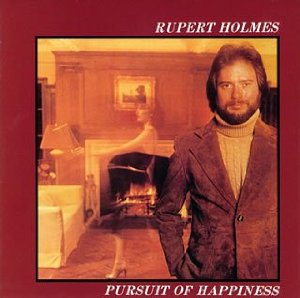
 

IN THE HEIGHTS at Toby’s – Energetic But Inaudible

Theater Reviews Page | Previous Theater Review | Next Theater Review

IN THE HEIGHTS at Toby’s – Energetic But Inaudible

Posted on BroadwayWorld.com on May 12, 2013

In The Heights is not standard Maryland dinner theater fare, concerning, as it does, the residents of a largely Dominican and Puerto Rican barrio at the northern end (and highest part) of Manhattan. The lyrics are often in Spanish, often delivered in rap monologue, and largely assume a kind of cultural literacy not common among Maryland dinner theater patrons: knowing, for instance, what it means for someone to say she comes from La Vibora or from Vega Alta (things I had to look up after the fact) or what kind of comestible a mamey might be (ditto), or what it means to yell “Wepa!” (ditto again). This is probably a good thing; all of us should constantly be looking to broaden our horizons, especially in our theatergoing. At the same time, as much help as possible should be extended to make the proceedings as comprehensible as possible for us Anglo newbies. And sadly, barring a half-page insert of explanation in the program, that kind of help was in scant evidence in Toby’s new production.

In fact, it felt as if Toby’s was going the other way. Largely this was a result of the sound design. Imagine, for instance, a show in which the entire 7-minute opening number is devoted to crucial exposition about most of the members of a large cast, delivered in Latin-inflected rap patter, rap patter which, like most rap, wanders thematically as the speaker gets seduced (or, if you prefer, inspired) by easy rhymes and/or word associations, so context isn’t very helpful, all in a theater in the round so you can’t always see and hence be prompted by the speaker’s lips – and then, just because of the sound design, you cannot make out more than every third word. The mikes were soft and the orchestra wasn’t. I can’t tell you how many consonants were shredded en route to the ears by the clatter of the bongos. And when it wasn’t the sound design, it was the accents, which were far thicker and far less penetrable than they were on Broadway (compare almost any singer on the original cast album if you doubt me).

I don’t want to make it sound as if this production of the show were all challenge and no reward. The singing and dancing, which are the biggest attraction of In The Heights, were superb, at the level one has come to expect of Toby’s. All hail David Gregory as Usnavi, the young bodega-owner who is the center of the action, sung in the original by the composer and lyricist Lin-Manuel Miranda; Gregory deserves the Danny Kaye/Martyn Green award for sheer aplomb with patter. All hail Nadia Harika as Vanessa, Usnavi’s love interest; Alyssa V. Gomez as Nina, the high school academic star returning home bruised by the competition in college; Marquise White as Benny, a rapping taxi-dispatcher and Nina’s love interest; David Bosley-Reynolds as Kevin, Nina’s worried dad and Benny’s employer; Tina Marie DeSimone as his wife Camila, tough-loving mom, who sets father and daughter straight in ENOUGH, and especially Santina Maiolatesi who brings an electrifying voice to the role of Daniela, a beauty shop owner. All hail also the amazing Rachel Kemp, the principal dancer (memorable in a nightclub sene).

In The Heights can be appreciated that way, as, in effect, a revue of the kind of music and dance one associates with a modern American barrio. But it lacks one component of a classic revue, which is well-defined songs. This is much more of an operetta than a musical; almost every word is sung, and so inevitably much of it is recitative. Without the melodic and lyrical repetition of true songs much of the time, without the aural space for exposition via spoken dialogue, it doesn’t have quite a musical’s ability to tell a story intelligibly, at least to Anglo audiences, nor on the other hand the segmentation into well-defined numbers, which makes a true revue more easily digested, the road-tested way to deliver song and dance when those things are really the point of the enterprise. So one has to consider it an uneasy hybrid, in which a lot of cool stuff will fly by without the average audience-member exactly understanding what or why it is.

Obviously this didn’t deter the Tony voters, who gave it the Best Musical award for 2008. The prestige of this award deservedly makes a reviewer think seriously about the merits of a show. I think, on reflection, that the voters may have had in mind not simply the vitality of the music and singing, but also the show’s merits as a document of New York City’s flux. Like Anatevka in Fiddler on the Roof, the Washington Heights of In The Heights is pictured at a moment when its inhabitants are about to be turned out. Gentrification has struck, and the rents are going up, driving out the three businesses (bodega, taxi dispatch, and beauty shop) around which the action focuses – although we see Usnavi at the end resolving to keep going with the bodega. There is a defiance mingled with acceptance, especially in Daniela’s call to hold a CARNAVAL DEL BARRIO before everyone disperses to outer boroughs, downtown or college campus.

This elegiac moment, impelled by the somewhat parochial issue of New York real estate prices, might predictably grab Tony voters to a greater degree than it does audiences from parts of the country whose realty is less prone to insane inflation.

In sum, even recognizing and allowing for my own limitations as a reviewer for this piece, I still think it’s not really Best Musical material, and that great performances cannot make up for weaknesses in the show, even before you factor in the crippling effect of the sound design on this particular rendering of it. I say this with regret, because I have great admiration for the Toby’s organization, which mostly delivers amazing musical theater. It was a gutsy thing to place this show before this audience, but not every gamble pays off.

Go for the singing and dancing, because sadly, you won’t get much more.

Copyright (c) Jack L. B. Gohn except for production still

Theater Reviews Page | Previous Theater Review | Next Theater Review