Only Two Duets: Red Branch Does Not Solve The Last 5 Years’ Mysteries

 Theater Reviews Page | Previous Theater Review | Next Theater Review

Only Two Duets: Red Branch Does Not Solve The Last 5 Years’ Mysteries
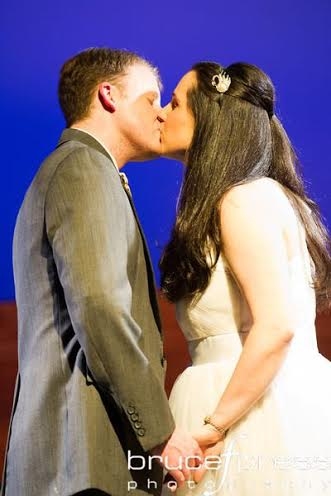
Kurt Boehm and Jennifer W. Culotta

Kurt Boehm and Jennifer W. Culotta

Posted on BroadwayWorld.com April 6, 2014

The Last 5 Years is a treasure of the American musical theater, the quintessential chamber musical. Jason Robert Brown‘s mini-masterpiece boasts but two performers, a small musical ensemble, a challenging but moving score, and a simple but powerful structure designed to maintain dramatic equilibrium and balance between the characters from start to finish. Not surprisingly, it is often produced (34 productions announced this year – not to mention a film version).

Somewhat more surprisingly, it is very hard to get just right. I’ve seen three productions in the last decade, only one of which hit the mark squarely. The revival at Red Branch Theatre in Columbia is, regrettably, not one of them. That said, it is full of good things, and worth the ninety or so minutes the viewer will spend with it (no intermission).

Why is it so hard? Well, start with the music. It owes as much to modern classical composition as to the conventional musical stage, and requires the performers to come in at or leap to odd notes; in short it requires real “ears” of both performers. Also, dynamic balance between the singers and the instruments (piano, synthesizer, cello and bass here, though original scoring calls for a guitar and a violin) turns out to be hard to maintain, and on most stages, that means the singers better have enough volume to compete. Here, so far as I could tell the performers were unmiked, which was simply a mistake. Kurt Boehm as Jamie was up to the challenge, barely, but Jennifer W. Culotta as Catherine was not, wobbling frequently not only on volume but on pitch as well. There’s a moment where Catherine, a young actress, is trying out for a musical, protesting that the other aspiring performers are “belting as high as they can.” When Culotta imitates the belting, just for a moment she sounds the way she ideally would through much of the proceedings. Culotta is a fine actress, but from a singing standpoint, this show gets the better of her.

The pitfalls continue with the book and the lyrics. I’ve said that this show is a treasure, but it certainly has its imperfections, imperfections left up to the cast and the direction to remedy. The tale of a marriage from first kiss to the moment of separation, it leaves essentially unidentified the problems that cause the separation. What we see are more in the way of symptoms. Catherine is uncomfortable with her writer husband’s celebrity; she opts out of attending parties with him; their careers make them spend a lot of time in different cities; he has an affair. These are common kinds of incidents in breakups, but they do not explain the breakups; they do not explain how a couple who were originally propelled into each other’s arms by passion come to be so awkward and distant with each other. That part of the story is told in ill-connected snapshots.

For instance, in the song A MIRACLE WOULD HAPPEN, we see Jamie dealing with the temptation when other women flirt with him. But the challenge seems to be surmounted. He responds, “It’s fine, it’s fine, it’s fine,” which seems to end the train of thought each time. Yet four songs later (NOBODY NEEDS TO KNOW) he’s in bed with another woman. Why? What changed his mind? The fact that he had a fight with his wife? The fight doesn’t seem to be about sexual temptation, and he does not seem to be leaving the fight determined to do a marriage-annihilating thing like have an affair. Cathy seems to know of his infidelity in SEE I’M SMILING, the song that follows chronologically after Jamie is in bed with the unnamed other woman, and she does not appear to be treating it as a deal-killer; what drives her to distraction is his inattention to her. But we kind of want to understand her views about the affair.

We simply need more information.

The dramatic structure (his story is told going forward, hers going backward) worsens the problem, because there is only one point where the two characters are portrayed in the same moment of time, at their wedding, which is the midpoint of the show. That is a lovely moment, one of the two duets in the production (the other being the finale, as they part for the first time from her perspective, and the last from his). If the wedding scene is done right, and it is here, the audience can witness for a moment how the ways Jamie and Cathy speak and feel seem to make them right for each other.

Apart from that, though, even when Jamie and Cathy occupy the stage at the same time, they are not in the moment with each other, and there is no interaction to read. We cannot see them reacting to each other. This leaves the actors dealing with unseen interlocutors like characters in a movie face-to-face with Transformers or space aliens. But unlike the space alien movie, this show has no way even to insert the missing character “in post.” A really great production of the show will make you suspend disbelief in the absence of the other character, will compel you to see the other character there before you. And thus somehow you can sense the missing pieces of the story.

This is not that production. This time, what you see, in all its maddening lack of completeness, is usually what you get. It may not be fair that the show calls for alchemy, not just hitting marks. But that’s what it does.

The strength in this revival is Kurt Boehm, a talented actor and singer who can at least deliver all that the script and the score require and a bit more.

The Red Branch Theatre Company is putting on The Last 5 Years in repertory with Andrew Lippa and Tom Greenwald‘s john & jen as “The Love/Loss Cycle,” opening in two weeks’ time. It may well be that there are resonances between these shows worthy of consideration, a subject to be considered in these pages after john & jenopens.

In the meantime, with all the caveats already mentioned, this production certainly made the opening night audience happy; clearly the magic of The Last 5 Years carried the day.

Copyright (c) Jack L. B. Gohn, except for production photo

 Theater Reviews Page | Previous Theater Review | Next Theater Review


A Measure of Serenity

Theme Songs Page | Previous Theme Song | Next Theme Song

A Measure of Serenity

Windham Hill 84

Aerial Boundaries, by Michael Hedges (1984), encountered 1984

Buy it here | See it here | Sheet music here

First you hear a rhythmic pattern plucked or tapped on a guitar’s upper strings, then a counter-rhythm and a melody on the lower strings. All at the same time. Then some of the notes are produced by a hand slapping the strings instead of plucking or tapping them. And no, there is no accompanist; this is Michael Hedges, somehow plucking (or tapping or slapping) with both hands simultaneously, laying down drones and sonorities with the left and with the right, playing them off against each other.

Paradoxical Virtuosity

Wait: How is all that possible? We know how a guitar is supposed to be played: one hand doing the fretwork, one hand doing the plucking. But that is clearly not happening here. There are too many notes. YouTube today reveals a small industry of guitarists trying to replicate Hedges’ dexterity.[1] He is carefully studied. But in 1984 there was only Hedges.

When, like me in 1984, you had only heard it, and like me you didn’t play the guitar, the virtuosity might have completely escaped you. There was something paradoxically simple about the overall effect, a bit like sunlight illuminating a field that seems quiet and motionless until you perceive bees working feverishly at every bud. And that was Aerial Boundaries, simultaneously busy and placid. This was a work of deceptively brilliant musicianship.

Aerial Boundaries was Cut 4 of the Windham Hill Sampler ‘84, the other album[2] that was part of the visit Lincoln, Nebraska I described last time. (I took a copy of the cassette out to Lincoln for my girlfriend Mary, and it got played a lot while Mary and I were together.) The album was an entrancing introduction to what was coming to be known as New Age Music. Later on, perhaps, the genre would come to be thought of as clichéd. But in 1984 it was fresh and new, and clean, dazzling as the sunlight.

To me, it was evocative for what it was, and important for what it wasn’t.

Evocative

What it was: a crystalline sound, a new way to evoke peace and thoughtfulness, things I stood in need of. Life had given me a second chance, but using it was not inherently a serene thing. I had to grow a real career from the little stub of one I’d achieved so far, and I still had much of the hard work of divorce to do. Peace and thoughtfulness would be great desiderata in that process.

As far as the career went, however brilliantly I may have done in law school, I was only beginning to master the basics of law office politics. Brilliant, it seemed, might not get you all that far. As had happened in graduate school, I gathered I was viewed as problematic and not a regular guy.

Manna for Naught

But suddenly, like manna from heaven, I was handed a piece of the regular guy stuff, the task of supervising the summer law clerks. By rights, it shouldn’t have come to anyone at my humble level. I was only three years out of law school and four years away from any likelihood of being offered a partnership. I intuited that I would not have been given this important role had the partners at my firm, which I’ll still call Funhouse, P.A.,[3] cared all that much about the summer program. Of course in a normal firm, they would have cared, a lot, and one of them would have been running it. But this was Funhouse. I figured that the way to make the most of this opportunity was to craft a summer program the equal of those being offered by the best firms in town.[4] And I think I succeeded pretty well.

Well, more accurately, I succeeded at matching the entertainment at the best firms. Not the outcomes, though. To my dismay, at the end of the summer, only one of my charges received a job offer.[5] By no coincidence, the offeree was the son of one of the firm’s best clients. Effectively, then, my work had gone for naught.

Realpolitik

My first response was the kind of undiplomatic reflex that had so often interfered with my chances before. I fired off a memo angrily protesting the waste of the summer program; luckily my new direct supervisor caught it before it went out, and told me not to circulate it. I followed his orders, though I didn’t really understand them. Later someone took me aside and explained the dollars-and-cents reasons why the firm had trashed the summer class. But all I knew at the time was that I was being asked to suck it up when something good I had done was being ignored. And of course I had no clue then what it was like to be the boss in charge of a business and its cash flow.

Going along with this little bit of realpolitik bore fruit promptly, however. Very shortly thereafter, I found myself in a social setting with a group of the firm’s rainmakers; just them and me, for some reason. They were all pleased with what I’d done. Had I given offense by bellyaching, the atmosphere would surely have been chillier. Not long after that, I was given to know I wasn’t thought of as difficult any more. One of the partners told me in surprise that I’d “joined the establishment.”

As another part of this “socializing Jack” effort, the new boss began to see to it that I did a lot of one work for a single client, and I began to develop some real expertise. I’ll write more about this later.

You might have thought it wasn’t a lesson a 35-year-old would have had to learn. But the sad truth was, it was exactly the kind of lesson I had to learn. The roots of my cluelessness in matters of diplomacy were the kind of thing I was addressing in therapy. Better late than never, I guess. And one key to addressing it was there in New Age music like Hedges’: serenity.

The Job of Divorce

At the same time, the work of the divorce never seemed to stop; it took a million forms.

For instance, taking my kids trick or treating for Halloween of 1984, in the neighborhood I’d left only that May, I learned that one couple I’d thought eternal were now in a nursing home. Strangers answered that door. I learned as well that a next-door neighbor had died; no one answered that door. Two families I looked on as old friends were out, and no one answered those doors either. In fact, hardly anyone was there to welcome me back during my brief return. The upshot of these little losses: I found myself greeting a strange guy I’d never liked very much, but who did answer the expected door, as if he were an old friend. But basically, I had to deal with the fact that when you move on, you move on. And many friends are not portable. That experience can stand for many, only of few of which will I mention, and none of which will I describe.

When you’re divorced, for example, the friends you do keep are apt to chip in with their perspectives on the recently ended union. I had some unpleasant discussions, let me leave it at that.

And no matter what you do, parenthood in a good divorce can be harder than parenthood in a bad marriage, because, of course, childhood in a good divorce can be harder than childhood in a bad marriage. First one of my children, then both of them, went into observable emotional tailspins. And my therapist said it would take everyone two years at least to regain their footings; she was right about the “at least” part. And let me leave that at that as well.

And what divorce is complete without wranglings about money? And in what divorce is there ample money anyway? So I had that too, part of the divorce suite, if you will.

Serenity from a Cassette

And in other news, my mother and stepfather were proving themselves to be not immortal, as my dad had a serious fall and they both had to miss coming to Baltimore for the holidays. Nothing like a holiday without your parents on hand to force you to face up to how on your own you may be.

With all such things, as with office politics, serenity can be a help. Even when it’s serenity from a cassette.

Not Actually Impossible After All

So much for what the album evoked. Now, I said above that the Sampler was also important for what it wasn’t. So here’s what it wasn’t: Music that had been part of my former marriage in any way. I had discovered it all on my own. It was a first in that regard. I was learning to like something new, something that was entirely my own. Of course it was bound to happen, but it felt miraculous, as did so many little things at that point.

Consider the title Aerial Boundaries. I used to think it was a nonesuch. How can one have a boundary in the air? And then I realized that all boundaries are just imaginary lines drawn by surveyors. Of course, you can represent a boundary on a plat, and you can mark a boundary terrestrially with a monument like a nail or a fence or a wall. The nature of the earth, as a (somewhat) immobile medium makes monumentation possible.[6] You cannot mark a boundary in the air by attaching anything to the air. But that’s just a matter of the monuments, not of the boundaries themselves. The concept of a boundary per se is just as meaningful in the sky as in the dirt. Perhaps the point of the title was the actual possibility of something that had seemed impossible. Like Hedges’ two-handed plucking/tapping. Like a hive of activity in a field that first seems to be sleeping in the sun.

Or like finding music for myself. And some measure of serenity.


[1]. See, e.g., here or here.

[2]. Purple Rain being the first, as described earlier.

[3]. See this piece for the explanation.

[4]. There had always been large law firms. But in that era, the dawn of the mystique of what’s known as BigLaw, when it seemed as if there would never be enough talented young lawyers to meet the demand, summer programs, typically focused on law students between their second and third years, were a sort of pledge rush, an attempt to woo the youngsters with an amazing variety of entertainment, instruction, vicarious lawyering experiences, softball and flattery. Take it from one who was fortunate enough to have been there in its heyday: it was great, great fun.

[5]. In that era, the norm was for most of the law clerks to get a permanent job offer at the end of the summer.

[6]. Although when you spend as much time doing boundary law as I have, you know how changeable the earth’s surface is relative to surveying monumentation. Earthquakes, bulldozers, floods, and changes in vegetation are just a few of the things that plasticize the surface of the earth (and give surveyors and lawyers much work to do).

Copyright (c) Jack L. B. Gohn except for album artwork

Theme Songs Page | Previous Theme Song | Next Theme Song

Beachheads and Enclaves

The Big Picture Home Page | Previous Big Picture Column | Next Big Picture Column

Beachheads and Enclaves

Published in the Maryland Daily Record March 18, 2014

Beachheads and enclaves, whether social, legal, or military, can resemble each other a lot. Each is a small pocket where the norms of the outside world don’t apply. The difference between them is usually determined by nothing more than the direction of history. In June 1944 Normandy was a beachhead, a small exception to the Nazi dominance which covered much of Europe. For a while in April 1945, Berlin, where Hitler made his last stand, was an enclave of Nazi governance in a Europe mostly under Allied occupation.[1] To a person who knew no history, maps showing the 1944 Normandy beachhead and the 1945 Berlin redoubt would seem to tell roughly similar stories. But with the hindsight of history, we know the stories were actually opposites: the Allied beachhead was about to explode, and the Nazi enclave was the result of an implosion.

It looks as if the same kind of tradeoff is playing out as same-sex marriage and marijuana become legal.

The beachheads in the same-sex marriage story were “early adopter” states like Hawaii and Massachusetts. Then, propelled by an astonishing shift in public sentiment, the bans against same-sex marriage have fallen in state after state. As of this writing, sixteen state governments (plus the District of Columbia) actually issue marriage licenses to gay and lesbian couples, and there are stayed court rulings invalidating bans of same-sex marriage on constitutional grounds in six more.[2] That’s almost half the Union. It seems as if the only thing that could stop the steady march against prohibitions of same-sex marriage would be a Supreme Court ruling that expressly or implicitly overturned each of those six unanimous rulings. At this point, that remains possible, but it is not likely. If those six rulings stand, every ban not killed by legislators and/or voters will be overturned judicially; it is close to a certainty.

The Religion Fence

The “religious freedom” bill that Arizona Governor Jan Brewer recently vetoed was an obvious attempt to counteract this trend and the changes in public sentiment it reflects. The bill sought to enable the creation of business enclaves in which laws of general applicability could be rendered ineffective if the proprietor was acting on a professed religious belief. While the bill said not one word about homosexuality, it was both promoted and attacked in reference to that issue. Uppermost in the minds of its promoters was a scenario in which businesses owned by adherents of a faith that rejected homosexuality might be asked to employ gays or to serve as vendors for a same-sex wedding. Arizona’s rejected law was expected to lend cover to a refusal to hire or to do business.

It is doubtful that such a law would have survived constitutional review. But it might have; religion has successfully served as a “fence” around certain kinds of refusal to conform with otherwise applicable law. During the Draft, conscientious objectors could sometimes be protected from service on the basis of their religious convictions. During prohibition, sacramental wine was always permitted.[3] Nowadays, religious organizations are given wide exemptions from anti-discrimination laws in hiring and enjoy special tax statuses under federal and state laws. In the future, religious objections may well prove a successful basis for noncompliance with the Affordable Care Act.

But even religious freedom does not have a great track record as a sanction for deviation from legal norms. Religious conviction does not get you a license to ingest peyote, for example, or to avoid paying income tax.

Anyway, even though there’s plenty of litigation yet to come, we’re already down to enclaves with sexual orientation.

Crushable, But Probably Not to be be Crushed

We are still in a beachhead phase with marijuana legalization. The legal changes advancing it have taken two forms: laws legalizing marijuana for medical purposes (currently enacted in 20 states plus D.C.), and laws legalizing it for recreational purposes (currently enacted in two states). These enactments have in common with the Arizona “religious freedom” law that they are passed as attempts to fashion environments in which the laws outside do not apply. The legislatures involved know that marijuana remains a federal Schedule I controlled substance, and that federal prosecutors and law enforcement retain full authority to halt every activity these state enactments purport to permit. These beachheads could still be easily crushed, and only the decision of the Justice Department not to proceed against them keeps this from happening.

In reality, though, it would be a tremendously impolitic thing for federal law enforcement to try stopping this change. Last year, for the first time, public opinion swung in favor of legalization. True, in the wake of these poll results, the Drug Enforcement Agency, apparently at loggerheads with the Department of Justice on how to respond to state legalization, sent an emissary to Congress, pleading that public opinion about marijuana should not be allowed to trump “science and fact.” There’s much to say for following science no matter what public opinion says, for instance in dealing with climate change or teaching evolution without bringing up the first two chapters of Genesis as some kind of equally plausible alternative. But what “science and fact” would the DEA be referring to in this context? Succinctly put, they got nothin’. Marijuana doesn’t cause lung cancer, isn’t addictive, does have medical uses, etc.[4] That’s why marijuana is gaining ground in public opinion and in our states’ laws. So a strengthened federal resolve against legalization at the state level seems unlikely.

Can we foresee a time, then, when there are enclaves against marijuana legalization? Probably so. Eighty years after the end of Prohibition, you can still find some dry counties and communities. Marijuana-free towns seem a good deal more likely than the tolerance of enclaves in which discrimination against LGBT people will be permitted, notwithstanding that the would-be discriminators have chosen to wrap themselves in the banner of religion. Certainly businesses that can reasonably be called public accommodations will be allowed little scope to discriminate. And for smaller business, the outlook is not much different.

Opposing Equality Puts You in Bed With Undesirables

It might not be fair, but surely some of the outcome in this argument will hinge on the fact that the religious elements sanctioning discrimination look distinctly fringy. Under the new pontiff, even the Catholic Church is backpedaling now. Few denominations want to look like the Westboro Baptist folks, who spew venom at gays and lesbians in the name of the Almighty. Looking like Westboro (or Vladimir Putin for that matter) will become an inevitable consequence of continuing to oppose legally equal status for LGBT people and their spouses. Bet on most religious organizations abandoning, within the decade, active resistance to laws assuring such equal status. In any event, there won’t be much left to fight about. Same-sex marriage will probably be the law everywhere by then. There will be openly gay generals and NFL quarterbacks. Denominations that prolong the lost battle and keep the populace unnecessarily divided will be judged harshly by the people who make the laws.

In any event, when you have to protect your viewpoints by trying to build an enclave, you have basically already lost. Redoubts almost never hold.


[1]. There were areas south of Berlin that remained in Nazi control after Hitler’s demise. See this useful map.

[2]. Ohio; Oklahoma, 2014 WL 116013; Kentucky; Virginia; Texas, 2014 WL 715741; Utah. (In the week this article reached the press, another ruling, 2014 WL 1100794, also subsequently stayed, added Michigan to this list.)

[3]. As per the former 27 U.S.C. § 4.

Catharsis

Theme Songs Page | Previous Theme Song | Next Theme Song

Catharsis

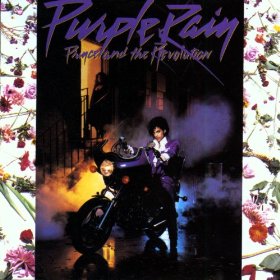
Purple Rain

Purple Rain, by Prince & the Revolution (1984), encountered 1984

Buy it here | See it here | Lyrics here | Sheet music here

If you asked me to name the most perfect week of my life, I would answer without hesitation that it was the one that began on Saturday, September 29, 1984. On that date, I caught a pair of flights that took me from Baltimore to Lincoln, Nebraska. And Mary, the woman who had flown out of my life on Halloween of the previous year and quite properly left me to deal with all my issues on my own, was waiting for me at the gate, her yellow Capri parked outside, ready to drive me to her new home.

Tight as a Spring

Even with the occasional flashes of ecstasy over being single again that came and went, it had been a hard eleven months since that Halloween, one hard thing after another, eleven months that had left me emotionally tight as the mainspring of an overwound watch.[1]  I’ve written about much of it in these pages, and I’ve left much of it unwritten.

But on that Saturday, the hard part stopped for a while. We walked out to the airport parking lot, neither of us quite able to believe I’d made it. But I had. And so it was possible for me to do something that would have seemed inconceivable eleven months earlier: sit down in a car in a strange state, and let a beautiful woman drive me to her home. Openly, with nothing to hide from anyone.

From the parking lot, then, to Mary’s apartment complex. From the car downstairs to Mary’s apartment upstairs. Then the door closed behind us, and, to paraphrase Michael Franks, I was hers and she was mine. And the week that followed that instant is largely a blur of good things.

Wahoo to Denton

WahooOne thing I remember clearly is that I fell in love with Lincoln, a town that greatly (and only to its credit) reminded me of Ann Arbor, my hometown. Some events do stand out. There was a leisurely drive through truly rural Nebraska, including a visit to towns named Wahoo and Prague (pronounced with a long a). My face in the photo tells the story, not just how much I enjoyed Wahoo, but also the magic that whole week was working. We saw the movie Places in the Heart at the Sheldon Museum of Art in Lincoln. We dined in and we dined out. We visited the Joslyn Art Museum and The Old Market in Omaha. We played Trivial Pursuit with some of Mary’s new friends. We attended the University of Nebraska’s homecoming game. We dined at Parker’s Steak House, then a legendary spot in Denton.[2]

For a week, nothing intruded on the bliss. I’ve never experienced another whole blissful week, before or since. I’ve never had a week go so exactly according to plan. And a week like that does release you from cares and tensions.

Of course we talked about what the future might hold. On our last night (over dinner at Parker’s, in fact), we began an indirect discussion of our aspirations, which for both of us turned out to include parenthood (in my case parenthood again). No one used the “m” word exactly; no one had to. The unused word notwithstanding, negotiations over a joint future were beginning. Only just beginning, since we lived and worked 1200 miles apart, we were each separated but not divorced, and I at least came with considerable baggage. There was no realistic way we could have done anything more than compare life objectives at that stage. And we didn’t try. We knew better.

Newfound Vulnerability, Newfound Power

On the third night, we went to see rocker Prince’s fictionalized cinematic self-portrait Purple Rain (out since July, but still playing). It was the perfect movie for that moment in our lives. The Kid, Prince’s character, is tormented by his past, which has left him wild, angry, and hurtful to those who care for him, and prone to self-sabotage. But at the end, confronted with the emotional corner into which he is painting himself, he stops painting. You can tell he has reached that moment when he agrees to sing a song that the women in his band, Wendy and Lisa, have written,[3] after he had been condescendingly and unproductively brushing off their proffer of the number all through the movie.

The song, of course, is Prince’s big over-the-top hit Purple Rain. What it means exactly has been a topic of great debate,[4] but for my purposes both on that October night and now, the answer to that question (even assuming one true meaning exists) is not important. What matters is that, for the Kid, the song is a moment of both newfound vulnerability and newfound power, a fact immediately apparent to the audience on the screen, a crowd of hard-eyed youthful cognoscenti of the 1984 Minneapolis music scene. The spectators are first mesmerized and then energized.

After pulling off this triumph, the Kid explodes off the stage, dashes down to his dressing room, where he paces up and down for a few moments, in awe of what he has done, and then, in a series of flashbacks and flash-forwards interwoven with the rousing songs he sings when he returns to the stage (I Would Die 4 U and Baby I’m a Star), he sets things right, or as right as he can, with his parents (the source of his angst), and with Apollonia (Apollonia Kotero), his girlfriend whom he has been abusing.

I was tired when I saw that performance. But the cathartic quality of it spoke directly to me through any fatigue I felt. I could dare to recognize then that I had been engineering my own catharsis. I had gotten single, I was doing good work in therapy, I was getting this love business right for once. And so for that night Purple Rain was my anthem.

A New Level

When I boarded the plane home the following Sunday, we knew we were still 1200 miles apart, and all the rest. We knew there still could be no exclusivity and no promises, that each of us was wide-open exposed to the risk that one or both of us might find someone else, that all sorts of other things could also drive us in different directions. But what with the overwhelming rightness of that week, and the oh-so-tentative negotiations, we, like Prince in the movie after his breakthrough, were playing at a new level. As Mary said, it was the most adult relationship of our lives.


[1] Probably a 20th century metaphor that dates me, but I understand that wind-up watches are still available in low-end and very high-end models. Most of us just check our cellphones now, of course.

[2] It’s funny how some things are so clear in memory and others, right next to them, fade. I know Mary still had work to go to at least some of the days in the following week, and yet I have no recall of being on my own.

[3] Wendy and Lisa, the characters, were portrayed by Wendy Melvoin and Lisa Coleman, who were then real-life members of Prince’s band, the Revolution, and are still musical partners, performing and songwriting for the screen, as of this writing (2014). In real life, however, Prince apparently wrote this song.

[4] This much seems clear: the singer has apparently been misunderstood by the woman he’s addressing, and apologizes, saying that he only wants to see her laughing in, bathing in, or underneath “the purple rain.” Whatever the purple rain might be, it’s a good thing, probably a wonderful one. And the singer’s impulse in hoping to place her underneath it is fundamentally generous, whether or not (and here’s where a lot of the debate lies) he also is trying to establish or reestablish a romantic relationship with her, presumably for his own gratification.

Copyright (c) Jack L. B. Gohn, except for cover art

Theme Songs Page | Previous Theme Song | Next Theme Song

And Now For Something Completely Hilarious: SPAMALOT at Toby’s

 Theater Reviews Page | Previous Theater Review | Next Theater Review
And Now for Something Completely Hilarious: SPAMALOT at Toby’s

Posted on BroadwayWorld.com January 27, 2014

Lawrence B. Munsey and Jeffrey Shankle

The Toby’s crew have rolled out another solidly enjoyable evening of frivolity with their revival of Monty Python’s Spamalot. Of course, Eric Idle’s 2005 blockbuster musical based on Monty Python’s King Arthur movie, done properly, is a sure-fire hit, a confection of generous helpings of all kinds of sure-fire elements. There’s nonsense delivered in true Cantabridgian style, i.e. with insane argumentative rigor. There are dazzling scantily-clad showgirls (“naughty girls in nasty tights” as the lyrics to one song put it) and showboys , and what they do wear, in many variations (Finnish, French, Jewish, medieval) is spangly and imaginative. There are songs that are wonderfully self-referential (THE SONG THAT GOES LIKE THIS), and songs that push the limits of taste, like the flatulence-oriented RUN AWAY, or YOU WON’T SUCCEED ON BROADWAY, the latter being, shall we say, quite direct about religious affiliation on the Great White Way. And there are lots of tag-lines and tropes for Monty Python fans – and who isn’t? Hard to quarrel with an assemblage of attractions like that.

A few try; there was one well-noted review by a Sam Anderson in Slate that proposed some reasons at least to consider not liking Spamalot. Anderson said (speaking of rigor) that Monty Python’s punch lines, however dadaistic, had been carefully built up to, and that the plundering of those lines in this show, often out of context, makes the laughs “unearned.” (For instance ALWAYS LOOK ON THE BRIGHT SIDE OF LIFE is blasphemous and sardonic in its original placement in Life of Brian, its impact very dependent on its occurring during a mass crucifixion. Here it can almost be taken straight, as a cheer-up bit of music hall-style peppiness.) I applaud Mr. Anderson’s steely determination to stay true to Pythonic purity – and to be fair, there does exist such a thing to be true to – but there is more than one way to make an audience laugh. To put it in Python-esque terms, it need not be “something completely similar” to the original. Fun, like cash, may be fungible, regardless of source.

And this company assures that the audience has fun. Lawrence B. Munsey, as Arthur, the one character who never understands he’s in a joke, brings a pleasing tattered gravity to the part. Jeffrey Shankle as Arthur’s ignored but vital underling Patsy, evinces a different kind of comic gravity, a political awareness, to the part of the downtrodden peasant. David Jennings, a master of sketch comedy, gets a variety of memorable parts: the aforementioned flatulent French Taunter, King Ni, and the sexually ambiguous Lancelot, among others. Judging from curtain call applause, the audience I watched with had a clear favorite: Priscilla Cuellar as the Lady of the Lake, possessor of an amazing voice. I’m not a Spamalot expert, but I note that she delivers her songs with a lot more Mariah Carey-ish melisma than the original Lady, Sarah Ramirez. While I’m not ordinarily a fan of that style, I think it works perfectly here.

And tips of the hat are certainly due to Tim Hatley, the prolific and imaginative costume designer, and director Mark Minnick, who seems to have milked every laugh out of the raw material.

In short, you would have to be a corpse not to enjoy this experience. Come to think of it, based on the number of times in the show the dead are resurrected to help with the wisecracks, even being a corpse might not prevent your enjoying this show.

Copyright (c) Jack L. B. Gohn, except for production still

 Theater Reviews Page | Previous Theater Review | Next Theater Review

Mysterioso and Lacrimoso: THE PIANO TEACHER at the REP

 Theater Reviews Page | Previous Theater Review | Next Theater Review

Mysterioso and Lacrimoso: THE PIANO TEACHER at the REP

Posted on BroadwayWorld.com February 10, 2014

Laureen E. Smith as The Piano Teacher

Laureen E. Smith as The Piano Teacher

“What’s so wonderful about the truth?” asks Mrs. K, the title character in Julia Cho’s 2007 drama The Piano Teacher, revived at the REP Stage in Columbia.

Mrs. K (here meticulously portrayed by Laureen E. Smith) has been doing pretty well without the truth, if by well you count living with pinched gentility in a nondescript suburb, in a solitary widowed retirement after a career teaching the less talented students. She has missed out at virtuosity on her chosen instrument herself because her hands were too small, and now arthritis has robbed her even of her former competence. And apparently she missed out on the best of marriages by having wed a solitary older man, a lost and traumatized refugee from some nameless war-torn land, and with his death she has come to lack even his dubiously stimulating company. She does have her tea cookies, which she shares with the audience at the outset, and her Dancing with the Stars on TV.

Unfortunately for the fragile peace she had achieved by sidestepping the truth, she succumbs to the temptation to fill in the gaps by reaching out to a few former students, notably Mary (Kashi-Tara). Among these gaps is the explanation for a recital in which Mary was among her students who all seemed to succumb to a series of “train-wrecks.” Why would they all suffer that fate at the same time?

Nor is Mary the only “Ghost of Train-Wrecks Past” who visits Mrs. K. She also encounters Michael (Joshua Morgan), a creepy psychological hulk of a former potential virtuoso. Something happened involving those two and Mrs. K’s deceased husband. We may think we know, but I suspect most guesses will be wrong. We know the play is going in a dark direction, but we may well not guess how dark.

In the end, having found the heart of her particular darkness, Mrs. K decides to choose a brighter version of her past. “I’ll tell it to the end,” she determines as the play closes.

This chilly tale is not a play to love, but it is a potential showcase for acting and directing talent, and the REP Stage, beloved for presenting Equity performers in pristine productions, lives up to its high standards here. Smith is absolutely outstanding as the slightly dotty, sturdy but emotionally hobbled teacher; we are not meant to know whether to admire or be horrified by her embrace of the half-truth, and Smith conveys that duality unflinchingly. We are not given enough information to know exactly what to make of the two former students, but Kashi-Tara and Morgan each do well embodying a degree of damage. Kashi-Tara’s is the slightly more challenging role, because she must convey a life only partly marked by the unnamed trauma. Morgan, however, is to be commended for a portrayal that is textbook emotional basket-case. We may not fully understand these characters, but thanks to the actors and Kasi Campbell’s direction, we certainly believe in them.

The play is billed as an “affective thriller,” a strange term I have not previously encountered. Whatever the intended denotation, I would dispute the use of “thriller.” The play is not exciting in that way. It holds the interest as a portrait of a flawed individual gradually encountering the whole story that made her and others what they are. “Chiller” would work, but not “thriller.” Whatever the terminology, the play is well worth a look.

Copyright (c) Jack L. B. Gohn

Theater Reviews Page | Previous Theater Review | Next Theater Review

Caustic and Hilarious The Book of Mormon

Theater Reviews Page | Previous Theater Review | Next Theater Review

Caustic and Hilarious THE BOOK OF MORMON

Posted on BroadwayWorld.com February 28, 2014

Book of Mormon

Not for nothing is The Book of Mormon, its national tour perched at Baltimore’s Hippodrome for a short while, a big hit. In one sense it has everything: snappy songs an audience can go out humming, great dancing, humor that is both broad and edgy if sometimes gross, and some wonderful roles. At its heart, however, lies an awkward match between subject and treatment.

Caustic vs. Feel-Good

The subject, religion, and indeed that of one specific denomination, the Church of Jesus Christ of the Latter-day Saints, is given a frequently caustic satirical once-over, and, once the process is complete, the image of Mormonism (and by implication all religious faith) has been so scalded the show no longer feels entirely like a good-time Broadway musical. And despite all the plaudits the show has won (both Tony and Drama Desk best musicals, among many others), the uneasy fit between subject and treatment is a real problem.

The treatment is exactly what one would expect of the creative team, which includes Trey Parker and Matt Stone, the geniuses behind Comedy Central’s thoroughly curdled South Park, a show that specializes in scabrous attacks on orthodoxy of all kinds. Few things are as disposed to orthodoxy as Mormonism, and hence, given who the creators are, it is a foregone conclusion that Mormonism is going to be roughed up. As most theatergoers know coming in, the arena for that roughing-up will be a proselytizing mission on which immature young Mormon men with the unlikely honorific of “Elder” are sent. And of course their faith is completely unprepared for the harsh realities they encounter. A lot like the hero of Candide who starts out with a naive belief that this is the best of all possible worlds, these Elders are slapped in the face by war and pestilence and ignorant superstition, not to mention the doctrinal and attitudinal weaknesses of their own beliefs. Like Candide, they will find that their initial convictions must be abandoned and something new put in their place.

This kind of plot, however, is not one that naturally winds up with everyone singing jubilantly at the end, which is one thing most big hit musicals require. Also, from a thematic standpoint, it paints the show into a difficult corner. I have seen various commentaries on the show that assert that the treatment of Mormonism is “affectionate.” I’m not sure how affectionate it is when you have lyrics like

I believe!!!
That Satan has a hold of you
I believe!
That the Lord, God, has sent me here
And I believe!
That in 1978 God changed his mind about black people!

Nor am I in any doubt that it’s downright hostile when the story of Joseph Smith’s finding the Golden Tablets is retold with what amounts to rolling eyes on the subject of why the tablets were never found. This is a frontal attack on the Mormon faith structure, accomplished mainly by harping on things about it that seem ridiculous. And when the missionaries, the vectors of this rendered-ridiculous faith, are set loose in a country where their earnest but clueless activities endanger the population (putting villagers at risk of being shot in the head or subjected to female circumcision), I’m sorry, it’s about as affectionate as Christopher Durang’s takedowns of Catholicism.

It Should End in Tears

So, after trashing Mormonism, and by implication most other faiths (since most have foundational myths about as likely-sounding as the LDS ones, and taboos that are no less but also no more sensible than those which restrain the Mormons), there are two natural places to end up. One would be in some kind of self-centered secular and existential humanism that takes the place of religion – where Candide arrives with his singular focus on making his own garden grow, or where John Lennon arrives after discarding all other forms of faith: “I just believe in me, Yoko and me, and that’s reality.” The other would be a much bleaker existential despair, Camus territory. But Parker, Stone, and their collaborator Robert Lopez don’t want to go either place. So they have to fudge it.

I won’t give away what they do, except to say that it’s a huge spoonful of sugar to help the medicine go down and philosophically confused and illegitimate (probably), but at least permissible in dramatic terms. There is some kind of reason for the whole cast (and hence the audience) to be exultant at the end.

Spare Parts

Apart from that, this musical shamelessly incorporates spare parts from all over the known universe of Broadway hits. There is singing and choreography that will put you in mind of The Lion King. There is a strong echo of the “Small House of Uncle Thomas” sequence from The King and I. The opening number, HELLO, in which a passel of insanely cheerful young Mormons ring doorbells hawking free Mormon scriptures, will call to mind the “Telephone Hour” that started off Bye-Bye Birdie. With all of this looting of sure things, it’s no wonder it all comes across in such sparkling fashion.

Not that the show succeeds on theft alone. To the contrary, the songs are solid, well-rhymed, frequently ingenious, and tuneful (probably primarily the handiwork of Robert Lopez, whose resume included Avenue Q). And always, always, the lyrical content is devoted unreservedly to blasphemy. To choose an example almost at random, this snippet from BAPTIZE ME, with an implicit comparison of baptism to – well, you know what:

NABULUNGI
I’m wet with salvation
BOTH
We just went all the way
Praise be to God
I’ll never forget this day

I’ve never seen the mothership show on Broadway, so I can’t compare, but I can tell you that this cast delivers about as well as I could imagine any cast doing. The three principals, Mark Evans as Elder Price (the handsome self-confident one), Christopher John O’Neill as Elder Cunningham (the short schlumpy one who turns out to have a lot more on the ball than anyone suspects), and Alexanda Ncube as Nabulungi (the smart, spunky Ugandan convert who longs to go to “Sal Tlay Ka Siti”), are simply superb. Ncube in particular just radiates star power, with a strong voice and, a smile halfway between angel and girl-next-door. The choreography by Casey Nicholaw is deliriously funny at times.

You Know You Will

So when you go to see it – because you know you would see it whatever any reviewer said (the crowd on press night was thick and enthusiastic) – you’re going to have a wonderful time. But as you do so, spare a thought or two for the deeper issues, philosophical and dramatic, that are raised when a South Park sensibility is trained on a religious subject.

Copyright (c) Jack L. B. Gohn, except for production still

Theater Reviews Page | Previous Theater Review | Next Theater Review
 

Glad-Eyes

Theme Songs Page | Previous Theme Song | Next Theme Song

Glad-Eyes

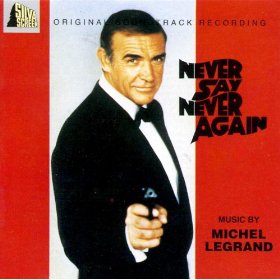
Never Say Never Again

Main Title – Never Say Never Again, Music by Michel Legrand, Lyrics by Alan and Marilyn Bergman, Sung by Lani Hall, Trumpet Solo by Herb Alpert (1983), encountered 1984

Buy it here | See it here | Lyrics here

Since I was newly single in the summer of 1984, you might have expected to see the odd woman around my apartment at that point. You probably would not have expected to see this one, however. My Aunt Gladys, then 70 hard years old, was a frequent visitor, and for a time she assumed a surprising role in my life.

Gladys 1985You can see her in this photo taken the Christmas of the following year, in ill-assorted thrift-store clothes she chose (no doubt) for their garishness, which cannot conceal the absence of teeth, and the stringy gray hair, and it may be hard to conceive that she was once a great beauty and a Hollywood starlet. And yet I have ample photographic proof of the beauty part, a sample of which is here too. Glad-EyesAnd somewhere I have a still from some forgotten Hollywood picture, a large cast with Gladys off to one side, clearly not the star. But the point is, she was in the picture. Her parents, whose boys went to Harvard and Princeton, had to watch as she eschewed even acting lessons and ran off to Hollywood, maniacally assured of her future. And to her credit she made it some distance. She was in the picture. But alas, not in pictures for long. She married an actor of some note, Ted Hecht, and then a New York photographer, and in her own mind she was still a great actress and a philanthropist.

In her mind.

Bipolar

The story of Gladys was the story of her mind; she was a victim of what we now call bipolar disease, in those days known as manic depression. Her family had watched in despair as her mind had driven her life out of control. When her parents died, she occupied their Central Park West apartment for a while, then lost that, as she ricocheted from psychiatric wards to the street or a shabby apartment and then back into psychiatric wards again.

Eventually she had quarreled with or driven away everyone in the family, except me. She was isolated. And as I have recounted, in my own way, in the summer of 1984 I was isolated as well. Up until that point I had pulled the same evasive maneuvers in dealing with her that most of the rest of the family did. Now, I stopped, or, if not stopped (some boundaries had to be maintained), I made sparing use of them. And I shall always be glad that I did.

A New Metier

One thing that Gladys may not have had much experience in doing was caring for anyone else. Mostly other people’s lives were at least adequate compared to hers, and hers was so lacking and contact with her so alarming that people instinctively pulled away, ended brief get-togethers with a My, how late it’s getting!, and kicked her out or made their escape; they certainly didn’t invite her deep enough into their lives for the question of them being helped by her ever to arise. But in the summer of 1984, I needed care, and for a little while, she found her metier in providing it.

It wouldn’t have worked if she hadn’t been in a depressed phase. Gladys manic could be unbearable. But she was in a lengthy depressed phase.

Order from Chaos

I had a pretty large apartment. I needed to unpack things. I needed to clean things up. And Gladys pitched in. She came over and we spent, I think, two or three afternoons getting the place shipshape. She wasn’t much interested in hearing my tales of woe; there was only room for one narrative in her mind, and it wasn’t mine. But she did enjoy being with me and she really was a help in getting the place organized.

It was strange that someone who could generate such chaos in any space she occupied could somehow help bring order to mine. But she did.

The song I associate with our times together that summer is the theme to the non-canonical[1] James Bond sequel, Never Say Never Again. Why on earth? Well, long story short:

The movie had come out in 1983, the same year as the dreary canonical OctopussyNever Say Never, featuring the original Bond, an older but still sexy and dangerous Sean Connery, a smart and funny screenplay by Lorenzo Semple, Jr., who had brought the Batman television series to me in my golden youth, and a Michel Legrand score, was just infinitely superior. And in those days you had to wait about a year for the home video (VHS videotape) to come out. I couldn’t afford much in the way of creature comforts over and above the apartment itself, but I was going to have a VHS tape deck, come hell or high water. And one of the first movies I rented to play in that deck was the then-just-released Never Say Never Again, which I was eagerly awaiting a chance to re-view.

I wanted it so much that, when Gladys and I decided to rest from our labors, I asked her if she’d like to watch, as it just so happened that that cassette was on rental in my apartment that afternoon.

Old Hollywood Meets New

Now, Gladys may have been a creature of the old Hollywood, but when I say that I mean really old, Sunset Boulevard old. Her exposure to popular culture had mostly ended before I was born. She might just have heard of James Bond, but she certainly wouldn’t have known anything about him. So I had no idea what her take on the ultimate celluloid hero would be.

Her introduction to 007 turned out to be fascinating to watch. She was dumbfounded. She wasn’t given to expressions like “Well, I never …” but she repeatedly muttered similar sentiments, though I can’t call the words to mind. Obviously she didn’t understand most of what was going on onscreen, but it really didn’t matter to her, because the whole thing was so unbelievable it was comic (even more than the tongue-in-cheek script had attempted). The bottom line was, Gladys had a wonderful time.

That was a high point for me: in the midst of my chaotic summer of separation, I and my crazy aunt finding a fragile, temporary point of equilibrium, a moment in which she was doing for me what a normal kind aunt would do and I was repaying her with a treat she enjoyed, as the nephew of a normal aunt would do.

And of course the number that came from the movie to stay in my head was Lani Hall’s wonderfully-rendered theme song with, as an added bonus, a soaring trumpet solo by her husband, Herb Alpert.[2] I had been in love with Lani’s voice since her days with Brasil ’66 (they account for another of these Theme Songs, you’ll recall). For many years I felt this was the single best Bond song, although I now think k.d. lang’s Surrender (the end title music from Tomorrow Never Dies (1997)) surpasses it.[3] Best or second-best, it’s a really great song, and reminds me of that summer and my afternoons with Gladys.

As you might expect for someone who lived so hard a life, Gladys did not make it to age 80. There wasn’t much gladness about her in the end, despite her self-appointed nickname of Glad-Eyes. My wife, who made her acquaintance a little later, has written feelingly about those difficult years that lay just ahead for her, and us in our relationship with her. But in the summer of 1984 there was a strange moment of ease, and when I hear that song, I remember it.


[1]. For those who aren’t already fanboys like me (to whom this is elementary stuff) the Saltzman/Broccoli/Wilson productions are the authorized James Bond movies, the history of which goes back to 1962. Owing to the tangled publishing history of the underlying Ian Fleming books, there were two novels the rights to which had fallen into other hands. In the case of Never Say Never, it might be more accurate to say “additional hands.” Thunderball (1965) and Never Say Never both are movies of the same book. Or perhaps more accurately (the matter was disputed) the novel and Never Say Never are both based on the same original screenplay.

[2]. Another fanboy note: Alpert was also prominently featured in the title music for the only other non-canonical Bond, 1967′s spoofy Casino Royale (the canonical version of which emerged in 2006).

[3]. The ultimate Bond song must be sung by a woman, and it must be swoony in some way. That’s why Goldfinger loses out, no matter how fabulous it is.

Copyright (c) Jack L. B. Gohn, except for cover art

Theme Songs Page | Previous Theme Song | Next Theme Song

TAGS:

Two Things About Jersey City

The Big Picture Home Page | Previous Big Picture Column | Next Big Picture Column

Two Things About Jersey City

 Published in the Maryland Daily Record February 20, 2014

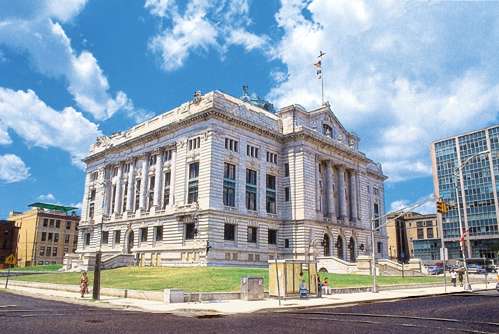
Hudson County Superior Court in Jersey City sure was the perfect place to hear about the recent flap over the Coca-Cola Super Bowl commercial.           

I’m sure you’re familiar with the commercial by now; it depicted a multi-ethnic, multi-generational crew singing America the Beautiful multilingually. There were a lot of angry comments from the commentariat and on Internet postings, complaining that that song should only be sung in English, and/or not by people who looked Hispanic or Arab or worse, Muslim.           

You may not be as familiar with Jersey City, so let me tell you two things about that town, where I spent several days in a trial. One, it has a killer view of the Freedom Tower from across the Hudson.[1] Two, as a judge there told me proudly – quoting, as I later learned, statistics compiled by Business Insider – it’s the second most ethnically diverse city in the nation.

The View from Exchange Place

The View from Exchange Place

All Varieties            

Now I don’t know how you quantify and rank diversity, but obviously Business Insider and the judge were onto something. Across the street is a McDonald’s I visited several times as the case dragged on. High-schoolers flock to this McDonald’s at breakfast and lunchtime, and they come in all varieties: young women with headscarves chatting on cellphones, a homeless black lesbian student working the phone to arrange the next friend’s house to crash at, a South Asian young man toting an algebra book, Hispanic kids networking like crazy. Not all that many white faces, and few faces my age. This surge of multicolored kids getting through the practical tasks of growing up and living day-to-day is exactly the customer base Coca-Cola was wooing with that spot.             

Well, actually not just the kids. There are blocks in Jersey City where it seems there are no two restaurants serving the same national cuisine. But they all serve cola.

 Idiomatic

The View from the McDonald's

The View from the McDonald’s

Looking around this McDonald’s, all you can see are Americans. Some are doubtless citizens or legal immigrants. Others may not be documented. Whatever their current legal status, however, and whatever languages they happen to use, they’re all truly Americans right now. Witness one Korean girl gossiping to another: “And I’m like ‘[insert Korean phrase].’ And she’s like ‘[insert another Korean phrase].’ And I’m like ‘[more Korean].’”[2] I’m sorry, when you lapse into idiomatic American English to punctuate a story, it doesn’t make much difference what language you’re using to tell the rest of it or where you’re from originally or even what your papers do or don’t say; you’re already here. You’re already one of us.          

A couple of months earlier I had been in a federal courtroom in Raleigh, NC. There the cultural determinants had been a little different, and probably much more to the liking of the kind of people who take umbrage at the Coke commercial. My local counsel had spent four years writing speeches for Mitch McConnell, the judge was reportedly a protégé of Jesse Helms, and he spent some time observing on the record how there were no unions to speak of in his state. But the actual experience of arguing that case was not markedly better or worse than what I experienced in the Hudson County Superior Court.


No Better, No Worse

It s not even different when it came to the judges. (Not altogether a good thing, by the way. We litigators have the same wary attitude toward judges that valets bear toward their masters. And as the poet Goethe remarked, no man is a hero to his valet.)[3] When the rules of courtroom decorum and of evidence, the jurisprudential principles and the constitutional doctrines are all the same throughout a system, judges can’t be too much better or worse either.

Now, it is certainly true that a big reason for the sameness of the experience was the English spoken in all of these courtrooms. And I don’t expect our growing diversity to change that. But what if it did? Back in 2005, I was on my first visit to Miami, which I have heard called the capital of Latin America. The morning after I arrived, I stepped up to a coffee counter. A blonde Anglo customer in the next line, a woman my age, burst into a rapid gust of Spanish while placing her order. I was amazed by her fluency, and I think I chatted with her for a minute afterwards, to confirm that she was, like me a native English speaker. She allowed as how she was. She’d just picked up the Spanish – I guess the way the “I’m like” Korean girls I mentioned are picking up English. And I didn’t think I could ever do that. But these days Spanish is all around. Fragments of it come to you the same way new English words do.

A month ago, a legal question I had to answer called for me to explore a couple of published opinions of the Commonwealth Courts of Puerto Rico. And guess what? Their rulings are in Spanish. And as I say, I don’t really speak Spanish. But somehow I was able to get what I needed out of those cases. We learn more than we know. As other languages become more prevalent, we figure it out. And new generations learn new languages on both sides of the divide. One of my own sons, a member of the bar with no more Hispanic heritage than I boast, speaks Spanish fluently.

It’s all going to be fine. The problem is not really with the newcomers; it is with the people whose heads are exploding about the commercial. It is hard to doubt that what they fear is further erosion of the privilege that (check all that may apply – and they all do in my case) Anglophone straight white Christian males have enjoyed.

As among citizens, the privilege question has been mostly answered by these little things we have called the First and Fourteenth Amendments. Our government should not be bestowing unique status upon any faith, race, heritage, or set of ideas. And to the extent America was built on that kind of privilege, we are headed away from it, and never going back. Rear guard skirmishes notwithstanding, that battle is clearly won.

Barrier to Citizenship

But there is still conceivably a viable line of defense for privilege when it comes to citizenship itself. The head-exploders about the commercial are the same folks whose heads explode at the “path to citizenship” proposed as part of immigration reform now. They can claim all they want that they are only trying to uphold the rule of law; I simply do not believe them.[4] To me, the dynamic is clear: “illegals” constitute an underclass, a cultural Other, whom the head-exploders do not want to see rendered equal to citizens and immigrants. If we give “illegals” immigrant status, we make privilege that much harder to preserve. That’s the real reason for the uproar.

There is no decision in this fight to date. But if Jersey City has taught me anything, it’s that those diners sitting in that McDonald’s, swigging (yes) Coke, are really our kids, our heirs and our successors. And our system won’t change much as they come into their inheritance. Nothing to fear.


[1]. My own picture of the scene.

[2]. I am not one to let a good anecdote stand in the way of the truth. But a 1200-word limit (which is what my Daily Record columns operate under) does nudge one in the wrong direction. So, to be clear: a) the young women in headscarves (walking with a friend not wearing one) were encountered on the pavement just outside the McDonald’s, not dining there; b) the Korean girls were encountered elsewhere within a week of the Super Bowl, though I did hear the snippet of conversation just as I recount it. But let it be noted that Hudson County, of which Jersey City is the seat, has a substantial Korean population.

[3]. Elective Affinities (1809), here at page 335.

[4]. Nor do I place much store by the “rule of law” arguments on their own merits, as discussed in an earlier column.

Copyright (c) Jack L. B. Gohn, except for image of Brennan Courthouse (http://www.jerseycityonline.com/hudson_county/courthouse.jpg)

The Big Picture Home Page | Previous Big Picture Column | Next Big Picture Column


Hurrying Sitting Still

Theme Songs Page | Previous Theme Song | Next Theme Song


Hurrying Sitting Still

Passionfruit

 Alone at Night, Composed and Performed by Michael Franks (1983), Encountered 1984

Buy it here | See it here | Lyrics here

I have always thought that Michael Franks was the singer-songwriter-laureate of heterosexual male desire. A big claim, considering how competitive the field may appear. Or maybe not so competitive. There are lots of male takes on romance, and some on sheer horniness.[1] And there are lots of caricatures of male erotic prowess, comic during the blues era, clownish and sometimes downright offensive in the time of hiphop. But the real feeling of being a man wanting and (sometimes, not always) getting sex from a woman – a woman regarded neither as an ideal nor as a mere plaything, but as an equal partner in the fun,[2] which I’d like to think is how most straight men experience it, at least on their best days, well, fewer people have written about that. During much of his career, it was Franks’ main subject.

Winsomely and Variously

His greatest achievement, his Sgt. Pepper, if you will, was his 1983 album Passion Fruit, a highly varied set in which fully eight of the ten numbers dealt in one way or another with male desire. He managed to capture it winsomely and variously. Here, for instance, is part of his lyrics to Sunday Morning Here With You:

…[U]p on the roof we are living proof
Love’s nutritious
Such delicious deja vu
Sunday morning here with you
Your kisses made with orange marmalade
Apple blossoms toast and tea
I cannot think of any place I’d rather
I’d rather be
My sleepy friend I always want to spend
Sunday morning here with you
I cannot think of anything I’d rather
I’d rather do
 
Lounging in bed Sunday papers read
Windows open
First day of spring hear the kettle sing
Tea for two
Lady in lace sunlight on your face
Quite an eyeful
Such delightful deja vu
Sunday morning here with you

Or you can hear an account of a tryst on a Rainy Night in Tokyo. Or try Tell Me All About It, a charming variation on the “We have ways of making you talk” trope, in which the lover threatens to force declarations of love out of his partner with determined lovemaking.

On My Own

The song that always makes me think of the summer of 1984, however, is Alone at Night. In that number Franks evokes a man who would much rather be with a lover who is sometimes there, but apparently usually not.

When I’m alone at night all I do is think about you
Especially when I’m blue I just can’t do without
I love the way you shiver my timbers
I need you here to keep myself limber
When I’m alone
I contemplate every way I’d like to rendez-vous you
I only hope s’il-vous plait you can respondez-vous
Your amplifier’s already preset
Let’s see of we can rattle the tea set
 
When I’m alone at night
Watching those reruns of Dragnet
Catching those rays of electrode light
Your love pulls at me like a magnet
When I’m alone at night.

 That was me. Before the marital breakup in which I now found myself, Mary, with whom I longed to “rattle the tea set,” had decamped to points west. Once my departure from my marriage had become definite, communications between us had resumed. Consequently, she was willing and able to visit me once that summer, but otherwise I was on my own. Well, as on my own as the slow onset of single-again dating allowed.

Then Comes Dysphoria

There was no contradiction between my feelings about Mary and my dating. It was all too clear to both of us that I was hardly in a state to settle down. I was raw and beaten up, and had some healing to do in the erotic department. Not to mention that I had a lot of things to work through in therapy before I could be emotionally reliable for anyone.

Not to mention that I had a whole life to reestablish on a different footing.

I wrote in the last piece about the ecstasy that had ensued when I first found myself in the new apartment. It was heady stuff while it lasted, a being-in-love-with-doing-it-my-own-way state in which even wheeling a cart down the supermarket aisles was an experience of happy independence. But that state didn’t last long. The main experience of that summer was much more summed up in Franks’ lyrics, which are a lot more dysphoric.

I spent a lot of time doing various equivalents of “watching those reruns of Dragnet.”

I spent a lot of time coping with the huge number of things a suddenly single part-time father must address.

I spent a lot of time being depressed. (I dropped 20 pounds that summer with no conscious plan of doing so, no diet, no plan of exercise.)[3]

Big Fight

It didn’t help that the summer started with a huge fight with my therapist and my therapy group. They felt that I was committing all sorts of sins: not focusing on my children enough and showing myself too self-absorbed, too focused on sex, too willing to depend emotionally on Mary, too eager to avoid standing on my own two feet. I should be marinating in place for a while, they felt. I understand now exactly why they reacted as they did, though at the time I was just hurt and lost when they talked that way. But they did not persuade me. Time has changed my views about many things, but thirty years later when I look back to that fight, I still think I was right and they were wrong.

There was no denying the power of the feelings with Mary. We were now hundreds of miles apart, but this kind of attraction, if it persisted, a love that (in Michael Franks’ words)  “pulled at me like a magnet,” could surely bring us back together and bond us for life. I felt that everything healthy in me was caught up in that pull. And if the reason I couldn’t simply surrender to it right away was that I needed to give other women a fair try and confirm that this wasn’t all a stupid rebound, then I should get down to that, because I didn’t want to wait until I was old to rebuild my life.

Call me a man in a hurry.

My therapeutic community disliked that hurry. But maybe I should have been forgiven my haste, considering the detours my life had already taken.

Anyway, the cumulative effect of the buzz wearing off, much loneliness, much busyness, and the group coming down on me was that I spent much of that summer in bemused solitude.

Alone at night indeed.

Things You Do When You’re Not Doing Much

And yet it was an incredibly rich time. You find a married couple who take you in, who listen to you, give you wonderful advice from their own experiences of divorce in their previous marriages. You find out that single people have their own entertainments and preoccupations, and you get to take part. You learn all about budgeting. You polish up on your negotiation skills as the shared stuff a marriage accumulates is divided up. You polish up on your parenting skills too. You learn how to iron. Your personality slowly changes, as certain behaviors adopted because they chimed so well with someone else’s behaviors have lost their raisons d’être, and maybe their appeal as well. You like to think you’re a nicer person because of it. You encounter people who are lost-er than you, women too fragile to make passes at, and you let your conscience be your guide. You have really bad sex with someone else whose mind is on someone else. You learn hesitatingly how to deal with the jealousy you feel when your faraway inamorata does her own dating, because fair is fair. You discover that there have to be these little silences on this subject between yourself and the woman you love. You go back to your hometown and debrief with your oldest friends. You try making peace with your mother over the things that turn up in therapy.

Alone at night, processing a million new things. In a way, just a way, it’s perfect. It wouldn’t do for a whole lifetime, but for the time being, alone is exactly what you need to be.


[1] My personal favorite song evoking horniness is Steve Forbert’s Don’t Talk to Me (1995).

[2] Not my own phrase; from Richard Rodgers’ lyrics (sung by Diahann Carroll) to Loads of Love in No Strings (1962) (“So far I’m not a wife so/ I organize my life so/ No one annoys me, no one enjoys me/ Unless we’re equal partners in the fun.”). The contemporary popular covers of the song (check both the Shirley Horn and Peggy Lee covers from the same year) omitted this passage, no doubt because in that era the idea of a woman aspiring to be “equal partners in the fun” – when the fun was explicitly premarital and almost explicitly sexual – was too risqué to articulate away from the cosmopolitan world of Broadway. And the song seems not to be covered anymore. So even the lyrics websites leave out the passage. So far as I know, you have to go back to the 1962 original cast album to hear it sung.

[3] There will be a picture of me in that sylphlike state two pieces hence.

Copyright (c) Jack L. B. Gohn, except for artwork and lyrics

Theme Songs Page | Previous Theme Song | Next Theme Song