Parenthood on the Hoof

Theme Songs Page | Previous Theme Song | Next Theme Song

Parenthood on the Hoof

Gonna Fly Now (Theme from “Rocky”), by Bill Conti, lyrics by Carol Connors & Ayn Robbins, performed by Maynard Ferguson (1977), encountered 1977

Buy it here  |  See it here  |  Lyrics here  |  Sheet music here

Running: that was the way I summoned joy and the way I expressed it in 1977. That year saw the dawn of the great jogging era, the publication of Jim Fixx’s Complete Book of Running, and the first Rocky movie (well, to be technical, released in December 1976). No one who ever saw that movie forgets The Scene: the one where Sylvester Stallone whips up some horrible nutritious concoction in the blender, downs it, and goes out for a training run through the predawn streets of Philadelphia. The scene morphs into a montage of boxing training footage, but then returns at the end to Rocky’s run, memorably topping off, literally and figuratively, looking eastward into the rising sun from the summit of the grand staircase in front of the Philadelphia Museum of Art, as Rocky flings his arms triumphantly into the air. All of this accompanied by Bill Conti’s soaring, pulsing theme song Gonna Fly Now, periodically propelled by swells of strings that communicate to every listener the sheer transcendence running can produce.

The Endorphin Rush

The Scene probably bred far more runners than Jim Fixx ever did, and led many of us who had no business lacing up jogging shoes to try living that dream for a while.

And I was one of them. I have preternaturally tight hamstrings (which I kind of knew) and a tendency to disk degeneration (which I guess I didn’t). Despite my body telling me there wasn’t something quite right about it for me, I was out there on Baltimore’s streets, and sometimes Washington’s when business took me there, three times a week. I was to pay dearly for it; I consider my three later back surgeries to have been secondary (at least in part) to injuries I inflicted on myself then.

But no matter: the immediate effect at the time was sheer joy. The Endorphin Rush was real, and I got hooked on it. No matter that my life and career had veered wildly off course; I still had a way to feel great as my feet were guiding me around, say, the Guilford Reservoir a few blocks north of our house.

Nosebleed-Inspiring

And of course as I did it, my breath got all rhythmic, and mentally I was singing songs to myself that went with the ragged pace of my breathing. Later running would involve Walkmen (Walkmans?), but those were a couple of years off yet. In a time before earbuds or even headphones, my own voice was the only portable sound source. And so voice it was.

And for jogging I couldn’t hum just any song to myself. Only certain songs had that power to make you run.  Gonna Fly Now was, predictably, a regular feature of my under-the-breath playlist. In the Maynard Ferguson version, that is. Though I saw the movie when it came out (who didn’t?), it was not really the Bill Conti soundtrack version I knew. Ferguson, a jazz trumpeter of formidable power and control, was never above jazzifying what was new and hot in the world of pop music. And frequently he moved as fast as the pop charts did. To choose the obvious instance, the release of his version of Gonna Fly Now was effectively simultaneous with the release of the Bill Conti original.[1]

This adaptation was everything you could want in a 1970s running song: pulsing disco beat and soaring fills and solos by Ferguson that took the melody to nosebleed-inspiring heights.

Outshining the Original

I don’t expect anyone would disagree that Ferguson’s adaptation outshines Conti’s original. Whereas Conti relied on strings and a wall of sound to add the sense of lift and elation, and this does work, Ferguson’s soaring solos are simply gutsier, more powerful, and more musically inventive ways to stimulate the same emotions. They are more in keeping with the dynamic of Conti’s own melody than what Conti does. Something about the song just calls out for a reach to the upper registers, which Conti does not do much but Ferguson does a lot – goes all the way up to three As above Middle C.[2] And not timidly: explosively, warbling at the heights.

Of course, what Ferguson could do with one of his custom-designed trumpets was far more impressive than anything I could have sung, even if I hadn’t been running, with my non-custom-designed voice. But no one else ever was intended to hear me, or did. So I was happy.

Celebrating the Arrival

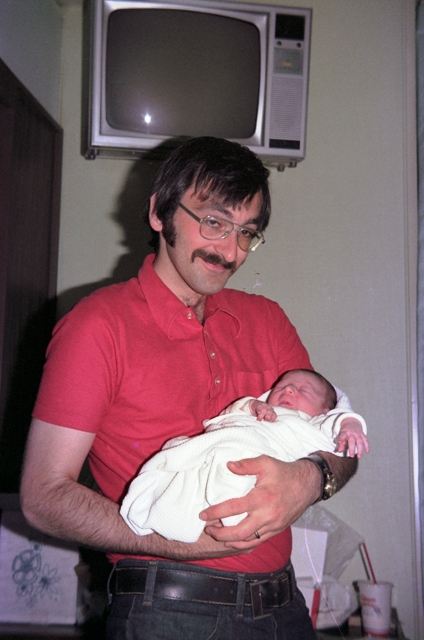
I vividly recall one run with that number on my lips, the day Andrew, my first son, was born, in June of 1977. For medical reasons, this was a scheduled birth. We went into the hospital early in the day and by the afternoon I was holding my son in my arms. The photo to the right, the first of Andrew and me together, was probably taken that evening. But in between, after the suspenseful, impatient wait in the lobby, I left his mother to sleep for a while, drove home and – went for a run.

I’m the father of three, and I know there’s no accounting for anything in the feelings of parents. But whatever the reasons, this was the most euphoric I ever was over the arrival of a child. I felt – I don’t know – limitless, transcendent, as if I were floating rather than running.

It was a very good moment, one I shall always treasure. (As I do the son who occasioned it.)

A postscript: If you want to see a tribute to the Ferguson performance that, for sheer excitement, tops even the Master’s effort, click here. It may not be quite definitive, but damn! is it good.


[1]  I’m unable to determine when, exactly, in 1977 the Rocky soundtrack album was released, but Joel Whitburn’s Top Pop Singles reflects that the Conti Gonna Fly Now single was released on April 23, and that Ferguson’s single was released the very same day. However, Conquistador , the album that had Ferguson’s version on it, was released in January, per allmusic.com. Since you can’t get much earlier in 1977 than January, we have to conclude that Ferguson’s album came out simultaneously with the soundtrack or even before it. And, as noted, the singles were released simultaneously.

[2] At the end of the Conti record, the strings briefly hit the E below that A, but in a somewhat understated way. Ferguson busts up into that territory several times, and loudly. For the most part, the Conti version succeeds by confounding expectations and going down where the ear expects the music to go up – and by doing so in muscular fashion, like a boxer aiming for the body when you think he’s going to punch for the head. Ferguson did the more obvious thing, but there was a reason it was more obvious.

Copyright (c) Jack L. B. Gohn

Theme Songs Page | Previous Theme Song | Next Theme Song

An Actorly Spring Awakening at Towson

Theater Reviews Page | Previous Theater Review | Next Theater Review

An Actorly Spring Awakening at Towson

Posted on BroadwayWorld.com on April 28, 2013

When I first saw Spring Awakening in 2007, I walked out of the Eugene O’Neill Theatre in New York almost quivering. I knew I had just seen something so exciting and innovative it deserved the overused characterization of important. I fell asleep in my hotel room with the freshly-purchased CD playing on my laptop. I could hardly play anything else for a few days. Though it won the Tony for Best Musical, the show did not actually stick around Broadway that long – about 900 performances. That was followed by a national tour or two.

During that spell in which the show was a strictly professional production, a strange situation prevailed. Spring Awakening is all about youth, and the cast is overwhelmingly comprised of youngsters. But the audiences skewed old, because people my age tend to be the ones with the cash to buy tickets to professional performances. But about a year ago, the show started being made available to non-professional companies, and over the last year there have been at least four different productions in Maryland alone. Spring Awakening has come to the masses. Finally youth can afford to see a show so profoundly about them.

Finally The Right Audience

I wondered what that concatenation of subject and audience would look like.  Last night, courtesy of the Towson University theater program, I found out. This was an undergraduate house, clearly, and they were rapt and engaged. Yet it was a knowing engagement. By that, I do not mean that the kids came in knowing the tunes and humming along, in fact it was obvious from the laughs and the gasps when funny or shocking things occurred that a large part of the contingent on hand had no idea what was coming. Nor do I mean that there were intense conversations about the show during the break, because so far as I could see there weren’t. What I mean is, the viewers got it, they understood it on both intellectual and instinctive levels, agreed and approved; in a sense, that accounts for the absence of intense lobby conversations during the break. But the raucous curtain calls demonstrated the engagement and approval of the audience. And the identification.

Different Issues

But having used the word identification, I must immediately report as well that to my mind the program notes may not have got the significance of the play for young viewers quite right. Those notes, some of the most extensive and interesting dramaturgy I’ve come across in any college production (and they rate a tip of the hat for that) nonetheless seem to argue rather too strenuously for the contemporariness of the issues. In one of the essays, director Joseph Ritsch heroically makes this case, speaking of the continued fights in this era for gay equality and the availability of contraception, and of the continuing risk of HIV infection for young Americans, and the high rate of suicide among gay teens. But these are mostly issues parallel to the ones the German youth of 1891 faced in the source material, Franz Wedekind’s play Spring’s Awakening, and in the modern musical; they are not the same. For instance, the suicide in the show does not seem to be about sexual orientation, but instead is a reaction to unmet social and familial pressures to succeed academically. We still struggle with sexual abuse of children by predatory adults, but it’s no longer a secret that it occurs, and it’s not an issue as to which there are two sides within the realm of respectable opinion. Crucially, the kids in the audience are the children or grandchildren of the generation that fought and won the Sexual Revolution. Only a few of them, but surely not many, grew up in households that expected them to have no sex lives, which seems to be what Wedekind and his successors depict the parents and teachers in the play as doing. And what Wedekind clearly saw as an underlying issue, the struggle to humanize a bourgeois society, to the extent it is not deemed passé altogether, is in a very different phase.

In short, the world of Spring Awakening is more different from the one last night’s audience inhabits than it is similar, and I don’t think the grip the show exerted on the audience was owing to a similarity of issues. Rather, I think it owed to the similarity of experience and the music.

Same Experience

And again, by similarity of experience, I am not talking about being up against the brutal parental repression or shame. For instance, Wendla, the young heroine, becomes pregnant; we still have a lot of debates about unwed teen motherhood, but there aren’t many young women these days being hustled by their mothers into unsafe back alley abortions (as happens to Wendla) because their mothers are so afraid of being ostracized. Shame about a daughter’s premarital sexuality and pregnancy might have been issues once but are not generally for this generation. Rather, I am speaking of the experience of being young and discovering sex. It is that simple, and on that level, Spring Awakening works profoundly well.

And here, at last, is the opportunity to discuss this particular production. These young performers give the distinct impression of having been much more thoroughly trained as actors than as singers. This is especially true for the two leads, Wendla (Bridget Linsenmeyer) and Melchior (Nick Fruit). As singers, they each showed distinct problems with controlling their pitch, and not merely at the upper end of the register. But as actors they were superb, especially Linsenmeyer. Wendla’s path into sexuality is a spanking fixation, and the beginning of the sexual encounters between Wendla and Melchior begins with her asking Melchior to beat her with a stick, a sensitive and scary thing to do, as indeed is almost any sexual overture for those without prior experience, but a request of this sort even more so than most. I have now seen a number of Wendlas making that request, but none venturing into it so feelingly, persistently, and bravely as Linsenmeyer’s Wendla. And Melchior’s reaction, first confused and then suddenly not merely confused but also turned on, seems grippingly real. Likewise, when Wendla’s friend Martha (Ines Nassara) sings of THE DARK I KNOW WELL, namely sexual abuse by her father, aided and abetted by her mother, though all the notes are hit correctly, the song is more acted than sung, and very convincingly. (Although someone had better tell young actresses that even after Anne Hathaway, you don’t have to sob through every song.)

Of course none of this works without tremendous honesty, which Wedekind’s play and Steven Sater’s book both exhibit. Wedekind, of course, showed the greater audacity: masturbation, homosexuality, rape, pregnancy, and abortion among teenagers were things that one simply did not write about then. All of these things are acceptable to write about in Sater’s era (masturbation jokes seem to be a staple of sitcoms, for example). Still, Wedekind and Sater don’t merely go there; they get it right. And in this actorly version, that comes through especially.

Joyously Angry

And, lest it be forgotten, this show is not just about sex, but about another universal a young audience will recognize and respond to: the rebellion of youth against age. Here, (as has been the case since the days of Plautus and Molière) realism is not always called for but comedy is. All the adults are portrayed by two actors, here Billy McHattie and Jenna K. Rossman, and most of the roles are portrayed in broadly comic, ogreish strokes. As schoolmaster and assistant, for example, they actually break out into villainish bwa-ha-has as they contemplate their villainy toward Moritz (Montel Butler), the youngster who in due course will take his own life because of their oppression. And on the other side of the coin, the resulting anger and disgust of the youngsters at their elders is given enormous play, especially in the showstopper, TOTALLY FUCKED, which in this production was actually the curtain call number, to the great enjoyment of the audience, which clapped along. There never has been a song in any musical I can think of that has been such a joyous expression of anger and contempt.

And this brings me back to the music, which is the other reason the show is so right for youngsters. You can call Duncan Sheik’s music rock (and other critics have done that), but I’m unhappy with that label. The orchestra does include a standard rock band combo (keyboards, drums, guitars, and bass), but also a string trio and a separate piano. Much of the score is deliberately discordant, owing far more to Leoš Janáček than to Buddy Holly. Still, the rock label was deliberately courted in the original production, which had many of the characters grabbing mics or even microphone stands, rock style, when delivering their songs. This production wisely eschews those props. But whatever you call the style, the songs are gripping, and wistful, and angry, and at times they break your heart.

Tweets

Lyrically speaking, the songs are also completely modern in idiom. No effort is made to keep them, either in phrasing or in frame of reference, applicable to early Industrial Revolution Germany. To the contrary, they are the stuff of contemporary Tweets: “May not be cool but it’s so where I live.” “Bobby Maler, he’s the best …/ Looks so nasty in those khakis.” Und so weiter. Musically irresistible songs, couched in Tweet idiom: what’s for a young audience not to like?

As I have already intimated, in this production, the singing tended not to be up to the quality of the acting, although certainly one exception was Shannon Graham as Ilse, the “throwaway child” who has taken to a precarious if exciting existence with a commune of artists (a sort of precursor of Mimi in either La Bohème or Rent); Graham does full justice to BLUE WIND. There were also technical glitches with the sound system, which threatened to slide into feedback at some points and left actors effectively speechless at others. And the choice was made here, unlike most productions, to take the orchestra off the stage, which robbed the interplay between musicians and singers of a slight degree of spontaneity, also made it easier for the musicians to drown out the singers at some points. So for those who were receiving their first exposure to Spring Awakening, it would be wise to take in a different production to get the full sound of the show. But the ensemble numbers generally went off beautifully.

The Song That Must Be Right

And of course the acid test of any production of the show is the most important ensemble number, THE SONG OF PURPLE SUMMER, the stunner of an anthem that ends the show. I’ve always felt that that song, a celebration of the inevitable triumph of the natural order over the sadness that life can engender, should really have capped a different show. (This is a show about the beginning of the spring of life, not its summer; the sadness of life has been pretty overpowering, what with the deaths of Wendla and Moritz; and if this is a way of saying that Melchior will succeed in carrying on the life force and the hope of his fallen friends, it’s an unearned reassurance, since all we’ve seen leading up to it is Melchior resolving to do so.) But it’s pointless to carp, as this melange of undecipherably lovely chords and heartfelt relief would be the perfect end to any evening of musical theater, even West Side Story. Illogical as is its placement here, I look forward to it every time. And this one went off without a hitch.

Spring Awakening is not for the faint of heart – I’m speaking of the hearts of those who produce it. The show turns out to be a heavy lift. Towson may not have pulled off a technically perfect rendition, but the superior acting made the imperfections matter less, and the palpable gratitude of the audience was clearly earned. And we can all rejoice that this show is finally reaching its most appropriate audiences.

Copyright (c) Jack L. B. Gohn, except for artwork

Theater Reviews Page | Previous Theater Review | Next Theater Review

Knocking the Songs Out of the Park: Chess

Theater Reviews Page | Previous Theater Review | Next Theater Review

Knocking the Songs Out of the Park: Chess

Posted on BroadwayWorld.com April 26, 2013

As the program notes to the revival of the 1988 version of musical Chess at Dundalk Community Theatre correctly reflect, the show is “rarely performed.” At the same time it has a well-deserved reputation as the repository of some gorgeous music. As John Amato, director of this incarnation of the show, comments, the book is the problem, i.e. the problem that explains why the show doesn’t get done often. Some of the book has reportedly been trimmed in this rendering. Perhaps because of these trims, the songs get a decent chance to shine through, and it helps tremendously the songs are delivered by a cast that is simply sensational. Nobody told these actor/singers that this was community theater, and apparently they never got the memo. With only two minor exceptions, this is simply professional-quality work.

Amy Agnese, as Florence, the “second” (i.e. trainer and nursemaid) of the boorish American chess master Freddie, yields not a thing vocally to Judy Kuhn, who originated the role. I KNOW HIM SO WELL, Agnese’s duet with Lisa Pastella-Young, as Svetlana, the estranged wife of Florence’s new love, the Russian chess master Anatoly, is stunning.

And I think I actually prefer the vocal delivery of Ken Ewing, as Freddie, to Philip Casnoff’s original, although Ewing in this role will not be to everyone’s taste. Freddie, obviously based on the late Bobby Fischer (not only in personality but in the unfolding of the tournament at the center of the action) is usually portrayed by young, handsome, intense-looking actors. Ewing is large and made to look ungainly by unflattering velour workout clothes, and not a bit the intellectual matinee idol. Yet he manages to inhabit the role a different way, making PITY THE CHILD, his self-revelation, an explanation of his nerdly and gay (“probably queer,” say the lyrics) persona. And if the voice is a little ragged, well, that fits the psyche.

Steve Antonsen (as Anatoly) is also expert at milking the emotion from a song, especially with ANTHEM, Anatoly’s tribute to Russia and, more broadly, to the persistent power of the loyalties he has tried to walk away from when he defected and the TERRACE DUET, in which Anatoly and Florence fall in love. Antonsen is also somewhat unconventional casting for the role, not young nor svelte, but since the character is supposed to have had a life and a marriage before he got to this point, it rang truer than what conventional casting yields.

So, back to the book, by Richard Nelson (“based on an idea by Tim Rice”). What’s wrong with it? There is every reason for it to amount to something. It’s what they call “high concept”: star-crossed lovers torn apart by Cold War politics set against a background of grandmaster-level chess competition. But the concept sort of lies there lifeless. If you’re going to show how Cold War realpolitik wrecked people’s lives, you have to do it realistically: that’s why The Spy Who Came In From The Cold worked so well. Here, we are supposed to believe that Freddy’s wheeler-dealer business agent Walter (Timoth David Copney) is also a CIA agent – and that the said Walter would first draw a gun to help Anatoly defect to the West and then a little later turn around, in close collaboration with his KGB counterpart, and pressure Anatoly to go back. That creaking sound you hear is the audience’s credibility straining and snapping. But once that happens, the book seems like an exercise in willed unhappy endings, and in fact there’s a song, YOU AND I, that tries to get past the point by making the point explicit:

…But we go on pretending
Stories like ours
Have happy endings.

Well, of course they don’t have a happy ending if the book author won’t write one, but the plot has to support it credibly. We have just witnessed two characters with the strength to create the precondition for a happy ending, Florence by defecting from the chess master who has been her professional obsession for seven years, and Anatoly by defecting both from an unhappy nation and an unhappy marriage. The CIA and KGB characters then engineer a situation in which Anatoly is persuaded to return to both like Sidney Carton opting for the guillotine in Tale of Two Cities. And Anatoly pretty much folds his hand and goes with it. It just doesn’t wash for a character who has just shown such courage.

I mentioned the gorgeous, operatic score, by Benny Andersson and Björn Ulvaeus (better known as the “Bs” in the rock group ABBA), but it must also be acknowledged that Tim Rice’s lyrics leave a lot to be desired – for songs in a musical. Individual lines work, but they don’t form coherent arguments (okay in pop music but not on the stage), and they frequently don’t exactly align with the plot. For instance, one of Florence’s big numbers, NOBODY’S SIDE, the interior monologue Florence runs through as she is making up her mind to desert Freddie for Anatoly, seems to be in part about chafing at being a chess second (“There must be more I could achieve/ But I don’t have the nerve to leave”) and in part about declaring her independence of relationships to anyone, as the song’s title suggests. What it doesn’t seem to be about is forming any allegiances, quite the contrary. Yet that’s really what’s going on dramatically: she’s not rejecting allegiances at all, but simply forming a new one, giving her heart to Anatoly, who barely figures in the song. Little lyrical lapses like this, making for showstopper tunes but insulting the thrust of the dramatic action, are commonplace, and they add up.

In short, this is a first-rate production (not only in vocal performance and acting, but also in costuming and sets) of what is, overall, an incurably second-rate show. Director Amato is to be congratulated for having highlighted the one part that is top-notch, coaxing out of the cast song after song that knocks each one out of the park. It is well worth going to to hear those songs sail by. We can all go see Sondheim some other time.

Copyright (c) Jack L. B. Gohn, except for graphic element

Theater Reviews Page | Previous Theater Review | Next Theater Review


The Torture Report: We Need Names and Consequences

The Big Picture Home Page | Previous Big Picture Column | Next Big Picture Column

The Torture Report: We Need Names and Consequences

Published in the Maryland Daily Record May 8, 2013

Ordinarily, when this column turns to things our government has done wrong, out of respect as much as anything else, it lays out the facts in some detail. This time, I’m sick of facts; I have waded through most of the 600-page report of the Constitution Project’s Task Force on Detainee Treatment, in particular the parts that had to do with torture. The Task Force, a bipartisan group headed by former Republican Congressman Asa Hutchinson and former Democratic Congressman James R. Jones, examined all public information on the way this nation dealt with the captives it seized during the “War on Terror.” Their report provides fact after fact: waterboarding and slamming people into walls and stress positions, and keeping people awake for days at a time and insults and forced nudity, and who ordered it and when, and who justified it and how. Much of this has been discussed in this column in years gone by, and it was disheartening to focus on it yet again. And by now, it all amounts to detailing a picture we all know.

The Undeniable

At this point, no one has to prove that our country engaged in torture. No one really denies it any more. We did unspeakable things to people who were or we thought might be our enemies. We did unspeakable things to ourselves: the Report details the high incidence of PTSD among the torturers.[1] We renditioned people to other countries that we knew would torture them.

There is little support for the notion that torture is efficacious. The Report encountered no reliable evidence that torture has yielded reliable actionable intelligence; do not be fooled by Zero Dark Thirty. Conversely, there is little dispute that torture is harmful to our national interest.

There is, likewise, no disputing that torture is illegal, under both international and domestic law. There is no disputing that the lion’s share of the torturers worked for the CIA. Yet the few prosecutions for torture have been courts martial, of military personnel; no CIA employees or contractors have been defendants.[2] We know, therefore, that there is a huge aura of impunity surrounding most of the torturers.

If the infliction of pain for revenge or information has truly stopped,[3] as the Obama administration claims, that is solely a function of the will of the administration, completely reversible by the fiat of any future president.

Fix It?

So what are we going to do about it?

It might seem obvious: the law ostensibly provides remedies, both civil and criminal.  But only ostensibly. Actually, the law provides no remedies.

The criminal remedies theoretically available cannot be applied unless the government chooses to apply them. The Obama administration has shown a determination not to do that, and there’s no overcoming prosecutorial discretion.

And civil remedies have proven next to useless against the government and its agents. All the cases are thrown out. Sooner rather than later, some Assistant U.S. Attorney will announce that allowing the case to go forward would reveal intelligence sources, methods, and activities, and/or state secrets, and the case will be ended.[4] One doesn’t know whether to laugh or cry.

Laugh? Let’s face it, the intelligence methods being protected from disclosure are probably torture, the intelligence activities are probably torture, and the intelligence sources are probably people who blurted things out under torture. But though none of this is a secret anymore, saying it publicly “discloses” it.

Cry? Maybe with frustration. The torture is no secret, and we ought to know the real names of the perpetrators. We ought to shame them. We ought to fine them. We ought to imprison them. We ought to make them, or the government that enabled them, pay damages to the people they injured – yes even the injured ones who also did or tried to do terrible things to this country themselves. (The law does not exist merely for the benefit of our friends.)

Impunity

Oh, we know the big names: the people at the top of the Bush administration who made the policies. And we and they already know there are only a few countries in the world – other than the United States – where they can travel totally unafraid of prosecution or lawsuit. (The USA a haven for criminals!) But there are hundreds of others whose connections to unspeakable deeds committed in this nation’s name truly remain secret. And these people, who violated U.S. and international criminal law, walk among us – can walk out into the world – with impunity because judges have shut down even the means of linking them to what they did.

Is the ingenuity of our judges and lawyers so trifling we cannot establish that linkage without revealing things that are truly secret? (Establish waterboarding, for instance, without going into what questions the torturers were asking? Or conduct certain proceedings in camera?) Is it beyond all possibility to chart a judicial path to consequences for the people who did these things?

Because – let’s face it again – if there are no consequences, it isn’t really illegal. Oh, maybe as a theoretical matter we could say that even if a crime or tort is committed by one who can never be sanctioned, still there was a crime and/or a tort. But in real life, if there are no sanctions, we do not ordinarily recognize that crimes or torts have been committed.

At Least A Truth Commission

And if that is too much, then at a bare minimum, even if there are no consequences, we need to link the names and the deeds. What happened at Guantanamo, at Bagram, at black sites all over the world, and at the hands of autocrats like Qadafi, who tortured renditioned prisoners at our request, has ripped a hole in our national psyche. It is not how Americans generally act, and certainly not how we want to think of ourselves acting. And when I say we, I mean practically all of us. As this column recorded at the time, I spoke to Army rangers fresh from Iraq in 2004 who were horrified by the then-emerging abuses at Abu Ghraib and felt strongly the need to prosecute the perpetrators. This should never be or become a left/right issue. Torture is simply un-American, no matter where one stands on the political spectrum. And we need to cure what it has done to us.

So, even if we couldn’t bring ourselves to make the torturers pay personally, even if we protected the public fisc from reparations, it would still be important for the bandage to be ripped away from these horrors. At least there ought to be a truth commission. If we cannot have the Nuremberg trials, at least we should have what South Africa and El Salvador had. A Nuremberg or a South Africa tends to establish a benchmark for what a country will never again permit itself to do.

That is a benchmark we urgently need to establish. The Report shows how badly we need to make this right.


[1]              Report at 276-78.

[2]              Report at 9.

[3]              Anecdotal assertions that the torture accelerated after Obama’s election are to be found here. But the Tampa Bay Times, which has looked into the matter, gives Obama high marks for having done what he promised. See the report here.

[4]              See, e.g. Mohamed v. Jeppsen Dataplan, Inc., 614 F.3d 1070 (9th Cir. 2010).

Copyright (c) Jack L. B. Gohn

The Big Picture Home Page | Previous Big Picture Column | Next Big Picture Column

Mondo Preview

Theater Reviews Page | Previous Theater Review | Next Theater Review

Mondo Preview

Published in The Hopkins Review, New Series 6.2 (Spring 2013)

I wrote last time about the contemporary ecology of the drama, particularly the serious drama, about a theater where tryouts have been replaced by “rolling premieres” in regional theaters or festivals, and where the point of bringing a show to New York is mainly to garner the all‑important writeups in the New York Times and other papers as calling cards that the show can then use in marketing itself to the larger body of regional theaters. Paradoxically, however, the more important the New York reviews in this ecology, the smaller the welcome mat extended to the reviewers who produce them.

The Endless Preview

In most other places press nights occur one or two weeks into the production, because the hope is that good notices will help shoo the ticket‑buyers into the seats.  The show is given just long enough to gel, and then the reviewers are invited. In New York, by contrast, the seasoning of the show is taken very, very seriously, and premature critical comment is discouraged. The publicity agents keep the reviewers away for a month or two (no tickets, no .pdfs of scripts, no press kits) , and this does not change even when, as is more than typical — especially off-Broadway–  the official run of the show, i.e. what happens after previews and before the show closes, is only a couple of months. And even on Broadway nowadays, the endless preview is becoming more common, much to the annoyance of the theater scribblers, who are darkly suspicious that producers are trying to substitute word-of-mouth for the dicta of critics, who view themselves as the official arbiters.

There is an economic impact to all this, but the system is built to absorb it. Obviously, if reviewers are positively discouraged until so late in the run, they cannot help ticket sales early. To fill the seats, there is much discounting before a show “opens.” The hoped-for tradeoff will be that the resulting reviews, when they do arrive, may be more enthusiastic, based as they are on the most refined state of the production, and amp up sales during the official run, as well as long‑term royalties from future productions.

Things that help in this strange universe: rolling premieres (already discussed), black box theaters, foundations, and residuals.  “Black box” is not a term of precise signification, in New York or elsewhere, but generally implies small (off‑Broadway — 100-to-499 seat) scale and spare performance spaces, often arranged in multiplex format. This translates into lower production costs. Most of the best stuff off-Broadway also has one or more non-profit producing foundations behind it. And part of the payoff for the foundations may be some residual rights in the plays they produce after the plays leave the New York greenhouse. This stretches the financial reward beyond the New York production.

Guerilla-Style

From a reviewer’s standpoint, though, this system becomes far too much about windows of opportunity. If a reviewer’s window of opportunity does not coincide with the window of opportunity the producers and publicity agents decree, the reviewer may need to turn guerilla, live off the land, buy his own tickets and attend when he will. And two of the three plays discussed here were seen guerilla-style.

These plays were also products of the above-described kind of greenhouse: rolling premiere, black box theater off-Broadway, and foundation support.  Lisa D’Amour’s Detroit had had a 2010 premier at Chicago’s Steppenwolf, en route to Playwrights Horizon, both a foundation and a black box venue. Athol Fugard’s The Train Driver had been produced at the Fugard Theatre in Cape Town, the Fountain Theatre in Los Angeles and the Long Wharf Theatre in 2010 before turning up at Signature Theatre in Pershing Square’s simple but elegant space. (Signature too is both a foundation and a black box venue.) Woody Harrelson and Frankie Hyman’s Bullet for Adolf had been produced in Toronto in 2011 before its New York opening at the black box New World Stages. (I saw no discernable foundation support for Bullet.)

Detroit: No 694 But Plenty of Plywood

I suppose that one reason I wanted to see Detroit was that I had grown up not far from the title city. But D’Amour’s own stage directions make clear that, the title notwithstanding, this play is not specific to that town. Even the limited geographical hints won’t work, e.g. references to “Highway 694.” (I-694 graces Minneapolis-St. Paul, not Detroit, and there is no State Route 694 in Michigan.) Instead, we are — and I quote the stage directions:

… in a “first ring” suburb outside of a midsize American city. These are the suburbs that comprise the first “ring” of houses outside the city proper. They were built in the late 1950s, smaller houses of outdated design. The kind of house many people today would consider a “starter house,” or a house you would want to purchase, live in, and keep your eye on the lot next door so you could buy that, knock both houses down, and build a double-lot house.[1]

Of course, the audience is not privy to these directions; instead what the audience sees is the fragility and degeneration of the housing stock. It reads, in the program, an excerpt about the limited lifespan of plywood from a New York Times article. (The excerpt also serves as an epigraph to the play.) One sees a character’s attempt to build a deck, an attempt which produces a platform so flimsy another character falls through and injures himself. One sees lawn furniture broken up for kindling to burn down a house.

If the audience had read further in the quoted article, it would almost see the thesis of the play. Its author, Herbert Muschamp, writing principally about the original Levittown, observed:

What planners call the first‑ring suburb, the belt of single‑family houses built between 1947 and 1977 around metropolitan cores, is fast wearing out. But some planners believe that the recycling of the first ring is the key to determining the way that Americans will live in the next 50 years. The social glue in these communities has also weakened. The population of the first ring is aging. The parents of the baby‑boomers, the Depression Era generation that pioneered what the historian Kenneth T. Jackson called the crabgrass frontier, are long retired. Houses are not only physically decrepit; their designs are out of date. As recently as 1978, 79 percent of the residents in the first‑ring suburbs of Minneapolis were members of one‑job, two‑parent nuclear families. By 1996, the proportion had declined to 28 percent. Zoning prevents the redesign of suburban houses and the subdivision of lots to meet the needs of the new population.

In other words, this “ring” of suburbia is not only architecturally but socially prone to extreme degeneration. And that is what we see: a kind of death spiral in which the degenerating surroundings bring people down, and their having been brought down in turn invites further degeneration.

Degenerating Lives

Thus Mary (Amy Ryan) and Ben (David Schwimmer) have just passed their peak of solidity as a couple and as economic actors. Ben has lost his job as a banker, and is trying to establish a new means of earning a living as a web-based financial planner — something he has neither talent, skills, or initiative to pull off, and Mary, a paralegal, is beginning to lose her fight with incipient alcoholism. The shady new neighbors Kenny (Darren Pettie) and Sharon (Sarah Sokolovic) are fresh from rehab, uncertainly dedicated to recovery or to any other kind of respectable pursuit. It also turns out that they are firebugs. Yet Mary and Ben’s remaining genteel values are exactly what render them particularly susceptible to intimacy of a sort with the new neighbors, and, ultimately vulnerable to the further loss of economic footing and self-possession that the neighbors invite them to incur.

D’Amour is very good at this; she does not show Ben and Mary making themselves vulnerable by letting slip too many dangerous disclosures of their own, especially at first; instead, the peril seems to lie mainly in allowing disclosures to be made to them: that Kenny and Sharon met in rehab, that one of them is falling off the wagon, that Sharon is clueless about how to pull together food for a social gathering (clueless in a way that implies that she was raised off the grid), that Kenny and Sharon have no furniture at all. You can only ignore these hints so often, D’Amour suggests, before you are condoning what they reveal.

And meanwhile, not too deeply buried in Kenny and Sharon’s discourse, are clear signs their momentary gentility is not fated to last. For instance, upon being told about the rehab facility, Ben comments (“still chipper” according to the stage notes):

BEN                  Oh, so that’s why you don’t drink.

KENNY          Yes, and that’s why we don’t smoke crack or shoot crystal meth or snort big fat lines of cocaine at four in the morning for the third day in a row.

The right way for Mary and Ben to respond would have been to emulate Kenny and Sharon’s other neighbors:

SHARON        [E]verywhere else we lived we hid from our neighbors and they hid from us, because nobody wanted to interact with us ever. I mean they knew, they could see.  And they could just ignore us — la la la la la — that’s your space this is mine, no I don’t hear the screams and moans of a drug addict. No, I don’t see those junkie friends with blood caked in their hair la la, that’s your space.

Breached Bargains

When genteel people allow others into their lives, it is generally on the basis of an implicit bargain that the others will behave genteelly. Here, as intimated by the passages just quoted, that implicit bargain is violated again and again.

If Ben and Mary were at a stronger moment in their own lives, they could withstand the effects of that breached bargain. But they are not. And so Sharon gets Mary drunk on an abortive camping trip, while Kenny persuades Ben to visit a strip club with him: “We’re just embracing our human nature, man… We’re just relaxing after a hard week’s work.” (Only the unexpected arrival of the women thwarts the junket.) And when Ben and Mary’s standards are sufficiently worn down, there comes an orgiastic moment when Ben’s and Mary’s lives are nearly destroyed.

Afterwards, there comes a dialogue with an older neighbor, Frank (John Cullum), who provides (too late) something like an authoritative background briefing on Kenny and Sharon, a bit like the psychiatrist at the end of Psycho, which also doubles as a theme statement:

FRANK           To be honest it hurts my heart to come back here. Half the houses falling apart, the others so fancified they seem untouchable… This is not what the developers intended. They wanted you to have neighbors. They wanted you to be in it together.

Because the play is so good at conveying the squickiness of a situation in which deserving losers tempt undeserving ones to join them, and because of the usually sharp dialogue, the play is usually spot-on. The one place D’Amour seems to lose it is in the orgy scene, which is too loud, goes on far too long, and may evince unintended confusingness in addition to the deliberate portrayal of the confusion which always attends such moments.

The cast, of course, was superb. I found it particularly interesting watching Ryan, whose work I had so appreciated in The Wire, where she played a somewhat marginal character whose life grows more solid as we watch, here show somewhat the same character going in the reverse direction. And Darren Pettie, who seems born to play shifty and unreliable men (known to me best as the tobacco heir who pulls the plug on Don Draper’s ad agency in Mad Men) nails it again.

Detroit is a good play but not a great one, and not merely because of the momentary lapse in pacing. Perhaps the distinction is tied up with the coyness about where the play takes place. Detroit-but-not-exactly is not exactly constrained by the particulars of one place, not infused with the information and data that add a final degree of certainty and assurance to the statements such a play makes about our society. Generalities generally work best when reduced to cases. There is a certain fuzziness here.

The Train Driver: Three Questions

Athol Fugard does not make that mistake in The Train Driver, which is anchored in the surroundings of Port Elizabeth, South Africa. References to the Mount Road Mortuary, the Perseverance and Despatch stops on the Metrorail line, the strong Afrikaans-accented English liberally sprinkled with Afrikaans and Xhosa words, all give a strong sense of place, even if the place is slightly displaced. The newspaper story that formed the creative nucleus of the play reported on a suicide-by-train that happened in 2000, three hundred miles away in Cape Town.[2] The early creative process chronicled in those notebooks also was centered completely around Cape Town. According to the newspaper story, there are 400 such suicides in Cape Town annually, and the landscape that the train in question ran through was, in Fugard’s words, one “of soul-crushing squalor,” lined with “miserable shanties and pondoks,” i.e. shacks. I have, and perhaps Fugard has, no statistics about such suicides in Port Elizabeth, but the soul-crushing shanty-towns from which the action springs are reportedly to be found there too. So the story seems completely transplantable.

As Fugard frames it, there are three essential questions that Roelf Visagie (Richie Coster), the engineer, is left with: a) Who was the woman who stood in front of his train with her child? b) Why did she do it? and c) What is Roelf to do about it? The partial answers the play comes up with to those questions limn a great deal of what Fugard makes of the whole situation in South Africa today.

As to the first question, there is no definitive answer. The suicide is unnamed and unclaimed, and she and her child are therefore eventually passed along through the system and buried in a squatter town outside Port Elizabeth, in an unmarked grave. Simon, the Xhosa gravedigger (Leon Addison Brown), cannot recall where he placed her remains and those of her child. All we will ever know about her identity is thus bound up in what she did. She is the women in a red doek (headscarf) who strapped her baby to her back and walked into the path of Roelf’s train with her eyes open, looking up at him as he looked helplessly down at her until a locomotive he could not stop rolled over her.

Hopelessness

The answer to the second question becomes clear to Roelf as he putters among the bleak unmarked graves, distinguished not by headstones but by castoff auto parts, communing with the dead. A life amidst those soul-crushing shanties would eventually drive out the hope essential to keeping a woman alive. Roelf, addressing the woman’s spirit, says:

I got some good guesses going about your world and why you stood there on the railway line, waiting for me and my train. One of my guesses is that I think it’s all about hope. You know what I mean — hope! — hoping good things are going to happen to you, that tomorrow is going to be better than today, which was terrible. And there you have it. (Pause.) I don’t know what it is like to live without hope, to give up. Because you did, didn’t you? That is why you did what you did because you didn’t believe anymore that good things was going to happen to you and your baby.

This is not necessarily existential despair, but keyed directly to the woman’s individual situation as a poor person in today’s South Africa. Fugard comments in his notebook:

The story of South African poverty, like the story of poverty anywhere, is made up of a few very stark elements, starting with hunger and ending … with a loss of hope… In her case [the] variables most likely included the loss of the breadwinner, her man, the father of her children. It could have been a death — those “informal settlements” are violent worlds — it could have been a desertion, a man looking for his “way out” when the burden of a wife and … children became too much.

Claiming Her

Having worked this out, Roelf comes to the toughest part of the catechism: what will he do about it? It is too simple, though it is certainly true, to say that he must deal with post-traumatic stress. In Cape Town, according to the article Fugard was relying upon, 15 engineers a month are treated for it. What happened to Roelf has a spiritual component too — at least from his perspective. To him, when Red Doek stared serenely into his eyes as the locomotive bore down on her, she was making a claim to be claimed, to be owned as someone’s connection. Roelf responds.

But now you are lying here in the place for the ones without names because nobody wanted you. Well, that is not the way it is anymore, because now I hold up my hand and say: “I Claim Her!” Me … Roelf Visagie … the driver of the train what killed her … wants her to be his.

This climactic speech obviously has a particular resonance in the mouth of a white South African like Roelf  — and like Fugard. As an engineer being treated for PTSD, he has been given all the reasons the death was not his fault; the therapist has reminded him that it takes 50 meters to stop the train, and the woman stepped in front of the train only 15 meters out, has reminded him that he could not swerve, and that he jammed on the brakes so hard “the wheels was screeching on the tracks.” Similarly a white man of good will like Fugard did not create apartheid, courageously opposed it, and did what he could. But apartheid still gave him white privilege, as the railway gave Roelf his cab in the locomotive, and neither can completely disavow what happened despite them.

What Then?

And if the white man does take responsibility, what then? In Roelf’s case, at least, the acceptance of that claim to be claimed will lead first to his exile from his own life and into the woman’s world, and then to his death at the hands of that world’s denizens, the amagintsa (youth hoodlum gangs). Although blacks are now at least as responsible as are whites for worsening disarray in South Africa, the initial disarray remains the legacy of white rule.

And it needs to be mentioned, because this is surely deliberate, that Roelf’s suicide-by-amagintsa is as heedless of the consequences for others as was Red Doek’s suicide-by-train. Almost (but not quite) casually, the last line makes clear that Roelf’s exit has probably destroyed Simon’s livelihood. The black man keeps paying, even when the white man tries in a desperate and not well-thought-through way to seize the burden of all those past wrongs.

As this discussion reveals, Fugard has put much into this play, and I am far from having unpacked the whole thing. While spare and short, and almost bereft of action, it qualifies as both profound and satisfying, and will surely appear frequently in regional theater.

Bullet for Adolf: Shaggy Dog Story

There is nothing profound about Bullet for Adolf. Also little that is coherent. That incoherence is either the primary defect or the heart of its charm, depending on your perspective. From the perspective of most critics, it was excessive. But most also professed a sneaking enjoyment of the show, which is also my reaction.

As has been well-publicized, the show is a riff on the marijuana-hazy memories of Woody Harrelson (here appearing as co-author and director rather than in his more familiar role as actor) and his 1983 Houston roommate and fellow construction worker (now co-author) Frankie Hyman. Woody and his alter ego Zach (Brandon Coffey) were/are white, Frankie and his alter ego Frankie (Tyler Jacob Rollinson) black, enabling instant racial humor, humor amplified by their concatenation with two strong and not very approving black women, Jackie (Shamika Cotton) and Shareeta (Marsha Stephanie Blake), and also with a very sweet white young woman approaching her 18th birthday, Batina (Shannon Garland) and her Nazi-era German father Jurgen (Nick Wyman), the roommates= bricklayer boss. There is also as a character known as Dago-Czech (Lee Osorio) who, seemingly oblivious to the heritage denoted by his name, acts completely black. Finally, Harrelson and Hyman have fun with the another look-one-way-act-another character, Clint (David Coomber) a roommate who flounces so baldly he swishes yet is unaccountably straight.

1983

1983 was an interesting moment in popular culture, a point established first by the multimedia show (courtesy of Imaginary Media) projected onto the set at the beginning of the acts and during scene transitions — Reagan, Sally Ride, and Rocky III, and dreadful, boxy-looking cars. It was also an interesting moment in race and in matters of sexual orientation. There’s something very 80s about the interactions between the cheekily-seductive Frankie and the upward aspiring Jackie; they meet as she interviews him for a job, and her ambivalence about falling for someone who is potentially under her supervision and also most likely of no account is the kind of dilemma that seems to have sprung into prominence around that time. The other characters’ speculation as to Clint’s orientation is also very 80s, as are Dago-Czech’s ambitions to be black.

Yet this play could never be thought to be “about” any of these things. Critic after critic labeled it a “shaggy dog story,” and that seems correct. The play is about nothing of particularly greater consequence than the joy of throwing odd things together, squeezing out jokes, and letting the storylines — not to mention character continuity and consistency — fall where they may. There’s a Hitchcockian McGuffin (a gun that was used to try to kill Hitler) to structure the action a little bit, and maybe a secondary McGuffin in the form of a frozen placenta (don’t ask). But the structure is like the stake for a tomato vine: maybe necessary to the enterprise, but not the enterprise itself.

Stoner Laughs

I mentioned earlier that this show, atypically, made it to off-Broadway without discernable foundation support, obviously on the strength of Harrelson’s Hollywood appeal. But despite the lackluster reviews, its run was extended, which would not have happened unless audiences approved. I think I know why. Audiences like stoner farce: irreverent, profane, inconsequential, and good-natured. Stoner farce should be recognized as a distinct and by now staple comedic subgenre: think Cheech and Chong or Harold and Kumar or The Big Lebowski. But it hasn’t been brought to the legitimate stage much. That may have been the elevator pitch for it: Stoners on Stage.

It’s more than stoner laughs, though. There is also a sweetness at its core that comes from one thing it does far better than many more pretentious works (Hair, say, or Rent): it captures pretty well the real way groups of young people form tribes in those precious times before they go off to live more adult lives. This group — including Zach who (the audience knows) is bound for Broadway and Hollywood, the two black women to all appearances headed for solid careers, Clint with an acceptance to Juilliard in his pocket, Frankie an amiable past and likely future jailbird, and other assorted former and future lovers, presided over by Jurgen, the improbable troop leader — spend an enchanted summer or two together fighting, making love, drinking and toking together, stealing from each other, and in the process calling each other on their several shortcomings, and thereby jointly acquiring the insight and steadfastness to aspire to more permanent things. It is, in fact, a bildungsroman in the form of a thinly-disguised idyll.

Real Mature

Both elements can be clearly seen in the final tableau. The entire cast is seated around the hole three of the men are digging as a sort of chain gang, the law having handed them over to Jurgen for various petty criminal involvements, and Jurgen having put them to work constructing a community children’s swimming pool. The men are allowed out for a lunch break, and the women have met them with a picnic. Batina offers up a prayer of thanksgiving, fractured by the usual flurry of wisecracks from her pals. Batina comes close to quelling it by saying “I love you guys.” There is one last spasm:

FRANKIE

Amen!

CLINT

A women!

ZACH

A‑dolf!

DAGO‑CZECH

A‑hole!

SHAREETA

Mature guys.

BATINA

Let’s eat!

SHAREETA

Real mature.

And actually, that last line is precisely the point: that a summer of shenanigans has really matured this crew. They have a lifetime to be grownups; this wisecracking dejeuner sur l’herbe is something like a closer to their extended childhoods. There is a detectable elegiac note here.

Theater always was and always will be what George Kaufman and Moss Hart called a “fabulous invalid,” no more susceptible to being killed off than to thriving. Surely the bizarre dance of the producers and the critics which has led to hypertrophied New York previews and ostracized reviewers will not damage it. And a system which serves up works like the ones just discussed has a lot going for it. Even if it forces the critic to go guerilla from time to time.


[1].          Published edition at 5-6 (2011).

[2].         See excerpts from Fugard’s notebooks, in The Train Driver and Other Plays (2012) at 177-178.

Copyright (c) Jack L. B. Gohn

Theater Reviews Page | Previous Theater Review | Next Theater Review

Boeing Boeing: A Delirious Farce

Theater Reviews Page | Previous Theater Review | Next Theater Review

Boeing Boeing: A Delirious Farce

James Whalen and Kelsea Edgerly

Posted on BroadwayWorld.com April 21, 2013

Let me get right to the point, commenting only that getting to the point is a thing good farces never do, because good farces, like the 1960 Marc Camoletti hit Boeing Boeing, in revival at the Rep Stage, thrive upon delaying what people are most impatient for and/or what they are frightened of. In Boeing Boeing, the thing Bernard, the Paris-based playboy at the center of the action most fears is that a unique arrangement that enables him to keep three “fiancées” in ignorance of each other’s existences will come crashing down. And of course that is exactly what the audience most desires to see – not out of anger at Bernard, who is rarely insufferable, but just because we all slow down for auto accidents and train wrecks.

To summarize, then, by way of a topic sentence – although of course summarizing is exactly what Bernard (portrayed with suavity but also increasing desperation by James Whalen) hopes each of his girlfriends will never manage to do. One, Gabriella (Kelsea Edgerly), an Alitalia air hostess, a vision in blue, as pictured above with Mr. Whalen, is passionate. Another, Gloria (Molly Cahill Govern), also an air hostess, decked in TWA crimson, sports a Noo Yoouhk accent and a stridently original take on the war of the sexes. And the third, Gretchen (Allison Leigh Corke) is what Brünnhilde would be like if she were wearing the lemon yellow uniform of Lufthansa.

So what it’s really all about is – naturally, what it’s all about is exactly what Bernard tries to keep the fiancées from understanding, abetted by his increasingly dysphoric and thus increasingly hilarious maid Berthe (Nanna Ingvarsson) and his old friend Robert (Paul Edward Hope), fresh off the boat from Wisconsin, who is torn between horror and horror-stricken envy at the webs Robert weaves when first he practices to deceive. Berthe’s French accent and Robert’s Fargo-ese add a polyglot flavor to the sheer mania of the proceeding, and no doubt gave a nightmare flavor to the almost completely successful labors of Dialect/Vocal Coach Nancy Krebs. The nightmare plays out on a charmingly 60s-styled bachelor pad set (a tip of the hat to Scenic Designer Daniel Ettinger) with doors for three bedrooms and a bathroom into which girlfriends are tossed with wild abandon, one or another emerging like a whack-a-mole as soon as a rival exits.

And thus, when you get down to it, the best farces – what was I saying? Until it comes back to me, let me comment that the thing about really great farces is that once they wind up, they become like three-ring circuses, with physical comedy (pratfalls and double-takes), character-based comedy, and the sheer geometry of exits from impossible situations being closed off, one by one, contributing to constant hilarity and nearly non-stop laughter. Of course, even in the case of the most beautifully-constructed farces, this requires a deft directorial touch, because the whole thing is always a soufflé of improbable coincidence, of characters missing unmissable cues, of perfectly-timed entrances and exits, of unbelievable ingenuity preventing inevitable disaster, of insults taken where none were intended, of passes made and, against all probability, not rebuffed. And keeping soufflés from falling is hard work. All praise is therefore due Director Karl Kippola, because in his hands the whole ridiculous confection never falls.

I seem to be wandering. Let me refocus: One of the interesting things about this play is that, after a great success in Paris and London, it flopped upon its first Broadway staging in 1965. It’s hard to imagine why. I was fortunate enough to see the 2008 New York revival, with, among others, Bradley Whitford as Bernard and Christine Baranski as Berthe, which was a deserved hit. As far as I’m concerned, this ensemble was every bit as good … So where was I going with this?

Oh, yes. Let me cut to the chase – and then you don’t really have to read the rest of the review. This show is a delight, an old-fashioned delirious laugh-fest. Of course, by the end, as in most farces, libertinage is chastened and conventional morality reasserted, and even Berthe the maid is properly compensated for the strain Bernard’s shenanigans have placed on her ethical sensibilities. But getting to that point we have not only laughed our heads off, not only witnessed the fulfillment, however temporary, of transgressive bachelor-in-paradise fantasies, but also been treated to something rarer: a visual reimmersion in the colors and sights of the most carefree part of an era: the coordinated uniforms and flight bags, the electric blue paint on the wall, the miniskirts, the smoking-jacket-and-ascot, not to mention the final payoff: a curtain-call that will remind viewers of the way singing groups used to present on television before rock videos and MTV.

Not to be missed.

Copyright (c) Jack L. B. Gohn except for production photograph

Theater Reviews Page | Previous Theater Review | Next Theater Review


A Silenced Songbird

Theme Songs Page | Previous Theme Song | Next Theme Song

A Silenced Songbird

It Never Entered My Mind, by Richard Rodgers & Lorenz Hart, performed by Joyce Carr (1981)

Buy it here | Lyrics here

This one is not about me. This is about a colleague I met in the course of my duties as a court reporter in Washington in 1976-78. Her name was Joyce Carr.

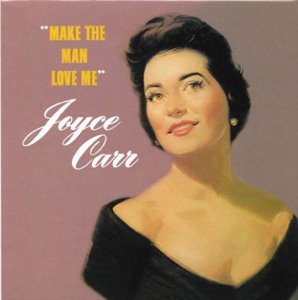
From the album artwork above, you already know I’m talking about the woman pictured there. So you know already that Joyce was a singer at some point. But you probably don’t recognize the name, and the album artwork gives ambiguous signals. It doesn’t look like the cover of a big-time release, but it does have a certain well-groomed look. (The artist, Reg Stagmaier, did a lot of album covers.)

So, was this a vanity project, the album, or the real deal? That’s an updated version of the question I always had about Joyce in the two years I knew her – as a fellow-court reporter.

The Real Deal?

You have to understand the way we reporters met each other. We didn’t usually go out in teams. There were two places I was likely to cross paths with her, and neither was necessarily conducive to long getting-to-know-you discussions. One was the Superior Court grand juries. There might be three or four juries meeting at the same time, in big subterranean rooms under Judiciary Square off a long corridor. When the juries were taking testimony, which was often most of the time, we reporters were in the room. Otherwise, we were most likely in the hall, which might be jammed full of witnesses, cops, prosecutors and jurors on break. The odds that any two of us would be in that long hall and sitting next to each other at the same time were limited. The other common milieu was the home office on Seventh Street Southwest, a somewhat secure facility where we would type up the confidential grand jury transcripts. And there, since we were largely paid by the page, we tended to keep our heads down over our Selectrics,[1] the better to churn out those pages.

Still, we did chat a little, and it seems to me I also heard some gossip about Joyce.  The story was she had been a singer once upon a time, greatly admired in Washington jazz circles. There was some connection as well with Lincoln Inn, a joint on or just off Pennsylvania Avenue near the National Theater, where we had a Christmas party during one of my two years on that job. Apparently the proprietor was an old friend of Joyce’s, and had cut the court reporting firm a deal for old times’ sake.

Yet I never knew what to make of this. If she had been such a big-deal singer, what was she doing transcribing testimony? I gently pushed Joyce’s reserve when talking with her, but never got very far. The sense I came away with was that something had happened, something had gone wrong. But she never gave away much. I liked and respected her as a colleague. She still looked a lot like the woman you can now see on that album cover (not surprising since the cover probably was painted three or four years thereafter).

In the Era of Amazon

Fast forward six years to 1984. I was then a subscriber to Stereo Review (nowadays known as Sound and Vision), and there was a review of a record by a singer out of Washington with the same name as my old friend. I forget how I got ahold of it, Amazon.com being a few years in the future yet, but I suspect I special-ordered it.[2] As soon as I saw the cover art, I knew it was my friend.

After listening to a couple of songs, I had the answer to at least part of the question. As a singer, that friend was the real deal: exponent of classics from the great American and British songbook: I Wish You Love, Skylark,  I Get Along Without You Very Well, Guess I’ll Hang My Tears Out To Dry. She had what the liner notes, by Jay McGahee, correctly call a “velvety timbre [which] she maintains throughout her vocal range.” True again that she showed “great insight into meaning and delivery of a song,” which is “direct but not exaggerated.”

I also received a trove of biographical information, and the best way to convey the gist of it is simply to reproduce a decent portion of Mr. McGahee’s notes (written in 1981, three years after I had exited Joyce’s sphere):

Joyce got from where she was (a college kid from Montana) to where she was not (reigning vocal artist in Washington, D.C.) by a path of ecstasy. With breathtaking ease she found herself established as a local star… [A]t 19, she left home with a one-way ticket and $30 for New York and musical comedy theatre. She stopped enroute to visit a sorority sister in Washington and has remained in the area ever since. Initially she took an office job and about four months later began singing in a neighborhood bar frequented by jazz musicians…. Her reputation spread….  She never had to audition for an engagement and one led effortlessly to another. Always very lucky, she seemed to be in the right place at the right time, only working in four rooms in 18 years. She suddenly found herself engaged to sing in the King Cole Room, the IN place at that time, and which was noted for its great atmosphere and staging of good singers. During this time she appeared on the Arthur Godfrey Talent Scout show, which she won, and despite a schedule to sign with MCA, decided instead to be married.

Her stint at the King Cole Room lasted about six years until it was sold…. In 1959, a room was designed for her in the Lafayette Hotel. She was given the luxury of choosing the musicians, the piano, and the acoustical equipment. She stayed there two years and followed that by two years in yet another room built for her, this one in the Lincoln Inn Restaurant.

McGahee goes on to talk about the years after 1963, when Joyce would hold forth at the Chimney Room in The Fireplace in Georgetown till 2 in the morning, and working with groups like the Army and Air Force musical ensembles, and the National Symphony.

A Lacuna

Although McGahee (as we have seen) mentions a marriage, he fails to bring up either a divorce or widowhood. Then, suddenly, this: “A few years ago she remarried and voluntarily put herself into semi-retirement. She put herself through business school and became and still is a top drawer professional court reporter.”

Hmm. I sense a diplomatic silence. One does not simply drop out at the top of a glamorous game and become an anonymous functionary in the halls of justice, marriage or not. Joyce Carr was born in 1931. Meaning that she probably became a court reporter in her forties, after the child-bearing years.[3] And I never heard anything about any children from either marriage. Even if Husband #2 was a (then)-conventional thinker to whom it was divinely ordained that wives belong in the home, I find it hard to believe that Joyce would have quit the bright world she so obviously ornamented for that reason alone.

No, I think something happened.

Two Possibilities?

I don’t think that simply because there is this odd lacuna in the official account. I think it because there was something terribly sad about Joyce. Something had burned her wings while she was flying high, that’s my take.

For my money, there are two possibilities, and I find one of them hard, though not impossible, to believe. The one that’s possible but hard to believe is that she had lost confidence in her voice for some reason. Yet the record, made in 1981, features the voice of someone with every reason to be confident about her instrument.

And the other would be a powerful man she had loved and lost. Washington was and is chock-a-bloc with those guys, guys who could stoke their egos by hanging out in sophisticated late-night supper clubs, romancing a cabaret singer. And Joyce, most of whose recorded songs are quietly torchy, about lost or unavailable love, would have been primed for just such a guy by her repertoire. So my strictly intuitive guess is that she had been a Washington mistress.

Looking Like Ava

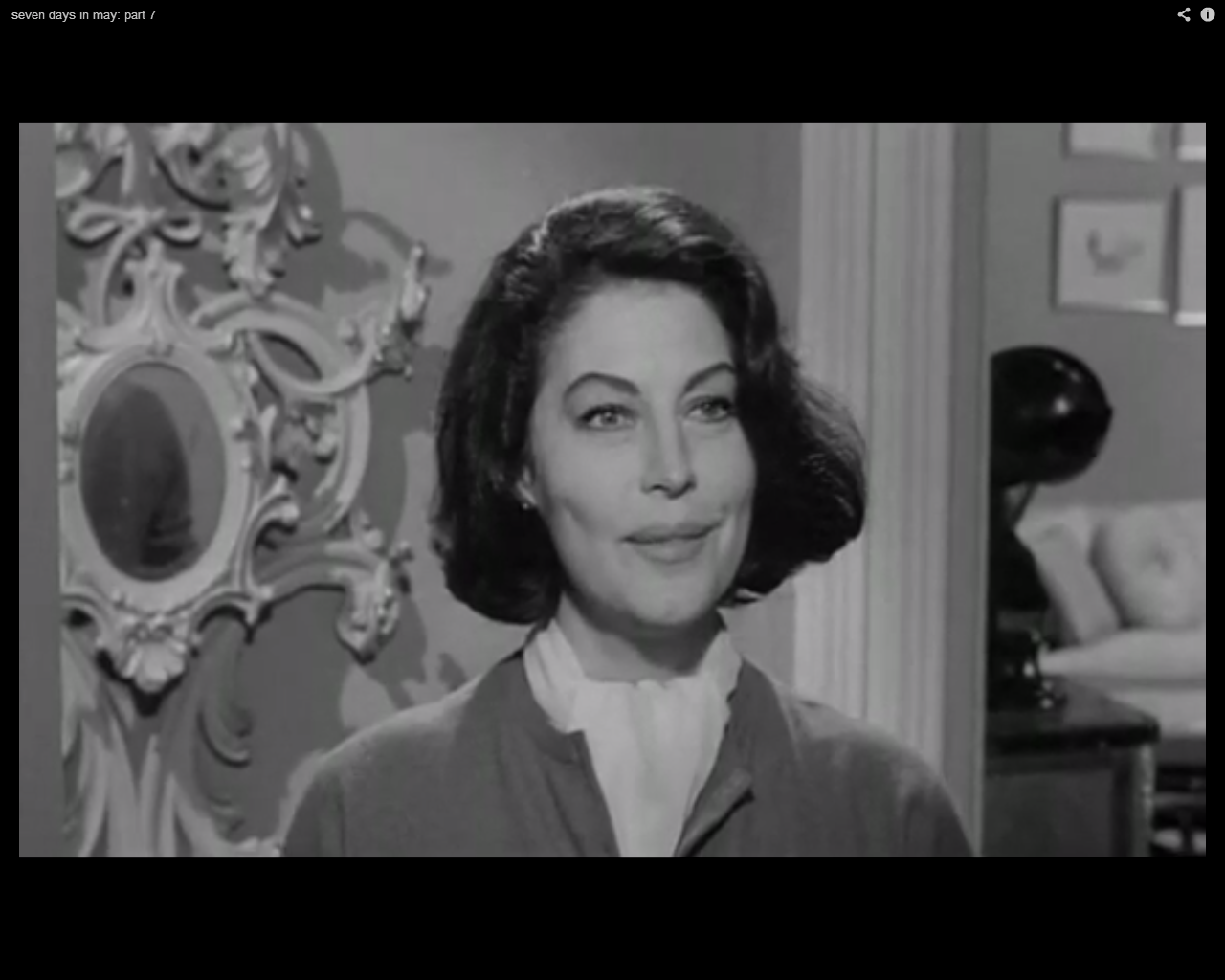
There is one unforgettable and (to me) on-target cinematic portrait of the breed: Ava Gardner’s Eleanor Holbrook in Seven Days in May (1964), cool, elegant, sophisticated, warm but a little brittle, and catnip for the evil General James Scott (Burt Lancaster). I had previously inserted a link to a clip to illustrate my point, but the clip has been blocked by Warner Brothers. But here’s the associated still:.[4] 

I could see Joyce, who definitely bore some physical resemblance to that character, showing a resemblance that was more than skin deep – and then recoiling into obscurity and matrimony for a while to get away from all that.

Well, this is all speculation, and I cannot (as I did, for instance, with Darryl Runswick) get in touch with Joyce to clear anything up, since (as I learn) she died in 2002. The album is not speculation, though. The album, made a few years after I knew her, is cool, elegant, and sophisticated, and warm but a little brittle. And if I’m right about the songs in it, they are the result of her adding a little bit of the heartbreak from whatever set her back to the craft she had perfected in all of those late night sessions in Washington bistros.

An Emblematic Song?

Since I didn’t know her music when I knew her, I cannot choose (for a series of pieces about individual songs) one that evokes that acquaintanceship; I can only choose a song that seems to sum up what I now see in her: It Never Entered My Mind. This beautifully-written number,[5] to which she gives a haunting delivery, paints a picture of  heartbreak:

Once you warned me that if you scorned me
I’d sing the maiden’s prayer again
and wish that you where there again
to get into my hair again.
It never entered my mind.

This could be what the General Jim Scott in her life, if there was one, said to her. And what her reaction was when he followed through. But if so, the heartbreak he inflicted was of a controlled and genteel sort:

Oh, who’d have thought
that I’d walk in the daze now?
I never go to shows at night,
but just to matinees now.
I see the show
and home I go.

Okay, she went to court reporting training, not matinees. Washington, not Manhattan. But you get the idea: Walking around in a daze, living what for her was only half a life.

I’m so glad she pulled herself together after I knew her and made that record. And I’m grateful to have known her, however superficially and briefly.


[1]  As soon as these words were written, I realized I needed to explain, for any reader whose memory doesn’t stretch back before 1986, when Selectrics were discontinued. By common consent and market share alike, the IBM Selectric typewriter was the class of the field for business typewriters from 1961 when it was introduced until the end of the typewriter era. It eliminated typebars with a radical “golfball” element that roamed from left to right on the line of type, rather than requiring that the platen move the paper to the position where a typebar would fall. If you were serious about typing, you wanted a Selectric. For some history, read here or here or here.

[2]  There was another record, Make the Man Love Me, from 1960, but the LP that is rare. However, the CD of Joyce Carr contains the contents from the 1960 release. The cover art of that earlier release, pictured here, does nothing to detract from my comparison to Ava Gardner, discussed below.

[3]  According to McGahee, writing in 1981, the semi-retirement was “a few years ago,” which sounds like the 70s. For what it’s worth, AllMusic has Joyce Carr retiring in the mid-60s. I suspect McGahee was closer to his source and the truth. Plus McGahee’s picture of Joyce’s gig at The Fireplace makes it seem as if it went on for a while, but he says it started in 1963, which was already the beginning of the mid-60s. The mid-60s ended about 1967. But I must acknowledge that if AllMusic were correct, then Joyce would still likely have been in child-bearing years when she quit.

[4]  In the clip the character is beginning to cheat on Scott with Scott’s deputy Kirk Douglas, who was almost as much in love with Scott as Eleanor was. The kind of triangle with powerful men I suspect the capital was awash with.

[5]  From a forgotten Rodgers and Hart musical, Higher and Higher (1940).

Copyright (c) Jack L. B. Gohn, except for graphic elements.

Theme Songs Page | Previous Theme Song | Next Theme Song

On Same-Sex Marriage, Reasonable Minds May No Longer Differ

The Big Picture Home Page | Previous Big Picture Column | Next Big Picture Column

On Same-Sex Marriage, Reasonable Minds May No Longer Differ

 Published in the Maryland Daily Record April 8, 2013

Last November, Maryland had a referendum on same-sex marriage. In the run-up to the election, the Catholic archbishop of Baltimore wrote a letter effectively ordering the faithful to vote against gays and lesbians marrying, and directed that it be read aloud in every pulpit.[1]  A friend of mine, from a venerable and distinguished Catholic family, was in church that Sunday with her two teenaged daughters, both of whom attend Catholic schools. After Mass that day and hearing the letter read, they announced to their mother that they were finished going to church – and obviously, short of dragging them physically, the mother had no way of forcing them into the pew. So that was that: the Church had just lost two bright young members.

This is just one example of the damage certain leaders and institutions are now doing to themselves by trying to fight the tide of acceptance on same-sex marriage. And it is entirely to be expected. After many years of dialogue, the public debate is well-nigh over. The arguments against same-sex marriage, after this prolonged vetting, stand revealed as simply irrational.

No Ducking A Reasonableness Test

Thus, for instance, the argument that the Bible forbids homosexuality. Maybe; that’s debatable. What isn’t debatable is that the dietary rules in the Bible also forbid ham sandwiches and pepperoni pizza, while both Old and New Testaments condone slavery. [2] You can be a rational Christian, but you cannot rationally maintain that anything is bad merely because the Bible says so. Reason calls for – insists upon – a separate reality check, in the course of which any sane Christian will discard some Biblical prohibitions. And the reality check with same-sex marriage leads to the other arguments, which all come out the same way.

Take the argument that marriage must have some kind of relationship to child-engenderment. We allow old straight people to marry, despite their evident barrenness.[3] Or the argument that children should have access to one parent of each sex: when compared to children of two same-sex parents in any respectable social science study, there is no deficit in the children’s well-being. Or the argument that gay people can (and will) train their kids to be gay: unsupported by any scientific data.[4]

And so forth.

The Consequences of Flunking The Test

When you get down to it, opposition to same sex marriage is not about rationality. It either comes down to distaste or shoddy thinking, or both. And now most of the American public recognizes this. If our leaders and institutions continue to attempt to enlist us against gays and lesbians marrying, they stand revealed as being, at best, shallow thinkers – at least on this issue. And shallow thinkers command little respect, which usually works out badly for them. As it did for the Church (my Church too, let me add) the day the Archbishop’s letter caused two young churchgoers to vote with their feet.

Which brings me to the Supreme Court. As the world knows thanks to the endless coverage, the Court must soon decide the fate of two laws: California’s Proposition 8, which would deny that state’s recognition to same-sex couples, and the federal Defense of Marriage Act, which denies federal recognition to same-sex couples, even those lawfully married under the laws of states which permit it.

At this writing, on the day oral arguments concluded, it seems quite possible the Supreme Court could act in such fashion as to leave both laws invalidated and yet avoid announcing a constitutional right for same-sex couples to marry. And there is a reasonable chunk of the commentariat encouraging the Court to do just that, to go slowly and cautiously[5]. In my view, such a sidestep would be a big mistake, partly because of that losing respect thing I mentioned. It would put the Court in bed with stupidity, a place the Court can ill afford to be these days.

Not Rocket Science

Consider how simple and obvious the basic problem is. Marriage is a fundamental right: we know that from Loving v. Virginia (1967). Fundamental rights can be interfered with only for good reasons, and by now all the reasons not to let gays and lesbians marry stand revealed as bad ones or (to the extent they are simply religious) ones that a religiously pluralistic society cannot use as a basis for denying rights.

The Fence The Court Needs To Mend

Meanwhile, the Court has some fences to mend. It has severely damaged its standing with its indefensible and indecipherable ruling in Bush v. Gore, which handed the 2000 election to a man who had lost it (and in the process certainly bequeathed us the Iraq war, and probably also the 2008 fiscal crisis). It allowed corporations disproportionate sway in the political sphere with Citizens United. It’s Second Amendment jurisprudence has probably cost thousands of innocent American lives. And even its grudging support of the Affordable Care Act (aka Obamacare) was done in such a way as probably to gut the Commerce Clause, a vital tool in effectuating national policy, going forward.

The commentators who urge caution in recognizing a constitutional right of gays and lesbians to marry all say this because they are afraid of provoking resentment and loss of acceptance on the right, the part of the spectrum where opposition resides. They urge that we allow matters to proceed state-by-state, hoping that each state electorate will eventually permit same-sex marriage, given time. But the Supreme Court has few fences to maintain or mend on the right, despite all the mutterings from that corner about “unelected judges.”

No, it is in the center and on the left that the Court had better think about its standing. For a generation, going decision by decision, including the big ones just mentioned, the Court has mostly been at war with the center and the left. And now it must deal with the fact that the center and the left look to be the majority for the foreseeable future, a majority whose respect the Court needs – and does not now have.

The last time the Court enjoyed such widespread disrespect was during the early New Deal, and it nearly resulted in court-packing. And the way things have been going, the idea might well be revived if the Democrats ever regained sufficient control of Congress.

Damn the Torpedoes

So, from the point of view of the Court’s legitimacy and integrity, this ought to be a Brown v. Board of Education moment. If there is a constitutional right of which people are being deprived, and pretty clearly there is such a right, there is no justification to wait for a “seasonable” moment to recognize it. In any case, it’s seasonable already. The gradualists, the optimists who see sweet reason swaying legislature after legislature, can ask themselves whether segregation would ever have become illegal in certain states without Brown. Certainly, at a minimum, it would have taken another generation to flush out all the Jim Crow laws. If we ever wish to see same-sex marriage recognized everywhere in our lifetime, the Court will have to say very soon that recognition is constitutionally required. Today is seasonable, then. And waiting will lose the Court respect.

Saying it today would not only be right, therefore, but awfully expedient for a Court that needs to realign itself sooner rather than later.


___________

[1] Interestingly, since the election, in which same-sex marriage prevailed, the Archbishop’s letter has become invisible on the Web, so far as I have been able to determine. Instead, the principal way to access references to it has been through references to a sermon preached in opposition by Rev. Richard Lawrence, pastor of Baltimore’s St. Vincent de Paul parish. The audio and video of the sermon are widely available. News coverage can be found here.

[2] Some of the most shocking endorsements of slavery are to be found in Exodus 21, right after the chapter with the Ten Commandments in it.

[3] A point Justice Kagan memorably made during the recent Supreme Court arguments.

[4] When I wrote this, I was unaware that there is some evidence suggesting a somewhat higher incidence of homosexuality among children of same-sex parents. There is also evidence the other way. However, even if the higher incidence should be proven true (which seems unlikely though not impossible in the face of further scrutiny of the admittedly sketchy data): a) there seems to be no respectable data suggesting that sexual orientation is chosen, and hence none that same-sex parents are making homosexuality occur where it would otherwise not do so; b) there seems to be no data at all suggesting that anyone is consciously attempting to persuade their children to adopt a homosexual orientation (which would be futile anyhow); and c) no one should care anyway, because the very raising of the issue implies that homosexuality in children is somehow an undesirable outcome.

[5] See, e.g., here or here.

Copyright (c) Jack L. B. Gohn

The Big Picture Home Page | Previous Big Picture Column | Next Big Picture Column

Who You Know

Theme Songs Page | Previous Theme Song | Next Theme Song

Who You Know[1]

 Libby, by Carly Simon (1976), encountered 1976

Buy it here  |  See it here  |  Lyrics here  |  Tabs here

How Deep Is Your Love, by Barry, Robin & Maurice Gibb, sung by The Bee Gees (1977), encountered 1977

 Buy it here  |  See it here  |  Lyrics here  |  Sheet music here

The Unmarketable Life

So: What do you do when almost everything you’ve achieved in your life has proven unmarketable? And you’re 26? (See my previous Theme Song piece for details.)

Well, at that age curling up and dying isn’t an option, particularly when you have a wife getting ready to go to law school and an infant daughter. On the contrary, there are two imperatives. The first priority is to find something remunerative to do, something that earns an adult income. And then you have to rethink everything. The second requires more time; it’s a process of discovery.

Job One, the job search, had me knocking on a lot of doors, especially in Washington. I remember more than one hot day near the Mall or up in the Federal Triangle, my white shoes[2] killing me, as I walked from federal office to federal office. I had taken the federal civil service exam (a Maryland one too) and researched job openings as best I could. But no matter where I filled out application forms or left my resume, I got nowhere. To the best of my recollection, nobody ever interviewed me for anything. I also tried my hand at journalism, and had some little bits of success. But what that brought in could never have been mistaken for an adult income.

Following the Mantra

That was the unbelievable thing: I had so much knowledge and still didn’t know enough about how the world worked to land any kind of job interview. I grudgingly acknowledged at last a mantra of my father-in-law’s: “It isn’t what you know, it’s who you know.” So I started thinking about the whos I knew.

One of the “whos I knew” was an administrative law judge with the National Labor Relations Board, my mother’s oldest friend. ALJ Jo lived in Alexandria, Virginia, an hour away. I called her up on a Thursday and laid out my situation. She told me she’d see what she could do, and that I should call her back the following Monday. When I did, I found she had come through: she could make me either a parole officer in Northern Virginia or a court reporter in Washington. I had never heard of court reporters, and asked her what they did: make transcripts of legal proceedings, she said. That sounded pretty good to me, and then too Washington was closer than Northern Virginia, so I told her I chose that one. Fine, she told me, and promised to have the contact information the following day.

And indeed she did write me the following day, with word that the boss of this court reporting agency, Roy, was expecting me to call him. Things moved quickly after that. Roy was more than willing to see me. (I soon worked out that his company had the prime contract on reporting all administrative hearings of the National Labor Relations Board, and doing favors for the ALJs was a concept he was wide open to. It wasn’t what you knew …) I visited his office on Seventh Street, SW, in the aptly-named Reporters Building. And, on May 18, 1976, a date I vowed never to forget, I walked out of the Reporters Building with my first grown-up job offer, to start in late summer. It wasn’t at all what I had expected to be doing, but it was a respectable living wage. And that was enough for the moment.

Remedial and Basic

While awaiting the beginning of my training, I paid heed to another parental prompting. There I was, the son of an economist teaching at a graduate business school, and I had never had the slightest training in either economics or business. It think it finally occurred to me that perhaps my inconveniently unworldly ways might have owed something to that deficit in my fund of knowledge. So I signed up for courses in both subjects at Towson State University, as it was then called. Introductory Econ and Bus Ad rubbed my nose in how little I knew – and delighted me with a flood of new insights into how the world worked. It was also nearly my first experience of higher education at a non-elite institution – and I liked it just fine. There was something about the lack of pretension that I found liberating.

Come the end of the summer, I was ready to start training. The technology was called voicemasking, a technology so passé 40 years on I can’t even find a photograph on the Web of the essential item: a big plastic sound-deadening mask you draped over your mouth and nose.[3] Inside the mask was a microphone into which you repeated (with stage directions) everything that was said in a legal proceeding. A wire would carry your voice feed to a tape recorder; later you’d use the resulting tape plus a backup tape of the proceeding itself to produce a transcript. The central skill, talking while listening, took a week or two to master. I believe I was ready to go in about a month.

It was a strange job, sometimes exciting, sometimes boring and frustrating. I never got to take a trial (there were official court reporters for those) and only got to take a deposition once (because those required notaries, and no one invested in making me one), but I got to do practically everything else once could think of.

It Couldda Been Worse

There were plenty of the NLRB hearings (fights over unionizing or de-unionizing workplaces). And those could take you anywhere: Norfolk, Baltimore, Scranton, Williamsport, sometimes even as far afield as Canton, Ohio (that hearing canceled on me after I drove a long way in a rented car in a snowstorm). Mike, the dispatcher, would say, in a whiny drawl: “Make like a bird and go to Pittsburgh,” and off you’d fly, all travel paid, with a decent per diem. If you liked travel for its own sake, and sometimes I did, that was great. Of course, if your wife had commitments that were inconsistent with childcare, it could be a problem.

But it wasn’t just NLRB; we had all kinds of federal agency hearings: FDA, FCC, Treasury, Postal Service. These were at all levels: from arbitrations to commission-level deliberations. Most of those were in Washington, though I remember one FCC matter that took me to Connecticut for three days.

The most interesting matters tended to be the grand jury proceedings; in those days all felony indictments in D.C., both federal and “state,” were handled by Assistant United States Attorneys, sharp and larger-than-life young lawyers. You got to see a panoply of all different sorts of cops (D.C. Metro, Park Police, Capitol Police, FBI, BATF, Secret Service, railroad police, postal police) and all sorts of bad guys, though never the bad guys they were trying to indict. I remember particularly one pimp who must have been testifying against some other bad guy; the pimp had an utterly magnetic personality. He was funny, appealing, charismatic. You could hardly help wishing you could have him as a friend.

And the lawyers were frequently very interesting too, particularly when they worked out that I was the product of the kind of education that made me somewhat atypical – though I quickly learned that there was no typical, when it came to court reporters. (My next Theme Song piece will be about a colleague who proves that point.)

Also, Washington could be exciting. It wasn’t all shuttling on underground trains among Union Station, the Reporters Building, the Federal Triangle, and Judiciary Square. I was a runner then, and frequently would put on my running shoes to head up to the Mall for lunch hour; I can remember one snowy weekend day when I had the Mall and the Capitol to myself, and ran up the stairs, Rocky-style, breathing the chilly air in exultation. I could head over to the areas near the National Portrait Gallery for shopping at Hecht’s and (I think) Garfinckel’s. And at Union Station itself there was excitement in a huge installation, just opened for the Bicentennial in the main hall, a huge pit with an array of video screens that could work in tandem or separately to hawk the attractions of Washington to arriving tourists. I remember that the music which accompanied the show (I must have seen and heard it all dozens of times) was peppy and catchy, and included plucked bass notes that reverberated beautifully in the marble halls. And of course this was the dawn of the Jimmy Carter presidency, when, for a liberal, all things were being made new – or so it appeared.

At times I felt like saying: Take that, Hopkins! I may not be teaching literature, but I’m out here in the big exciting world, so there!

It Couldda Been Better

At the same time, it was very lonely work. You were seldom in the same place from one day to the next. You rarely saw your fellow-reporters except back at the company offices if you were transcribing grand jury notes (you weren’t allowed to take them home, unlike notes from administrative hearings). And when doing that you were in a long dark gallery where people from sister companies, not even your own company, were likely to be your only neighbors. It took me away from my wife and daughter and plunked me down in a different city, either Washington or somewhere else, almost every day. And I would always be a functionary, never a star like the lawyers who strutted and preened and growled and fought. Not even like a witness. And, let’s face it, going to Scranton or Allentown or Salisbury may have had some charms, but it was not glamorous traveling.

So I had “theme songs” for both moods.

For the more wistful one, there was Libby. One day in October of 1976, not too long after I’d started, after taking down the proceedings of a Food and Drug Administration toxicology conference on new animal drugs, I found myself in a record store on the Rockville Pike, and I picked up Carly Simon’s latest album, Another Passenger. The album title was a quote from the most important song on the album, Libby,[4] it resonated powerfully with me.

As I’ve already partly disclosed, Simon had always seemed to me like a spokeswoman for my exact cohort. Well, my exact me, actually. When I’d been doubtful about getting married, she’d been doubtful about getting married. When I’d warmed up to the attached state, so had she (I Haven’t Got Time for the Pain). And now she was getting restive and looking for escape to new climes. Well, so was I.

You could argue that though I probably thought the song was about me, it really wasn’t. And on the surface, you’d be right. Obviously, for a big star with serious money to get restive and want to visit another place was different from me wishing I didn’t have to go to Scranton. Also, the song is very feminine: a man would not have written:

If all our flights are grounded,
Libby, we’ll go to Paris
Dance along the boulevards
And have no one to embarrass,
Puttin’ on the Ritz in style
With an Arab and an heiress.
Libby we’ll fly anyway

The attitude is female and privileged. Finally, the song is about friendship as well as escape. As Simon wrote on her website: “The song … is about my relationship with a woman who used to be a very close friend.[5] The hard times became funny in our mutual observation of them. We got each other laughing over the pain.” I wasn’t having friendship highs or lows.

At the same time, the obvious experience of recent pain Simon’s lyrics evoke was mine as well, and the desire to run away.

Crossing the Bridge

In a way, the court reporting was running away too. Maybe Scranton or Norfolk or Dover wasn’t Paris, but then again it was not Baltimore, the scene of my humiliation, either. And if reporting wasn’t the life I’d chosen or envisioned, it wasn’t always so terrible.

That kind of thinking was what caused me to glom onto another “theme song” for the moments that felt better. That was How Deep Is Your Love, by the Bee Gees, from the Saturday Night Fever soundtrack. I can’t tell you exactly when I first heard it (obviously shortly after September 24, 1977 when it was released), but I can tell you with great precision the moment it was permanently associated with a picture in my mind, about 8:30 a.m. on Tuesday, October 18, 1977. On that pleasant early fall day, I was driving along the eastbound approaches of the Bay Bridge,[6] which leaps over from the military, governmental, and sailboating purlieus of Annapolis to Maryland’s agricultural Eastern Shore. I was headed for an NLRB hearing in Easton, MD. As you move along those bridge approaches, the Bay appears to your right, and, if you can spare a glance from your driver’s focus, you can frequently make out large vessels standing in the roads making towards or away from the Bridge. From your vantage point you are going quickly and those boats have all the time in the world. For some reason, that is a pleasing and calming prospect. And this was a nice clear morning, and there were the boats – and there were the Bee Gees on the car radio.

Now it’s reasonable enough to argue that the lyrics are not so peaceful, and betray the singer’s insecurity in his woman’s love.

And you may not think I care for you
When you know down inside that I really do
And it’s me you need to show
How deep is your love? (how deep is your love?)
I really need to learn.

But the music simply overwhelms all that. The limpid splotches of Fender Rhodes piano reverb and the slowly-developing quiet harmonies of the Bee Gees’ voices are all about the kind of all’s right with the world security you can feel when you see the boats out in their channels, and you’re off about your business. Impossible at a moment like that not to think of life as a gradually-unfolding adventure. I was going to make a transcript people depended on to reach decisions that governed their work lives. I was earning some real money

It may have had some impact on my affect at that moment that I was beginning to get ideas about the next stage for me. But that’s a tale for later.[7]

For now (or then), I personally was not someone who I knew anymore. But I was wanting to make my acquaintance.


[1]  Yes, friends, I’m aware it ought to be “whom you know.” Read on and discover why the solecism.

[2]  I had no fashion sense then. But to be fair, neither did a lot of folks. The shoes in question were kind of patent leather-ish and cruise-y. It’s possible (though I think not probable) that those shoes and other sartorial choices turned off some of the gatekeepers who might have given me real access to a job or two.

[3]  Nowadays there are still some voicemasks in use, but they don’t cover your nose, and even in this healthier format (you wouldn’t be inhaling nearly so much in the way of vinyl fumes), I get the impression they are not much relied upon.

[4] Obviously, in this assessment, I take issue with the verdict of the Rolling Stone reviewer, who called it “an overlong banality.”

[5]   The woman in question was Simon’s friend and sometime collaborator, singer/songwriter Libby Titus. According to her Wikipedia entry, she came from money the way Simon did, and knew and had liaisons and/or marriages with all kinds of interesting people. It seems likely from the commentary in various places that she and Simon must have had some kind of falling out, though no one quite says that.

[7]   A tale for nowhere in this blog is the blockbuster Saturday Night Fever album on which the song shortly afterwards came out (premiering in November). Though I liked a lot of the songs, I never bought or took to the album (though I did tape it from the Baltimore County Public Library’s collection one day). And I never was a devotee of the movie, either. What can I say? I was neither Karen Gorney nor John Travolta.

Copyright (c) Jack L. B. Gohn, except for cover art.

Theme Songs Page | Previous Theme Song | Next Theme Song
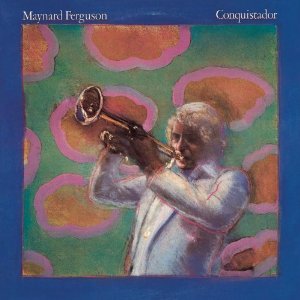
A ‘Deliciously Disgraceful’ Tallulah

Theater Reviews Page | Previous Theater Review | Next Theater Review

A “Deliciously Disgraceful’ Tallulah

Posted on BroadwayWorld.com on March 6, 2013

It has become practically a genre: the ordeal of the showbiz little guy by balky, dysfunctional star. Think My Favorite Year, My Week With Marilyn, Barrymore, or Ma Rainey’s Black Bottom. In these dramas, young strivers in some branch of showbiz, given responsibility but little power, must endure the cutups of a star who has something very different on his or her mind (or what is left of it) than the job at hand. A recent entry in the genre, Looped, at Baltimore’s Hippodrome for two weeks, has the classical elements: a celebrity on her last legs, so addled with alcohol, coke, and pills that she cannot “loop” the recording of a single line to complete a movie; the striver, in this case a young film editor who comes to do his job but stays to experience a very personal catharsis; the star’s disclosure of the path to dysfunction; and some moments in which the star shows what she could do once upon a time. It’s an interesting genre, and this is a fine entry.

The star in question is the in her own words “deliciously disgraceful” actress and celebrity Tallulah Bankhead, channeled, in a very interesting bit of casting, by Stefanie Powers. The role was to have been played by Valerie Harper, who had held down all this show’s previous incarnations of Tallulah, starting with the Pasadena Playhouse in 2008, and continuing thereafter in West Palm Beach, Washington, and on Broadway. Ms. Harper has unfortunately gone on the sick list, however, and so Stefanie Powers has been called in. Considering that Powers was actually herself part of the event being dramatized, having co-starred with Bankhead in the very movie Bankhead held up with that unfinished “loop” (the 1965 horror flick Die, Die, My Darling), and given that Powers has of late distinguished herself as another faded and dotty star, namely Norma Desmond (in a production of Sunset Boulevard I was fortunate enough to see at the Ogunquit, Maine Playhouse, which is reportedly being brought to New York), she is an utter natural for the role.

There was a time when everyone knew what Bankhead looked and sounded like, but that time is past. This play cannot sell itself primarily on the thrill of seeing Bankhead walk among us again, as can My Week With Marilyn. Instead, it rises or falls on the strength of those classical elements mentioned above.

The central calculation playwright Matthew Lombardo has made is that the conduct of Tallulah, deliberately muffing lines, cadging drinks to fuel an outrageous alcoholic thirst, insisting on coming late and taking lengthy breaks will be more amusing than irritating. (The show is billed as “A New Comedy.”) And to the extent Bankhead’s schtick isn’t amusing, he hopes its appeal will be aided by Tallulah being Tallulah, recounting bawdy memories, dropping outrageous bon mots (for instance dismissing the notion that cocaine is addictive with the comment: “Nonsense, I’ve been doing it for years”). And if that doesn’t work, there is an appeal to pathos, a memory of a Bankhead performance as Blanche in Streetcar Named Desire that she deliberately camped up because her audience no longer looked to her to do it straight, followed, toward the end of Looped, by a purer, more vulnerable bit of performance as Blanche, authenticating Bankhead’s true gifts as an actress. And finally, should all else fail, Lombardo gives the comparative youngster, the film editor, Danny Miller (Brian Hutchison) a back story that shows him in bad need of moral and life lessons that only Tallulah can provide.

It would be very interesting indeed if there really had been an historical Danny Miller, but, alas, the real film editor seems to have been named John Dunsford, a creature of the world of British B-movies, not the Hollywood type presented here. (The movie was made in England, and, for all I can determine, the looping happened there too, not in LA as presented in the show.) It is thus a reasonable guess that the character of Danny was created out of whole cloth to be a foil for Tallulah.  Somehow this lack of authenticity matters.

I will not spoil the plot’s secrets by saying exactly how, but I will note that the gradual revelation of Danny’s story is made to carry an enormous amount of weight in the play that the Tallulah-being-Tallulah business therefore did not have to sustain, and indeed could not have sustained. In plain English, it looks as if the Danny-plot were conceived as filler that enables what is organically a one-act play to grow to two acts. The ultimate success of Looped therefore depends on the ability of this filler to take on a life of its own, even if we know it’s likely a complete fiction. I believe it does, thanks in no small measure to Brian Hutchison’s careful handling of the part. Hutchison takes a character who at first glance is flat and non-descript and allows us slowly to witness the character’s tortured inner life, one that the encounter with Tallulah Bankhead arguably improves and perhaps saves.

In the small but crucial part of Steve, the recording engineer, Matthew Montelongo nails the archetypal Hollywood tech guy, one who is not (as Danny turns out to be) terribly emotionally involved with the bits of moviemaking activity that come within his purview, but able to interact forcefully in an understated sardonic way when called upon. If the label of comedy truly fits on this performance, Montelongo’s character has a lot to do with it.

Credit is also due to director Rob Ruggiero, for keeping things moving along, not slaughtering the audience with frustration at Tallulah’s balkiness, not allowing the strong reminders of Tallulah’s impending demise or the sad secrets of Danny’s life to make things too gloomy, and for maintaining a consistent tone even through Tallulah’s flashbacks. This is not great drama or great comedy, but it is an enjoyable evening of theater, thanks in large measure to Ruggiero’s sure hand.

Of course, in the end none of it matters if Powers does not deliver, but no one can deny that she knocks it out of the park. It may be a tinier park than some, but knock it she does.

Copyright (c) Jack L. B. Gohn, except for photograph

Theater Reviews Page | Previous Theater Review | Next Theater Review